In the wake of recent heavy rains and devastating floods, the Odisha government has placed absolute priority on public health, mobilising rapid response teams and deploying critical medical infrastructure to vulnerable regions.
With waterborne and vector-borne disease risks escalating, the Health Department has intensified monitoring across eight severely affected districts.
The state has ramped up disease surveillance for high-risk conditions, including diarrhoea, fever, malaria, dengue, leptospirosis, and jaundice. Special attention is directed toward vulnerable demographics—pregnant women, newborns, children, the elderly, and persons with disabilities—ensuring they receive priority care through doorstep health screenings and mobile medical teams.
Targeted Interventions in Ganjam and Asika
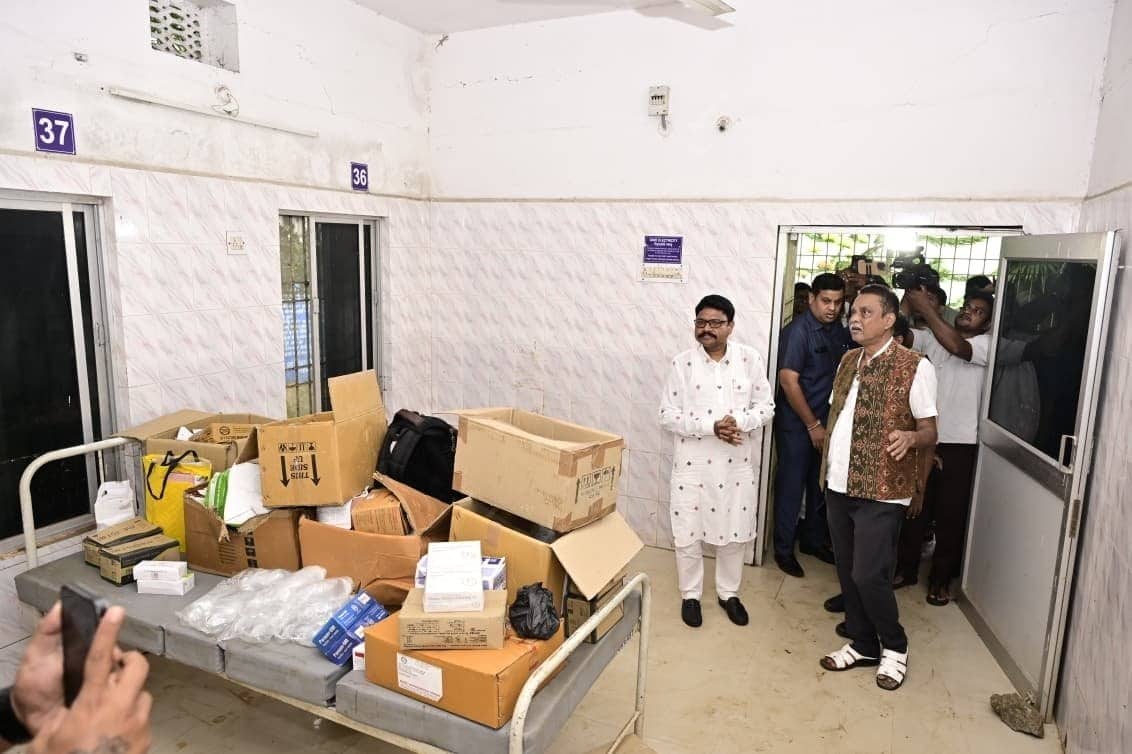
Ganjam district has emerged as a major focus area for post-flood recovery. State Health Minister Dr Mukesh Mahaling personally toured flood-affected regions in Asika to review infrastructure damage, drug availability, and sanitation measures.
To bridge the healthcare gap caused by disrupted medical facilities, the government is establishing two temporary hospitals in Asika—situated at the Asika Women’s College and the Kendriya Vidyalaya. Treatment services at the women’s college have already commenced, with the Kendriya Vidyalaya facility slated to open shortly.
Robust Ground Mobilisation
To ensure continuous medical access in remote and marooned pockets, 21 mobile health units (MHUs) are being deployed in Asika alone, with 10 units already operational on the ground. District and block-level Rapid Response Teams (RRTs) are actively conducting door-to-door checkups, distributing water purification supplies, and running localised medical camps.
The Health Department remains on high alert across Ganjam, Gajapati, Kalahandi, Koraput, Malkangiri, Nabarangpur, Nuapada, and Rayagada, continuously reviewing public health indicators to prevent any large-scale outbreaks.