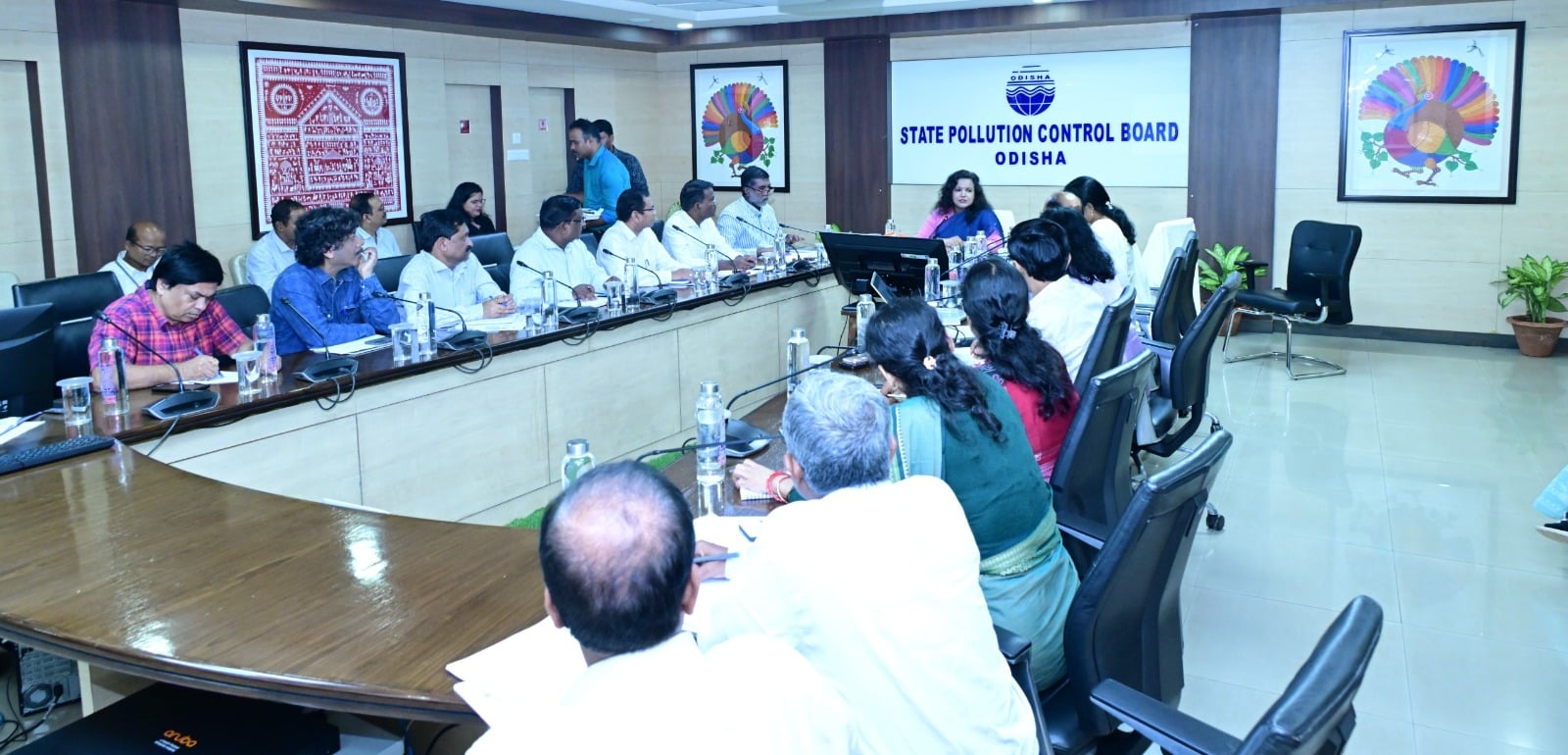
Chief Secretary and Odisha State Pollution Control Board (OSPCB) Chairperson, Anu Garg, visited the SPCB headquarters today to conduct a comprehensive review of the board’s regulatory mechanisms, environmental monitoring, waste management strategies, human resources, and future operational roadmaps.
During the review, the Chief Secretary emphasized the imperative need to harmonize rapid industrial development with rigorous environmental protection, particularly as Odisha experiences explosive growth across its steel, aluminum, power, mining, and petrochemical sectors.
Key Focus Areas Identified by OSPCB:
+--------------------------+-------------------------------------------------------+
| Strategic Pillar         | Targeted Action / Innovation                          |
+--------------------------+-------------------------------------------------------+
| Regulatory Process       | Single-window online approval & paperless operations   |
| Environmental Monitoring | Real-time automated data & digital compliance tracking |
| Circular Economy         | Waste-to-wealth models for fly ash, slag, & e-waste   |
| Infrastructure Upgrade   | Modernization of central and coastal testing labs     |
+--------------------------+-------------------------------------------------------+
Promoting Ease of Doing Business and Transparency
Stressing that environmental regulation must move beyond mere compliance checking, CS Garg called for establishing a transparent, data-driven, and technology-led environmental management framework. She directed the board to simplify, digitize, and standardize environmental clearances to promote Ease of Doing Business.
Integrations with single-window online systems, paperless processing, automated digital tracking, and predictable timeframes will enable industries to maintain regulatory standards while attracting fresh investments to the state.
Advancing the Circular Economy: Waste to Wealth
Highlighting the principles of a circular economy, the Chief Secretary urged officials to view industrial and municipal waste not as refuse, but as valuable economic resources. She advocated for sustainable resource recovery through recycling, reuse, and value-added processing, specifically targeting:
- Industrial By-products: Fly ash, slag, red mud, and phosphogypsum for use in highways and construction.
- Streamlined Waste Streams: Strengthened segregation and recovery systems for municipal, plastic, electronic, hazardous, and construction/demolition waste.
- Sustainable Business Models: Encouraging new enterprises and technologies that turn waste into raw materials, creating fresh employment and entrepreneurial opportunities.
CS Garg underlined that every initiative undertaken by the OSPCB must align with the broader visions of ‘Viksit Odisha-2036’ and ‘Viksit Bharat-2047’, pointing out that long-term economic prosperity will increasingly rely on sustainable industrialization, eco-tourism, and green infrastructure alongside mineral utilization.
Strengthening Infrastructure and Institutional Capacity
During the meeting, OSPCB Member Secretary Dr. Manoj V. Nair presented a detailed roadmap on current regulatory measures and future strategic directions. Key operational priorities discussed include:
- Lab & Research Modernization: Upgrading central, regional, and coastal environmental monitoring laboratories, alongside partnerships with premier national research and technical institutions.
- Public Awareness & Engagement: Broadening outreach programs during major events like World Environment Day, International Clean Air Day, and National Pollution Prevention Day, while making real-time air and water quality data accessible via public and social channels.
- Institutional Capacity Building: Reviewing technical/administrative human resources, filling vacant posts, and strengthening regional offices, IT divisions, and legal wings.
The Chief Secretary concluded by reinforcing the board’s vital role in positioning Odisha as a clean, green, and resilient state capable of balancing industrial performance with environmental sustainability.