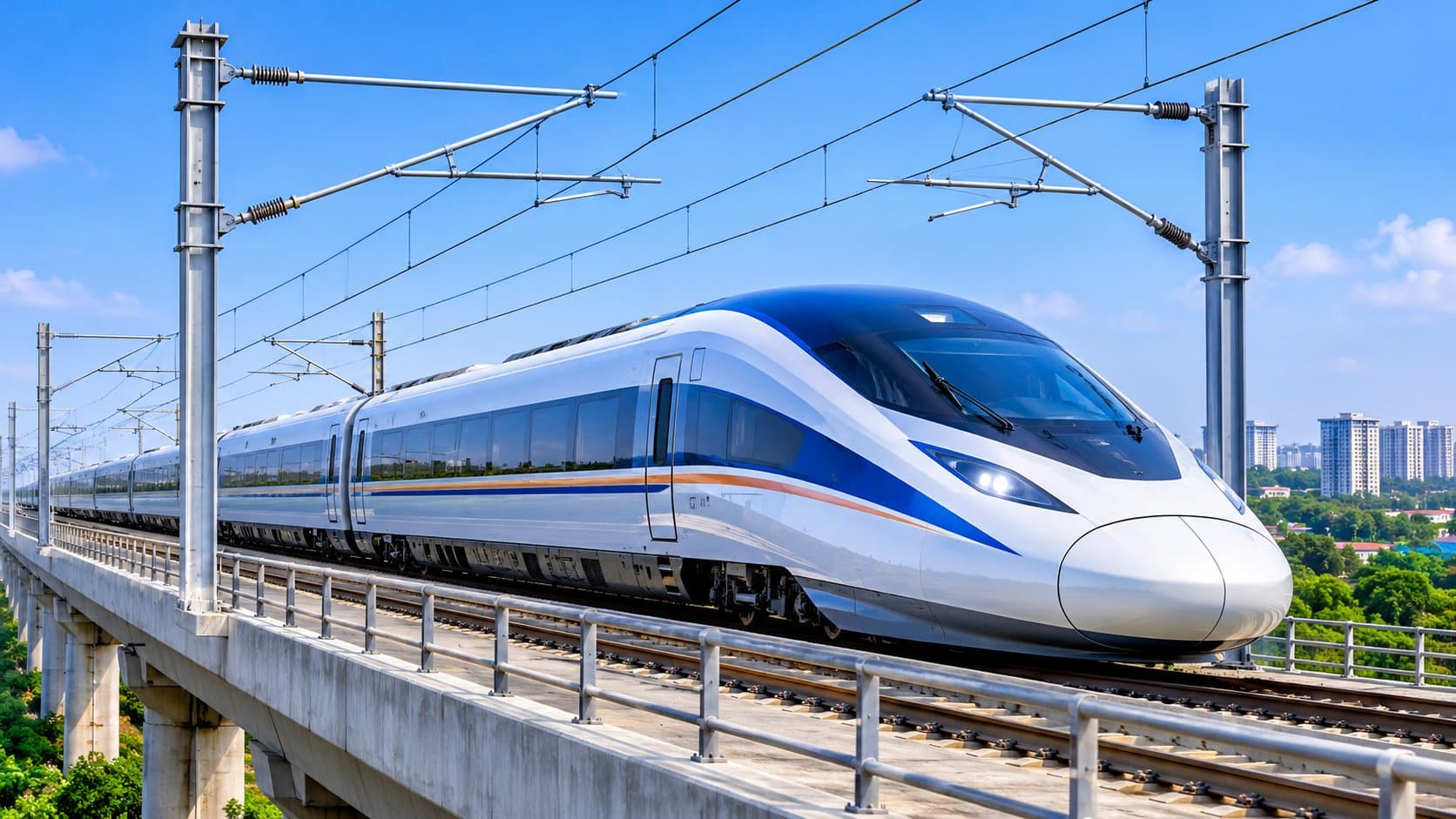
India’s first bullet train project is gathering momentum, with the country’s maiden indigenous high-speed train set expected to begin track trials by mid-2027 and commercial operations likely to commence later that year.
The milestone signals a major step forward in India’s efforts to build world-class rail infrastructure and develop domestic expertise in high-speed rail technology.
The Mumbai-Ahmedabad High-Speed Rail (MAHSR) corridor, spanning 508 kilometres, is witnessing rapid progress across multiple fronts. Large portions of the elevated viaducts have already been completed, while work on stations, tunnels, track laying and electrification continues at an accelerated pace.
A key highlight of the project is the development of the indigenous B28 bullet train by the Integral Coach Factory (ICF) and BEML. The first train body frame has been completed and is undergoing testing, with track trials expected by the middle of 2027. The train is being designed specifically for India’s high-speed rail requirements and marks the country’s entry into indigenous bullet train manufacturing.
The Mumbai-Ahmedabad route is expected to transform rail travel in western India. Once fully operational, passengers will be able to cover the distance between the two cities in just about 1 hour and 58 minutes, dramatically reducing travel time and enhancing economic connectivity.
Among the engineering marvels under construction is India’s first undersea rail tunnel beneath Thane Creek. The 21-kilometre tunnel includes a 7-kilometre undersea stretch and represents one of the most technologically advanced railway projects ever undertaken in the country.
The project also features a massive underground bullet train station at Bandra Kurla Complex (BKC) in Mumbai, built nearly 32 metres below ground level. Designed to handle future passenger growth, the station will serve as a critical hub for high-speed rail operations.
Safety remains a central focus of the project. Advanced systems, including earthquake detection sensors, wind monitoring equipment and automated train control technologies, are being deployed to ensure world-class safety standards on the corridor.
The bullet train network is also expected to boost domestic manufacturing, with an increasing share of components and construction systems being produced within India. Officials view the Mumbai-Ahmedabad corridor as a model for future high-speed rail expansion, with several additional bullet train corridors planned across the country.
As construction advances and indigenous train development moves closer to testing, India’s long-awaited bullet train project is steadily transitioning from vision to reality, promising to redefine intercity travel for millions of passengers.