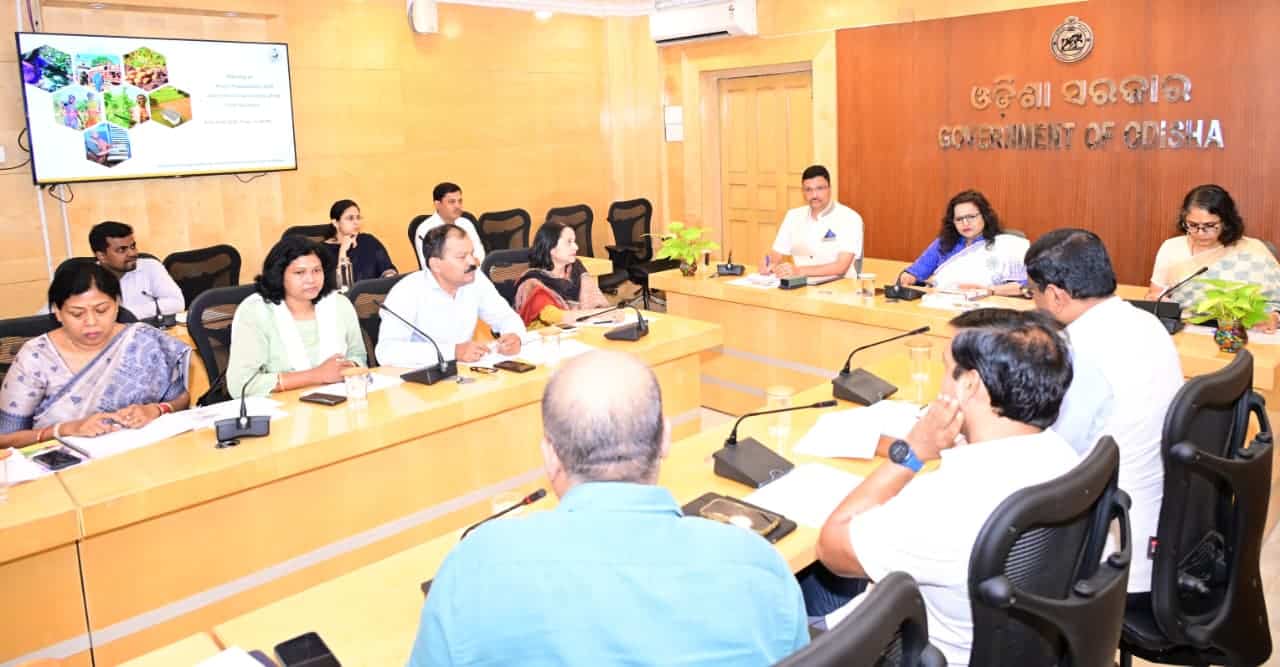
In a proactive move to safeguard the state’s agriculture, Odisha’s Chief Secretary, Anu Garg, IAS, chaired a high-level review meeting today, emphasising robust preparations for the Kharif season despite the looming shadow of El Niño.
While national forecasts point to below-normal monsoon rainfall across India, officials remain optimistic that Odisha will experience minimal impact, urging full readiness to ensure a successful farming season.
The meeting at Lok Seva Bhawan brought together senior officials, including Additional Chief Secretary (Revenue & Disaster Management) Dr Arabinda Kumar Padhee, Principal Secretary (Water Resources) Shubha Sharma, Commissioner-cum-Secretary (Agriculture) Sachin Ramchandra Yadav, and IMD Bhubaneswar Director Dr Manorama Mohanty, among others.
El Niño Outlook and State-Specific Assessment
El Niño, characterised by warmer-than-average sea surface temperatures in the Pacific, often disrupts global weather patterns and can weaken the Indian southwest monsoon. IMD presentations indicated a likelihood of slightly below-normal rainfall nationally this year. However, historical data and regional analysis suggest Odisha may largely escape severe effects, with rainfall expected to remain close to normal in many areas—potentially varying slightly lower, higher, or average.
Monsoon rains have already begun in some coastal parts of Odisha, with favourable conditions for further advancement. Chief Secretary Garg stressed the need for contingency planning regardless, directing departments to monitor rainfall, reservoir levels, and agricultural activities closely.
Key Decisions and Preparations
A major outcome of the meeting was the decision to form a dedicated Task Force for integrated water management. This committee, with the Water Resources Department as the nodal agency, will focus on:
- Real-time assessment of water availability.
- Irrigation planning for Kharif and Rabi seasons.
- Enhancing irrigation efficiency through micro-irrigation.
- Optimal water use for farmers and reservoir management.
Discussions highlighted water conservation, groundwater recharge (especially in over-exploited areas), and efficient utilisation strategies to mitigate any rainfall deficit.
Agriculture Targets for Kharif 2026:
- Total targeted cultivable area: 57.88 lakh hectares.
- Area under assured irrigation: 39.04 lakh hectares.
- Seed supply plan: 2.66 lakh quintals (over 1.18 lakh quintals already distributed; 14,350 quintals reserved for emergencies).
- Fertiliser requirement: 11.43 lakh metric tonnes (current district-level stocks reported as satisfactory, with strict monitoring and enforcement squads in place).
The state aims to cover around 25 lakh farmers under the Pradhan Mantri Fasal Bima Yojana. Weekly review meetings on Kharif preparedness are already underway. A dedicated Kisan Help Line provides ongoing guidance, building on discussions from earlier meetings chaired by the Deputy Chief Minister (May 27) and a national-level conference (May 29).
Chief Secretary Garg directed all departments to strengthen coordination at the state and district levels. Emphasis was also placed on pest and disease management in case of deficient rains, alongside promoting crop diversification and community nurseries where needed.
A Message of Resilience
“Odisha has learned from past experiences,” Garg noted, calling for integrated action on water conservation and sustainable farming practices. With strong seed and fertiliser availability, proactive irrigation planning, and a vigilant task force, the state is positioning itself to turn potential challenges into opportunities for resilient agriculture.