Odisha today took the first formal step towards a coordinated, cluster-based development model for agriculture, horticulture, fisheries and dairy, with the aim of moving beyond higher production to higher farmer incomes.
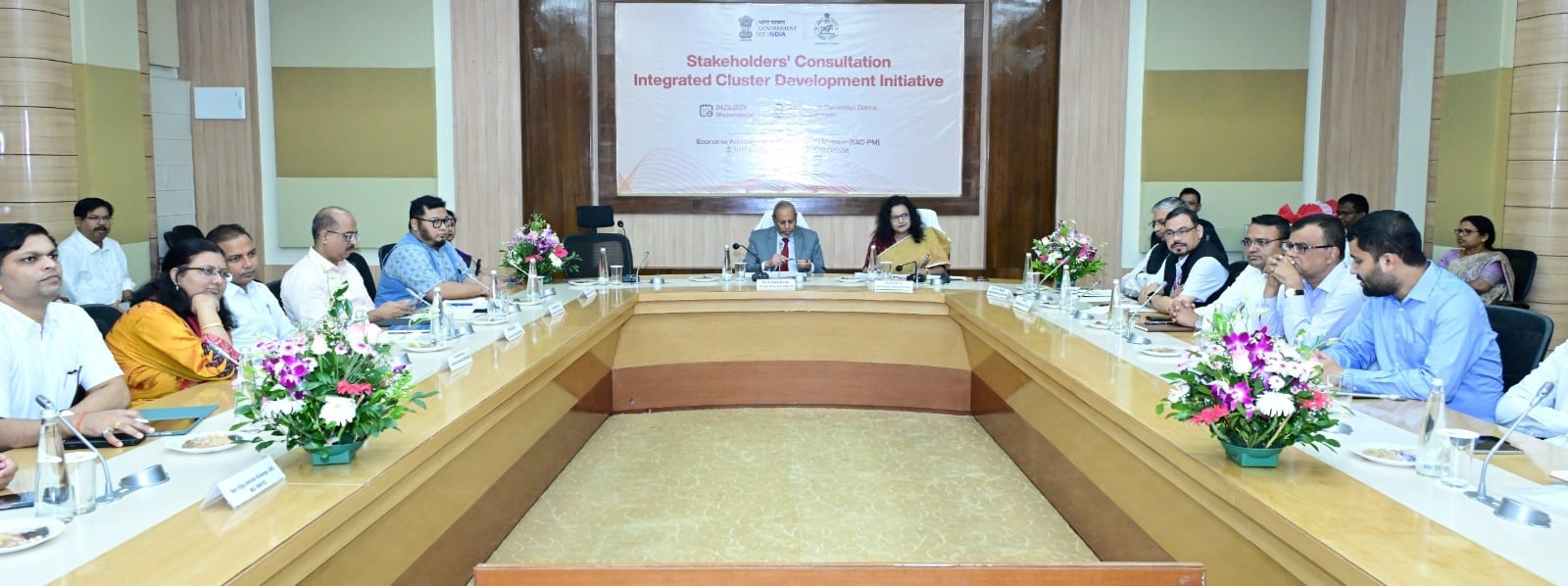
The first consultation workshop of the Integrated Cluster Development Initiative (ICDI) was held at the State Convention Centre in Lok Seva Bhawan. The programme was organised with support from the Economic Advisory Council to the Prime Minister (EAC-PM), NITI Aayog and the Odisha Department of Planning and Convergence.
The workshop focused on identifying priority clusters, closing gaps in infrastructure and institutions, improving coordination among departments, and mapping the next steps for a full farm-to-market value chain.
Income, not just output
Prof. S. Mahendra Dev, Chairman of EAC-PM, said the state must shift from a production-centric approach to an income-centric one. He stressed post-harvest gains, support for small and marginal farmers, and stronger Farmer Producer Organisations and cooperatives. As an eastern state, Odisha could set an example that also links farm growth with tourism, he said.
Chief Secretary Anu Garg said a developed Odisha would contribute directly to the national goal of a developed India. She called for inclusive and balanced growth that uses the strengths of every region. Strengthening the entire value chain — production, value addition, processing and market linkage — was essential, she said. Connecting local produce to larger markets and bringing women’s self-help groups more firmly into cluster activity would give rural economies new momentum. Success, she added, would depend on close coordination among government departments, district administrations, research and financial institutions, cooperatives, the private sector and local entrepreneurs.
Puri and Ganjam first
Officials discussed launching pilot clusters first in Puri and Ganjam. In later phases, the initiative is proposed to expand to Angul, Dhenkanal, Sambalpur and Deogarh. Collectors from the concerned districts were present.
Sachin Ramchandra Jadhav, Commissioner-cum-Secretary, Agriculture and Farmers’ Empowerment, presented Odisha’s horticulture potential. The state has emerged as a major fruit and vegetable producer, with horticulture crops grown on about 16.53 lakh hectares and annual vegetable output of nearly 11.1 million metric tonnes. Around 3.83 lakh farmers are already working in 95 horticulture clusters. In Ganjam and Puri, the focus would be on cashew, mango, vegetables and spices, along with collection, cold storage, processing and market access. Strengthening FPOs to link farmers with national and international markets was outlined as a key part of the roadmap.
Fisheries and dairy on the same map
Prem Chandra Choudhury, Commissioner-cum-Secretary, Fisheries and Animal Resources Development, highlighted the blue economy, deep-sea fishing, the shrimp mission, reservoir aquaculture and related infrastructure. For Puri and Ganjam, he stressed fish production, landing infrastructure, cold chain, processing, FPOs and cooperatives. In dairy, he outlined a cluster strategy covering productivity, animal health, fodder, milk collection, chilling and value-added products.
Dr Sudha Narayanan of IFPRI, who delivered the welcome address, said the initiative, if backed by all departments and institutions, could speed up grassroots agri-industrial growth and improve farmer welfare.
Technical sessions examined field studies, institutional arrangements, value addition, situation analysis and the identification of promising clusters. Selection criteria included production, market demand, processing potential, exports, employment, inclusive growth and sustainability.
Senior officials from state and district administrations, along with representatives from agriculture, fisheries, horticulture, dairy, cooperatives, financial institutions, research bodies, the private sector and subject experts, took part in the discussions.
The message from the meeting was clear: Odisha wants clusters that do more than grow more. They should collect, store, process, brand and sell better — so that rural incomes rise with them.