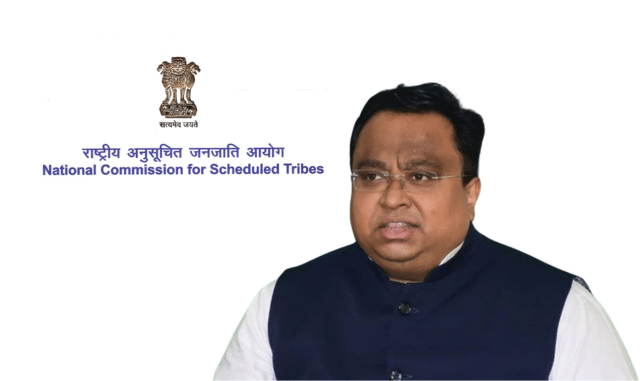
In a significant development, the National Commission for Scheduled Tribes (NCST) has directly reached out to BJD Rajya Sabha MP Dr Sasmit Patra, asking him to submit comments on the contentious Sijimali bauxite mining issue in Odisha’s Kalahandi and Rayagada districts.
In an official letter dated June 9, 2026, NCST Director Dr P. Kalyan Reddy informed the MP that the Commission has been actively investigating the matter since it received a detailed representation from Reena Majhi and other residents of Talampadar village, Kalahandi, on November 10, 2025. The petitioners had alleged continuous harassment, intimidation, and violation of constitutional and human rights of the Scheduled Tribe community leaders and villagers protesting the proposed mining project.
The Commission had issued a formal notice on December 10, 2025, to senior Odisha government functionaries, including the Chief Secretary, Home Department, Steel & Mines Department, DGP, and Collectors of Kalahandi and Rayagada. Replies were subsequently received and forwarded to the original petitioners for their comments.
Now, the NCST has enclosed the key responses — from the Additional Secretary, Steel & Mines Department (letter dated January 20, 2026), the A.D.G.P. (HRPC), Odisha Police (January 29, 2026), and the Collector & District Magistrate, Kalahandi (January 3, 2026) — and invited Dr. Patra to share his views “so that further necessary action may also be taken at this level.”
The Sijimali controversy revolves around Vedanta Limited’s proposed bauxite mining lease spanning over 1,549 hectares across Thuamul Rampur tehsil in Kalahandi and Kashipur tehsil in Rayagada.
The state government issued a Letter of Intent (LoI) to Vedanta in March 2023 following an e-auction. Still, the actual mining lease is yet to be granted as statutory clearances, including forest and environmental approvals, remain pending. The project has triggered intense protests by local tribal communities under the banner of Maa Mati Moli Surakhya Manch, who claim the mining will destroy their forests, livelihoods, and cultural heritage.
In their detailed replies, Odisha authorities have strongly defended their actions. The Steel & Mines Department stated that Gram Sabhas were conducted as per the Forest Rights Act 2006, community forest rights have been conferred in four villages, and the Orissa High Court disposed of a related writ petition (W.P.(C) No. 3729 of 2025) on March 5, 2025, without interfering with the administrative processes.
The police maintained that multiple criminal cases were registered only after complaints of violence, road blockades, assaults on pro-mining villagers, and obstruction of lawful activities. They described the protests as “systematically orchestrated” with external involvement rather than purely spontaneous local dissent.
The NCST letter marks a fresh chapter in the long-standing dispute, signalling that the constitutional body is keeping the case alive and actively seeking inputs from all stakeholders — including a prominent national lawmaker from the BJD who has consistently raised the issue in Parliament.
Dr Patra’s two petitions, dated April 12 and April 20, 2026, had specifically highlighted alleged “police excesses and violation of Tribal Rights in Sijimali,” making his response particularly significant for the Commission’s inquiry.
Tribal rights activists see the NCST’s move as a crucial opportunity for the voices of protesting communities to be heard at the highest level. The Commission, armed with civil court-like powers under Article 338A of the Constitution, has the authority to summon officials and take decisive action if violations are established.
As the deadline for comments remains open, all eyes are now on Dr. Sasmit Patra’s office. His submission could shape the next phase of the NCST investigation and potentially influence the fate of the high-stakes Sijimali project — and the future of thousands of tribal families living in the shadow of the proposed mines.