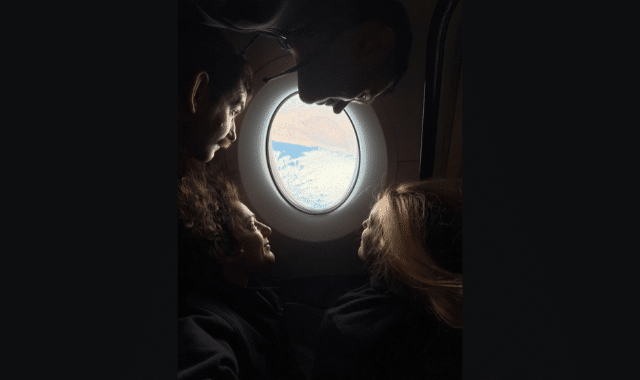
After nearly eight months aboard the International Space Station, NASA’s SpaceX Crew-12 is packing for the trip home, carrying results from experiments that turn the absence of gravity into a laboratory advantage.
Commander Jessica Meir and pilot Jack Hathaway of NASA, European Space Agency astronaut Sophie Adenot, and Roscosmos cosmonaut Andrey Fedyaev launched on February 13, 2026, and docked the following day. NASA and SpaceX are targeting an undocking no earlier than early October 7, with a Pacific Ocean splashdown planned for October 8, ending a mission of roughly 233 days.
One of the most watched efforts involved growing crystals of cancer-targeting compounds. On Earth, gravity distorts crystal formation and limits size and purity. In microgravity, the same molecules can form larger, more ordered structures that give pharmaceutical researchers clearer maps of how drugs bind to their targets. Crew members supported hardware that let these crystals develop under conditions impossible to sustain for long periods in a ground lab.
Bone research took a similarly practical turn. Microgravity accelerates bone loss, offering a compressed timeline to test countermeasures. Adenot worked with small containers holding scaffolds made from wood that mimic the porous structure of real bone and encourage new cell growth. The goal is to see whether these lightweight, biocompatible materials can support regeneration when mechanical loading is nearly absent—an insight relevant both to astronauts on long missions and to patients with osteoporosis or complex fractures on Earth.
A third line of work focused on antibiotic-resistant bacteria. Closed environments such as spacecraft favor hardy microbes that survive starvation, disinfection, and standard drugs. Hathaway and colleagues used onboard sequencing tools to examine how these organisms adapt in orbit. The data are intended to help design better monitoring and countermeasures for future exploration vehicles while also feeding into broader efforts against resistance in hospitals.
The crew also contributed to other investigations, including ultracold atom studies in the Cold Atom Lab that support quantum technologies, tests of colloidal soft materials, stem-cell expansion, on-demand production of intravenous fluids, and metal 3D printing. Together the portfolio illustrates the station’s dual role: a platform that improves life on Earth and a proving ground for the health systems needed on longer voyages.
With the change-of-command ceremony already completed and Crew-13 settled aboard, the four departing astronauts are finishing final packing and system handovers. Their return will close one chapter of station science, but the crystals, scaffolds, and genetic sequences they leave behind are expected to keep generating results long after splashdown.