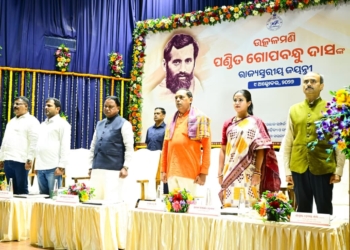
In a fresh escalation of a long-simmering dispute, Puri’s titular king and chairman of the Shree Jagannath Temple Managing Committee, Gajapati Maharaja Dibyasingha Deb, has once again appealed to the International Society for Krishna Consciousness (ISKCON) to strictly follow the scriptural dates for Rath Yatra and Snana Yatra observed at the ancient Jagannath Temple in Odisha.
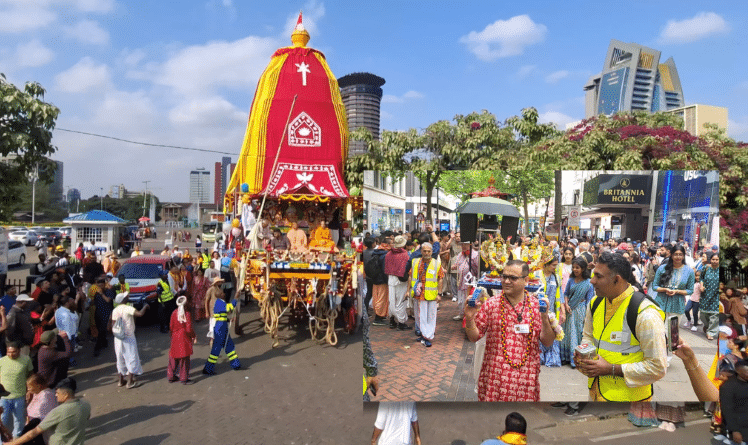
The appeal, communicated to ISKCON’s Governing Body Commission, comes amid reports that ISKCON has organised “Adinia” (untimely or off-tithi) Rath Yatras in at least 11 international locations across Canada, the United States, Europe, England, and Africa. Additionally, an early Snana Yatra was reportedly held in Australia on July 4–5 — weeks before the traditional Puri schedule.
The Traditional Calendar vs Global Reality
According to Hindu scriptures, particularly references in the Skanda Purana, the Rath Yatra in Puri is observed on Ashadha Shukla Dwitiya. For 2026, this sacred tithi falls on July 16. Snana Yatra, the ceremonial bathing of the deities, takes place on Jyeshtha Purnima, typically in late June.
Devotees and traditionalists argue that these dates are not arbitrary but carry deep spiritual significance. Altering them, they say, compromises the sanctity of one of Hinduism’s most revered festivals and creates confusion among the global community of Jagannath premis (devotees).“Changing the dates compromises the sanctity of one of Hinduism’s most revered festivals,” Gajapati Maharaja has emphasised in his communications. He has repeatedly stressed that the Jagannath tradition should remain uniform worldwide, as observed for centuries at the Puri temple.
Global Celebrations and Rising Anger
Social media and Odia diaspora groups have been abuzz with criticism following recent ISKCON events. Reports highlight processions held in places like New York (including a 50th anniversary celebration on June 13) and Dresden, Germany, where some events used palkis (palanquins) along public roads instead of traditional massive chariots.
Odia devotees and religious scholars have expressed deep emotional hurt, labelling these “Adinia Rath Yatras” as a dilution of centuries-old culture. Some have accused the events of prioritising convenience and publicity over scriptural adherence. Heated online exchanges have included strong language from both sides, with critics calling for greater respect toward Puri’s traditions and ISKCON defenders pointing to the challenges of organising large public events overseas.
The Practical Side: ISKCON’s Perspective
ISKCON maintains that organising Rath Yatras abroad involves significant practical hurdles. Securing permits for street processions, managing crowds, road closures, and aligning with local weekend schedules or civic regulations often makes strict adherence to lunar tithis difficult across different time zones and countries.
The organisation has stated that these global celebrations are meant to spread devotion to Lord Jagannath and do not aim to replace or diminish the significance of the original event in Puri. Notably, ISKCON has reportedly agreed to observe Snana Yatra on the prescribed scriptural date across its temples, though differences persist regarding Rath Yatra timings.
A Long-Running Debate
This is not a new conflict. Gajapati Maharaja and the Shree Jagannath Temple Administration (SJTA) have written multiple letters over the years, including appeals to the highest levels of Indian leadership. Temple officials argue that every festival associated with Lord Jagannath carries its own sanctity and must follow established traditions to preserve the culture’s integrity.
Devotees worldwide remain deeply passionate. For many Odias and Jagannath followers, the Puri calendar represents not just dates on a calendar but a living connection to ancient rituals, the emotions of millions who gather in Puri, and the unbroken lineage of devotion.
What Lies Ahead? As the traditional Puri Rath Yatra of 2026 approaches on July 16, the debate continues. Both sides express commitment to Lord Jagannath — one emphasising unwavering scriptural fidelity and cultural preservation, the other highlighting the need for practical adaptation to spread the message of devotion globally.
Whether dialogue will lead to greater alignment or the divide will persist remains to be seen. For now, the call from Puri’s royal custodian echoes loudly: respect the tithi, honor the tradition, and keep the sanctity of Jagannath culture intact for generations to come.