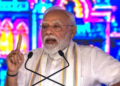
India firmly defended its record on religious freedom and press freedom during Prime Minister Narendra Modi’s visit to the Netherlands after questions were raised by a Dutch journalist regarding minority rights and media freedom in India.
The exchange took place in The Hague after delegation-level talks between PM Modi and Dutch Prime Minister Rob Jetten, where both countries elevated bilateral ties to a strategic partnership and signed 17 agreements across key sectors.
India and Netherlands Elevate Ties to Strategic Partnership
During the high-level meeting, India and the Netherlands signed agreements covering:
- Defence cooperation
- Semiconductors
- Critical minerals
- Green transition
- Emerging technologies
- Supply chain resilience
- Innovation and trade
The two countries also discussed expanding collaboration in artificial intelligence, startups, climate action and advanced manufacturing.
The visit is being seen as a major step toward strengthening India’s economic and strategic engagement with Europe.
India Responds to Minority Rights Question
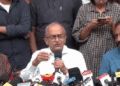
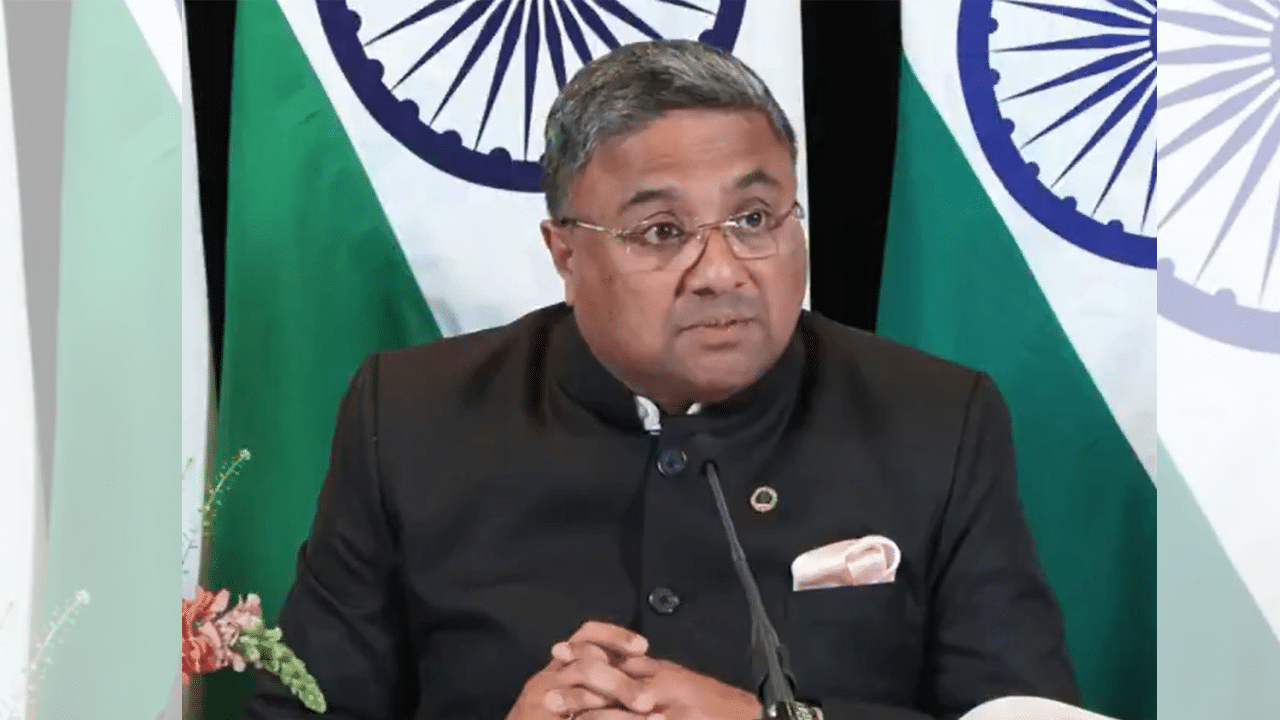
The controversy began when a Dutch journalist asked India’s Ministry of External Affairs secretary (west) Sibi George about reported concerns regarding press freedom and the rights of minorities in India, including Muslims and smaller religious communities.
Responding strongly, George said the question reflected a “lack of understanding”.
“We face these kinds of questions basically because of the lack of understanding of the person who asked the question,” he said.
India Highlights Religious Diversity
George defended India’s record on pluralism by pointing to the country’s long history of religious coexistence.
He said India is the birthplace of four major religions:
- Hinduism
- Buddhism
- Jainism
- Sikhism
He also noted that several other world religions flourished in India for centuries, including Judaism, Christianity and Islam.
“No other country in the world has given birth to four major religions,” he said.
Diplomat Cites Minority Population Growth
On the issue of minority rights, George cited demographic data to argue that minorities in India continue to grow in number.
“When we became independent, the minority population in India was 11 per cent. Now it is more than 20 per cent. Name a country where the population of minorities has gone up,” he said.
India Defends Press Freedom
The Indian diplomat also rejected concerns over press freedom in the country.
“Everyone has freedom of expression and freedom of press in the country. That makes our democracy a very noisy democracy, and we are proud of that,” George said.
He further highlighted India’s democratic participation, noting that recent elections witnessed extremely high voter turnout.
George invited the journalist to visit India and experience the country firsthand.
“See for yourself how India lives, how thriving an economy it is, and what a vibrant democracy it is,” he added.
PM Modi’s Netherlands Visit Gains Strategic Importance
PM Modi’s Netherlands visit comes amid growing geopolitical uncertainty and global supply chain disruptions linked to conflicts in West Asia and rising energy concerns.
Both countries are now focusing on building trusted and resilient supply chains while deepening cooperation in technology, trade and innovation.
The India-Netherlands partnership is also expected to gain momentum following progress on the India-European Union Free Trade Agreement negotiations.