In the wake of the deadly missile attacks on merchant vessels in the Strait of Hormuz, the Centre has unveiled a comprehensive “Seafarer-First” initiative to safeguard Indian crew members operating in high-risk maritime zones across West Asia.
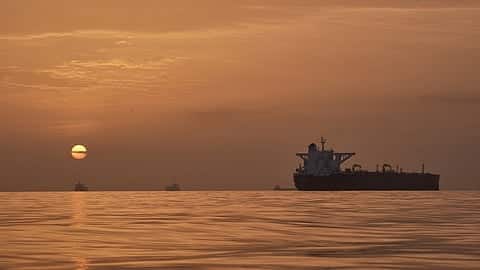
The announcement follows the death of Indian seafarer Rohan Kumar and injuries to several others after two Emirati oil tankers came under attack in the Strait of Hormuz earlier this week.
Union Minister for Ports, Shipping and Waterways Sarbananda Sonowal said the government will adopt a whole-of-government approach to monitor and protect every Indian seafarer, regardless of the vessel’s flag or ownership, operating in the Persian Gulf, Strait of Hormuz and Gulf of Oman.
Real-Time Monitoring of Indian Seafarers
As part of the initiative, the Directorate General of Shipping (DGS) has been directed to create a real-time operational dashboard to track every Indian crew member working in the conflict-affected maritime region.
The dashboard will provide live updates on vessel location, ownership details, cargo, crew strength, welfare status, voyage plans, next port of call, threat assessment and emergency support facilities.
The move comes amid growing security concerns after attacks on the oil tankers MT Al Bahiyah and MT Mombasa, which together had 30 Indian seafarers among their crew. One Indian crew member lost his life, while another sustained injuries aboard MT Al Bahiyah. Nine Indian nationals on MT Mombasa were also injured, including two who remain in critical condition.
Government Activates Emergency Response
During a high-level review meeting involving officials from the Ministry of External Affairs, Indian Navy, Directorate General of Shipping, and Indian missions in Iran and Oman, Sonowal ordered round-the-clock coordination among all agencies handling the crisis.
The minister directed authorities to:
- Establish real-time monitoring of Indian-operated vessels.
- Appoint a dedicated liaison officer for every affected Indian seafarer.
- Coordinate continuously with Indian diplomatic missions and maritime authorities.
- Ensure timely evacuation, medical assistance and repatriation whenever required.
Dedicated Support for Families
Under the new framework, each affected family will receive assistance through a designated liaison officer, who will coordinate medical updates, documentation, compensation claims, outstanding wages, welfare fund support and repatriation.
The government has also activated a 24×7 grievance support system for Indian seafarers and their families through toll-free helplines, WhatsApp and email.
India Condemns Attacks on Merchant Ships
Expressing condolences over the death of the Indian sailor, Sonowal strongly condemned the attacks on civilian merchant vessels.
He said India has formally objected to attacks that violate international maritime law and endanger innocent seafarers responsible for maintaining global supply chains.
The minister assured that the Centre would extend every possible support to the families of those killed or injured and continue working with international maritime bodies and foreign governments to ensure the safety of Indian seafarers.
Fresh Safety Protocols for Ships
The government has also instructed shipowners, vessel managers and recruitment agencies to ensure that Indian crew members are not compelled to sail through conflict zones without adequate information, security measures and professional risk assessments.
Every vessel transiting the region must conduct a fresh threat assessment in coordination with relevant maritime authorities before continuing its voyage.
Sonowal reiterated that the government’s response will remain “Seafarer-First”, with coordinated action across ministries and maritime agencies to protect Indian seafarers while ensuring the uninterrupted movement of global trade.