India had “hardly any choice” but to allow former Bangladesh prime minister Sheikh Hasina to enter the country after her government collapsed in August 2024, Indian High Commissioner to Bangladesh Dinesh Trivedi said at the Bay of Bengal Conversation 2026 in Dhaka.
Trivedi said India’s decision was based on the circumstances at the time and described it as a neighbour’s duty to respond to an unfolding crisis. He also clarified that Hasina was not brought to India by the Indian Air Force or the Indian Army.
‘It was our duty as a neighbour’
Speaking during a panel discussion in Dhaka on Saturday, Trivedi said Hasina was still Bangladesh’s prime minister when she left the country.
He said India was not prepared for the situation but had to respond to the circumstances surrounding her departure.
Trivedi said refusing landing permission could have resulted in a very different situation.
Hasina arrived in India on August 5, 2024, aboard a Bangladesh Air Force aircraft after weeks of protests culminated in the fall of her government. A Bangladesh Army-led security detail escorted her from her official residence as protesters moved towards the premises.
No timeline for Hasina’s return
On Bangladesh’s repeated requests for Hasina’s extradition, Trivedi said India could not provide a deadline for her return.
He said the matter was being handled through a structured legal process involving the courts.
“The process is on,” Trivedi said, adding that nobody could provide a timeframe while the legal proceedings were underway.
India’s Ministry of External Affairs has previously maintained that Bangladesh’s extradition request is being examined through established procedures.
Hasina’s presence remains a bilateral issue
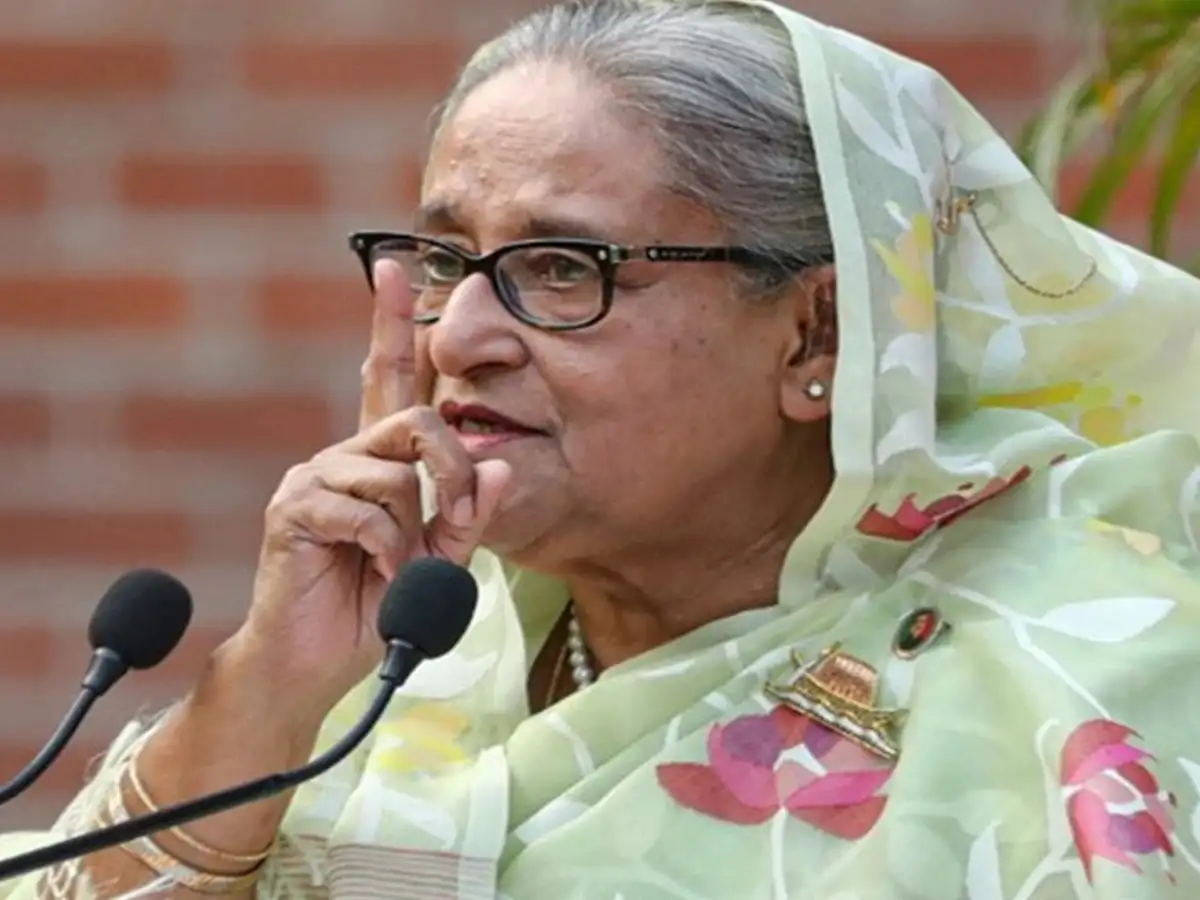
Hasina has been living in India since fleeing Bangladesh in August 2024. Her presence has remained a sensitive issue in India-Bangladesh relations, with Dhaka repeatedly seeking her extradition.
Her political statements from India have also added to tensions between the two countries.
Bangladesh’s current government has renewed its demand for her return, while New Delhi has maintained that the extradition request is under examination through the established legal process.
Trivedi stresses respect for Bangladesh’s sovereignty
Trivedi also said Bangladesh was a sovereign country and had the right to decide its own foreign-policy choices.
He stressed that India did not seek to interfere in Bangladesh’s internal affairs and said disagreements between neighbouring countries should be addressed through dialogue and consultation.
The remarks came at the fifth edition of the Bay of Bengal Conversation, organised by the Dhaka-based Centre for Governance Studies. Bangladesh Prime Minister Tarique Rahman delivered the opening remarks at the event but was not present during Trivedi’s session.
The envoy’s comments come as New Delhi and Dhaka continue to navigate the extradition issue and broader efforts to stabilise bilateral ties.