
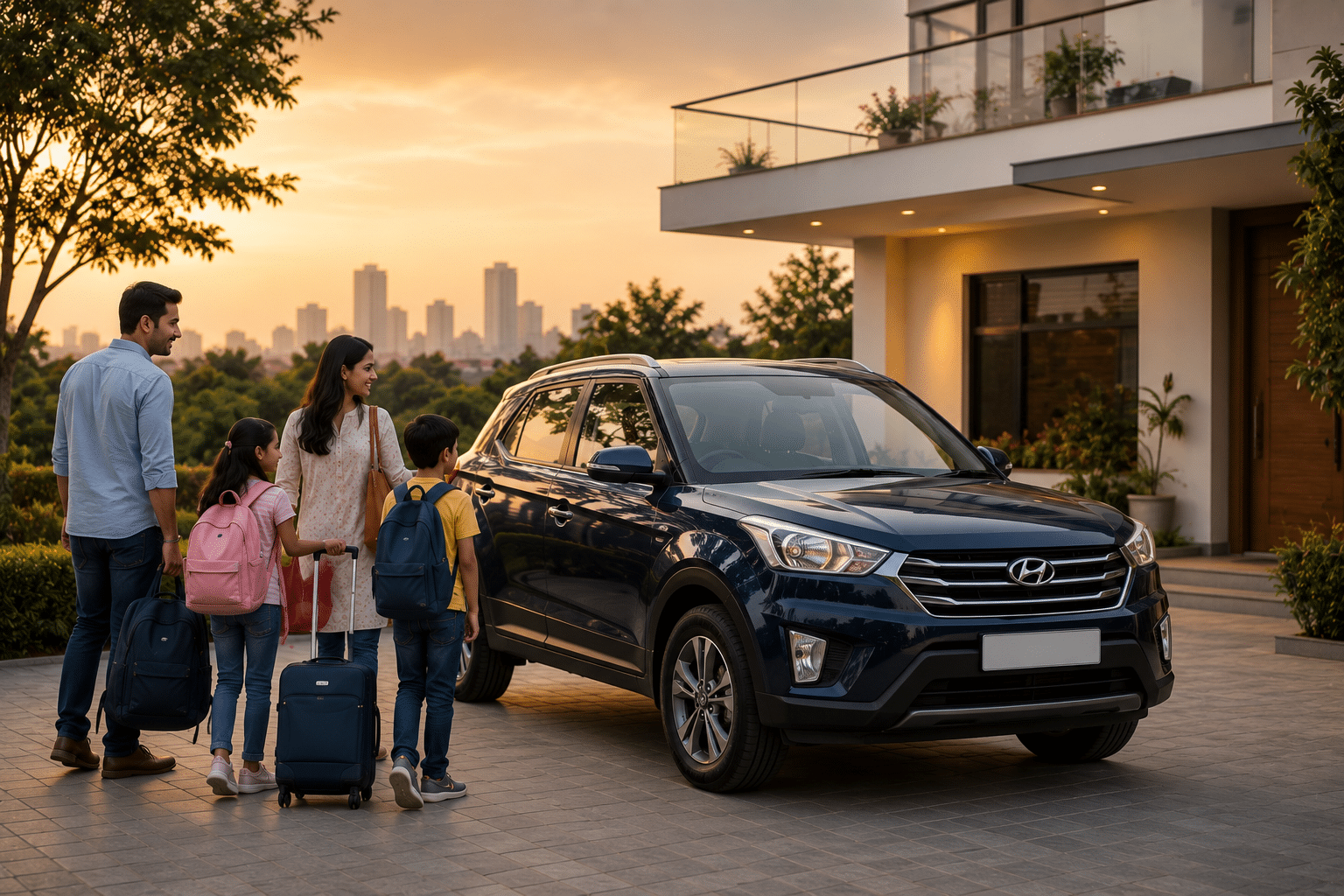
Hyundai didn’t stumble into Indian households by accident. The South Korean carmaker earned its place through calculated moves that most competitors either ignored or completely botched.
Understanding how this happened matters, especially for anyone shopping for a family car today, whether new or through the thriving 2nd hand Alcazar market that keeps growing year after year.
Reading the Indian family like a brief
Most automakers entering India in the late 1990s assumed price was everything. Wrong call. Hyundai noticed something else: Indian families wanted cars that looked modern, not just cars that were cheap.
The Santro launched in 1998 with a tall-boy design that gave rear passengers genuine headroom – sounds minor until you’ve got three adults sharing the back seat on a weekend trip to the in-laws.
Suddenly, everyone gets it.
That extra two inches of roof height matters more than the marketing department’s PowerPoint slides ever captured. The pattern repeated with every generation, because Hyundai invested heavily in design studios that studied Indian preferences separately from global ones – dashboard layouts, boot space, second-row comfort, even bottle holder placement got tweaked for how Indian families actually use cars.
Not glamorous work. But it built loyalty that competitors spent decades trying to replicate.
Here’s what most people miss: good design alone doesn’t explain the loyalty. Hyundai paired it with features that trickled down from premium segments faster than rivals managed. Rear AC vents, touchscreen infotainment, and automatic climate control showed up in mid-variants, while other brands reserved them for top trims.
For a family comparing two similarly priced hatchbacks, that visible feature gap made the decision easy. For those looking for a more premium used car, a 2nd hand Alcazar can fit the bill perfectly, offering great value for larger families.
The after-sales machine that quietly won trust
A car purchase is one event. Servicing is a long relationship.
Hyundai understood this distinction earlier than most, expanding its service network aggressively into tier-two and tier-three cities during the 2000s – often reaching towns where competing brands had zero presence. Some buyers pick a brand for the showroom experience. But family buyers – the ones running a car for seven or eight years – pick based on whether they can get a doorstep oil change in Ambala or a clutch plate in Salem without shipping parts from Chennai.
That’s the real test.
Hyundai’s parts availability and service turnaround times became a competitive edge through warehouse logistics and franchisee training. The part nobody tells you is how this service backbone also feeds the pre-owned market. A car with easy, affordable maintenance holds its value better.
Buyers hunting for used Hyundai cars in India benefit directly from this ecosystem, because a well-serviced Hyundai at five years old often has lower ownership costs than a newer car from a brand with thinner service coverage.
Filling gaps before families knew they existed
Hyundai’s product strategy followed a pattern of creating segments rather than merely entering them. The Creta arrived when compact SUVs were barely a category. The Venue carved out sub-compact SUV territory. The Alcazar offered a three-row option for families who needed occasional six or seven-seat capacity but didn’t want a full-size MPV.
Each launch targeted a specific family life stage – a young couple buys a Venue, first child arrives, and they move to a Creta, parents visit frequently, so the Alcazar handles the extra seats. Sounds logical on paper. Rarely works that way in practice, because families rarely follow neat upgrade paths.
But having the options available within one brand ecosystem keeps buyers inside the fold when they do upgrade.
Engineering choices matter too. Hyundai offered both petrol and diesel across most models, then added turbo-petrol options as fuel preferences shifted. Automatic transmissions, including DCTs and torque converters, appeared across price points.
A family that wanted a diesel automatic Creta in 2018 had exactly one mainstream option available in that configuration.
That wasn’t a coincidence.
Why reputation compounds over time
Don’t assume brand loyalty is permanent. It’s not. But reputation has a compounding quality that works in Hyundai’s favour – every cousin who had a trouble-free Verna, every colleague whose i20 crossed two lakh kilometres, every neighbour whose Creta resale value surprised them, stack up in family WhatsApp groups more effectively than any television advertisement.
The real question: can this momentum sustain itself as the market shifts toward electric and connected vehicles? Hyundai’s early moves with the Ioniq 5 suggest they’re applying the same playbook. Arrive early. Offer more features than expected. Build service infrastructure before demand peaks.
Hyundai has faced criticism over pricing creep in recent years, and some models have drawn questions about safety ratings. But when families evaluate the full package – design, features, service access, and long-term value – the accumulated trust built over two decades of consistent execution is difficult for competitors to match quickly.