

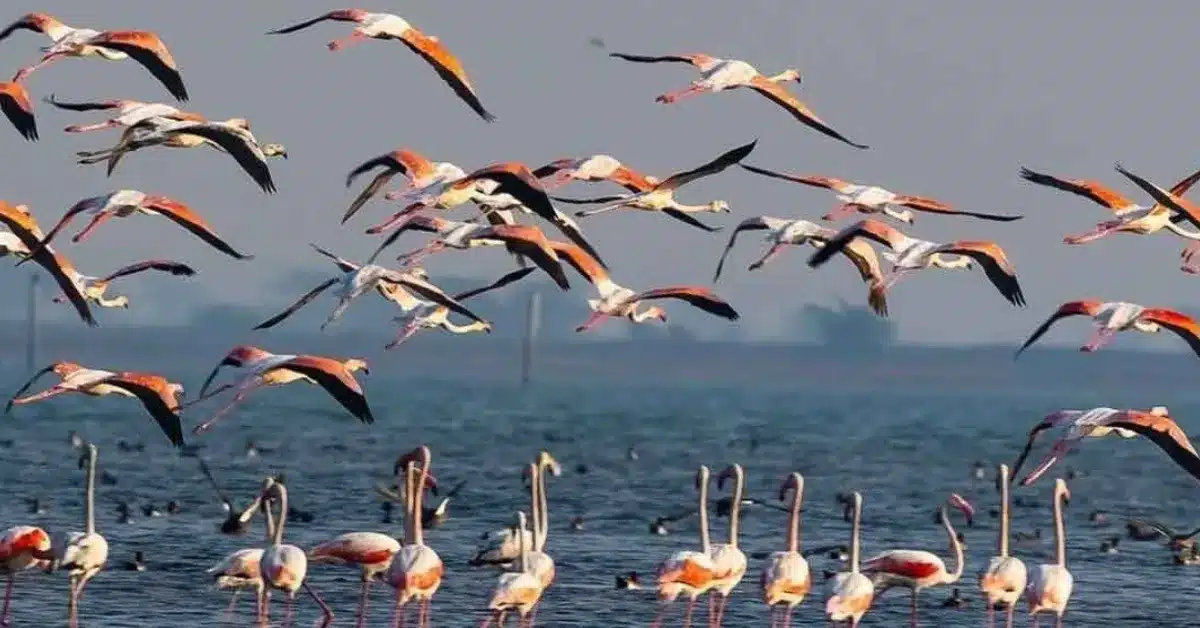
As winter sets in, Chilika Lake has once again transformed into a thriving sanctuary for migratory birds, attracting thousands of winged visitors from across the globe. Asia’s largest brackish water lagoon is witnessing the arrival of lakhs of birds belonging to more than 50 species, adding to its scenic beauty and drawing a surge of tourists.
Birds Arrive From Across Continents
Chilika’s vast wetlands now echo with the calls of birds flying thousands of kilometres from regions such as Malaysia, Mongolia, Kazakhstan, Russia, France, and the Netherlands. These migratory species choose the lagoon for its abundant food resources and favourable habitat conditions, making it a preferred winter refuge year after year.
With the seasonal arrival underway, visitor numbers at Nalabana, Mangalajodi, Satapada, and other bird-rich zones have risen steadily. Tourists are opting for guided birding tours and boat rides, while local boat operators and bird guides are preparing for what is expected to be a busy season.
“I had some bad luck with wildlife sightings earlier, but Chilika surprised me. I saw so many kingfishers,” a foreign tourist shared, expressing delight at the thriving avian activity.
Sanskruti, a frequent visitor, echoed the excitement: “This is my third visit, and I saw a wide variety of birds in just an hour. Chilika is a must-visit in winter.”
Chilika Remains a Prime Winter Destination
Despite global climate pressures, Chilika continues to attract large numbers of migratory birds each year. Officials report that nearly 50 species have already arrived in sizeable groups, and the number is expected to rise as the season progresses. More than 200 species visit the lake annually, making it one of India’s most important wetlands for bird diversity.
“The number of avian guests is increasing. Birds from around 50 species have already arrived. We also expect strong tourist footfall this year,” said Jay Behera, Secretary of the Mahaveer Bird Security Committee.
Protection and Monitoring Intensified
To safeguard the visiting birds and manage tourist activity, authorities have strengthened protection measures across the lake. Around 21 protection camps have been established at strategic locations including Tangi, Balugaon, Rambha, and Satapada.
More than 150 forest personnel have been deployed to monitor bird congregations, prevent poaching, and ensure responsible tourism practices.
“After a fortnightly assessment, we found that nearly 100 bird species have arrived. We are hopeful that both bird numbers and tourist arrivals will increase,” said Amlan Nayak, DFO, Chilika Wildlife Division.
A Prime Destination for Nature Enthusiasts
With its vast biodiversity, breathtaking landscapes, and thriving winter bird population, Chilika Lake continues to offer a unique experience for birdwatchers, photographers, and nature lovers. Its seasonal transformation reaffirms its position as one of India’s premier eco-tourism destinations.