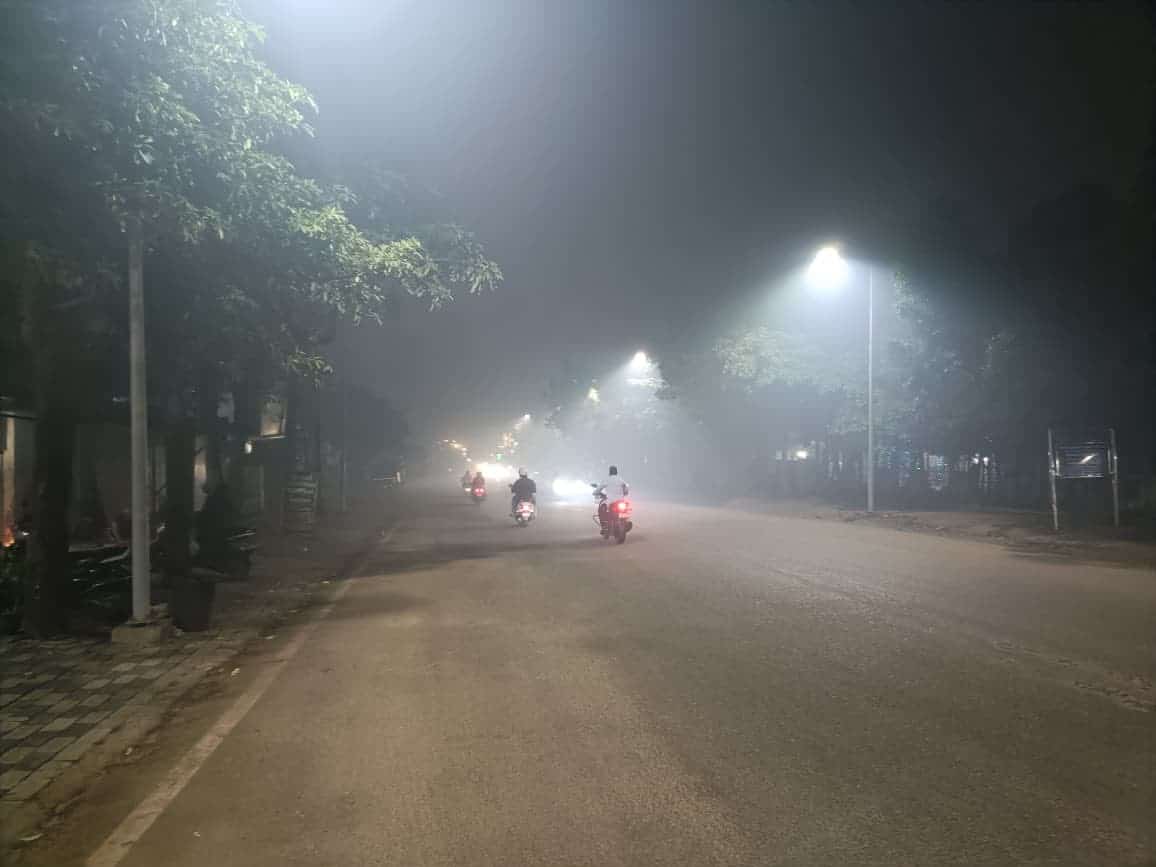
On the night of Diwali 2026 (November 8), Bhubaneswar’s air quality plunged into the hazardous zone as high-intensity firecrackers filled the skies with smoke. Real-time readings showed the Air Quality Index (AQI, US scale) surging past 1,000, with peaks reported near 1,254 and higher in some local trackers—far above the city’s normal levels that typically stay below 250 outside festival periods. PM2.5 concentrations climbed to around 704 μg/m³ and PM10 to 844 μg/m³, creating a thick smoky haze that reduced visibility on roads and left the city under a blanket of pollution.
Just hours earlier, pre-festival readings hovered in the moderate to unhealthy range (roughly 100–200). By evening, as celebrations peaked after the restricted 7–9 pm window, the index skyrocketed. Temperature lingered near 22°C with humidity around 65% and light winds, trapping the particulate matter close to the ground.
Normal vs Diwali: A Stark Contrast
Under ordinary conditions, Bhubaneswar’s AQI frequently remains in the satisfactory to moderate category (often under 150–200, and commonly below 250 as a baseline for much of the year outside winter peaks). Winter months bring some natural rise due to temperature inversions, vehicular emissions, construction dust, and occasional waste burning, but nothing matches the sharp, overnight spikes triggered by widespread bursting of traditional high-intensity firecrackers.

Diwali turns this pattern upside down. The sudden release of fine particulate matter, sulphur compounds, and other pollutants from fireworks overwhelms the local atmosphere, especially when wind speeds are low. Health experts note that such levels pose serious risks—respiratory irritation, aggravated asthma, cardiovascular strain—particularly for children, the elderly, and those with pre-existing conditions. Residents have reported burning eyes, coughing, and difficulty breathing amid the haze.
Five-Year Trend: Recurring Spikes, Worsening Peaks
Data from monitoring stations and air quality trackers over the past five years reveal a clear pattern: Diwali consistently drives sharp deteriorations, even as authorities promote green crackers and time restrictions.
- 2022: Post-Diwali air quality stayed largely in the moderate category. PM10 and PM2.5 roughly doubled compared with pre-festival levels at several stations, but the overall index did not enter severe territory. Enforcement of timing windows helped limit the damage.
- 2023: One of the more severe recent years. Official averages pushed into the very poor range (around 380 city-wide), with some stations recording higher. PM2.5 peaked near 500 μg/m³ in places—many times the WHO safe guideline. Thick smog lingered into the next day, and the city briefly recorded worse readings than parts of Delhi.
- 2024: AQI rose from pre-festival moderate levels (around 70) into the poor category (135–228 at various stations the following morning). Localities saw elevated PM2.5, reduced visibility, and persistent haze despite some rain helping later recovery.
- 2025: Levels climbed significantly. Official post-Diwali readings reached 297–354 (very poor) in key areas, with PM2.5 nearly tripling in places. Independent trackers captured even higher short-term spikes (above 600 in some neighbourhoods during peak night hours). Visibility dropped dramatically in several localities.
- 2026 (current): The most extreme recorded on real-time platforms so far. From daytime values in the 150–250 range, the index climbed rapidly after 7 pm—passing 300, then 600, 800, and beyond 1,000 by late evening. The city ranked among the most polluted locations globally in live updates, with smoky haze dominating the night sky.
November averages in recent years have typically ranged from about 140 to over 190, reflecting the seasonal uptick, but Diwali nights produce the sharpest single-day jumps. Across these years, the combination of fireworks, cooler nights, and limited wind has repeatedly turned a festive evening into a pollution event lasting into the following morning.
Local Updates and Broader Concerns
Reports circulating in Odia-language coverage highlight the familiar scenes: dense smoke reducing road visibility, residents complaining of breathing discomfort, and calls for stricter adherence to green-cracker norms and the two-hour bursting window. Authorities had issued advisories urging certified low-emission crackers and compliance with Supreme Court guidelines, yet widespread use of conventional high-intensity fireworks appears to have driven the surge once again. Similar patterns of haze and elevated readings were noted in nearby areas as well.
While firecrackers remain the most visible short-term trigger, longer-term contributors—growing vehicle numbers, construction activity, and seasonal weather—keep baseline pollution higher than ideal. The 2026 episode underscores how quickly conditions can deteriorate when celebrations ignore environmental limits.
Residents are advised to limit outdoor exposure, especially for vulnerable groups, use N95 masks if necessary, and keep windows closed during peak haze hours. As the festival lights fade, the hope is for clearer skies—and stronger collective restraint next year—so Bhubaneswar can reclaim the cleaner air that once defined the Temple City.