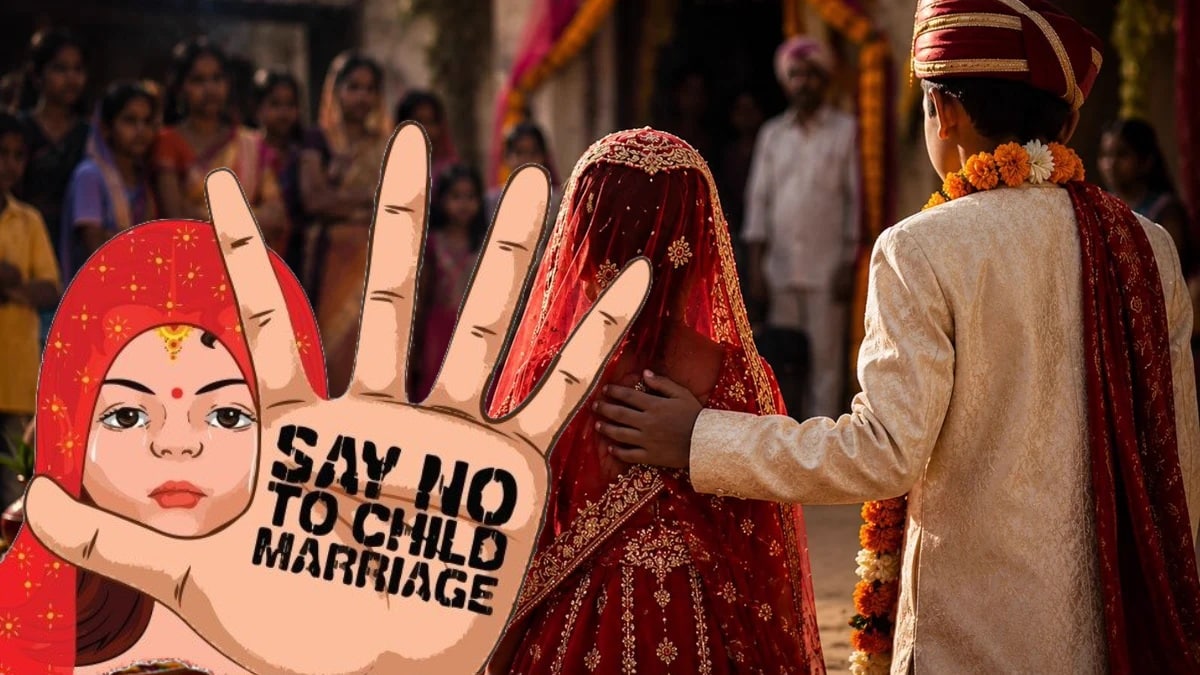
Assam’s sustained campaign against child marriage has received fresh global attention after the United Nations General Assembly designated November 27 as the International Day for the Elimination of Child, Early and Forced Marriage.
The UN General Assembly adopted the resolution on September 4, creating a dedicated international observance aimed at raising awareness and encouraging stronger action against child, early and forced marriage.
Assam Chief Minister Himanta Biswa Sarma welcomed the decision, highlighting the state’s efforts to tackle child marriage through enforcement, awareness and measures aimed at keeping girls in education.
Assam’s crackdown on child marriage
Assam has emerged as one of the states that has pursued large-scale enforcement against child marriage. According to figures cited by the Assam government, 12,196 cases were registered over the past five years, while more than 11,000 people were arrested.
The state launched intensified enforcement in 2023 under the Prohibition of Child Marriage Act. Cases involving minors can also attract provisions of the POCSO Act, depending on the circumstances.
Sarma has repeatedly set 2026 as the target for eliminating child marriage in Assam, with the government combining legal action with programmes aimed at improving girls’ access to education.
Reported decline in child marriages
A separate study covering 1,132 villages across 20 districts reported an 81% decline in reported child marriages in Assam.
According to the study, reported cases fell from 3,225 in 2021-22 to 627 in 2023-24.
The decline has been cited alongside other indicators, including increased enrolment of girls in higher education and a reduction in teenage pregnancies.
Education as a tool against early marriage
Assam has also sought to address factors that can contribute to early marriage by encouraging girls to remain in education.
The Mukhya Mantri Nijut Moina scheme provides financial assistance to girl students pursuing higher secondary, undergraduate and postgraduate education. The state government has described the initiative as part of its broader effort to discourage early marriage and support girls’ education.
The approach combines enforcement with social and educational interventions, rather than relying solely on arrests and criminal proceedings.
Why the UN decision matters
The designation of November 27 gives the issue a permanent place on the international calendar and is intended to encourage greater awareness and action against child, early and forced marriage.
For Assam, the move places its years-long enforcement campaign in a wider global context. The state’s experience also highlights the importance of combining legal measures with education and social support to address the causes of early marriage.
The UN observance is therefore expected to provide a broader platform for governments and organisations working to protect children and promote education and opportunity for girls.