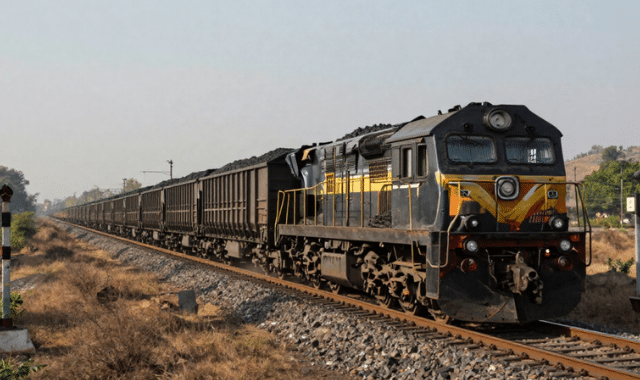
A six-kilometre stretch of single track in Odisha’s iron-ore heartland is about to become a lot less of a bottleneck. Indian Railways has approved the Barbil–Bolanikhadan doubling project on South Eastern Railway at a completion cost of Rs 122 crore, a compact but strategically timed investment aimed at keeping mineral traffic moving as mines, steel plants and ports scale up.
The announcement places the work firmly inside the Railways’ Energy, Mineral and Cement Corridor — the network being built to carry coal, iron ore and cement more reliably from producing districts to plants and ports.
Why this short section matters
Barbil, in Keonjhar district, sits in one of India’s richest iron-ore belts. The Barbil–Bolanikhadan section is a single-line link that today handles about 9 million tonnes per annum (MTPA). Roughly six loaded rakes leave the stretch every day, carrying high-grade ore and pellets from SAIL’s Bolani mines and private sidings of Rungta and Khatau Narbheram towards steel plants and ports.
On paper, six kilometres looks modest. In operations, a single-line pinch point can hold up entire corridors. Freight trains wait for a path, loaded rakes sit longer than they should, and any surge in mine output quickly turns into congestion. Railway planners have already seen the warning signs: traffic on the section has been rising, and SAIL has plans to lift loading from current levels towards a much higher throughput. Private sidings have also added new originating traffic.
The approved doubling is designed to get ahead of that curve. After commissioning, the stretch is expected to take an additional 8.9 MTPA of freight. That extra capacity is not a distant forecast tacked on for effect; it is the operational case for spending Rs 122 crore now rather than waiting until the line is already saturated.
Built for the next wave of ore, not the last one
The ministry’s note is unusually explicit about timing. The work is being taken up *ahead of* the full realisation of SAIL’s mine expansion and of port and plant capacity additions in the region. The logic is straightforward: if the rail line remains single-track until the extra ore is already at the loading point, the corridor will hit a wall just when industry needs it most.
Doubling will also cut detention of freight trains. On mineral routes, time lost at a bottleneck is not just a timetable problem. It is idle rakes, slower turnaround, higher logistics costs for steelmakers, and pressure to move more cargo by road. A second line on this short section is meant to restore fluidity so that originating traffic from Bolani and the private sidings can leave without waiting for an opposing path.
The traffic mix is almost entirely high-grade ore and pellets. That makes the section more than a local feeder. It is a first-mile link in the chain that feeds blast furnaces and export terminals. Strengthening it is, in the Railways’ own framing, a way to keep the designated mineral corridor from becoming the constraint on mining and steel growth in eastern India.
Part of a wider mineral-corridor push
South Eastern Railway has been steadily adding capacity across the Odisha–Jharkhand iron and steel belt — third and fourth lines, flyovers, new connectivity to unserved mines, and doubling of other congested sections. Barbil–Bolanikhadan is a small piece of that map, but it sits at a sensitive junction: between captive SAIL production, private merchant ore, and the routes that carry both inland to plants and outward to ports.
The Energy, Mineral and Cement Corridor is the policy wrapper for such works. The idea is not one mega-project but a series of targeted capacity additions so that coal, ore and cement do not compete for the same scarce paths. Approving this 6-km doubling is consistent with that approach: spend where the constraint is sharpest, and do it before the next wave of mine and plant expansion arrives.
For Odisha, the project is also a signal that the rail network in Keonjhar’s mining circle is being treated as industrial infrastructure, not just a branch line. Smooth evacuation from Bolani and neighbouring sidings supports steel plants that depend on this ore and, over time, the broader industrial and port build-out the state is pursuing.
What comes next
Approval of the completion cost is the green light, not the last mile. Construction, traffic blocks, and commissioning will decide how quickly the promised 8.9 MTPA actually materialises. What the sanction does establish is priority. Indian Railways has chosen to remove a known pinch point on a live mineral route rather than wait for congestion to become a crisis.
Six kilometres will not transform the eastern freight map by itself. But on a corridor that already moves about 9 MTPA of high-grade iron ore, a second track is the difference between a line that can absorb growth and one that starts to ration it. That is the bet behind the Rs 122 crore outlay — and the reason a short doubling in Barbil–Bolanikhadan is being treated as corridor-level news.