As the nine-day sojourn of the deities at Gundicha Temple draws to a close, the holy city of Puri is buzzing with devotion and excitement.
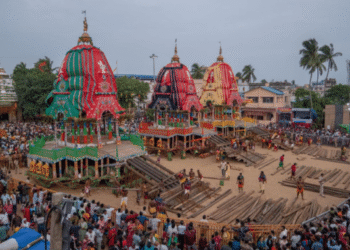
On Friday, the majestic chariots of Lord Jagannath, Lord Balabhadra, and Devi Subhadra will begin their return journey — the sacred Bahuda Yatra — carrying the Chaturdhamurti back to the Sri Mandir, their eternal abode on the Ratna Bedi.
The air is thick with bhakti as devotees await the divine homecoming that marks the emotional culmination of the world-famous Rath Yatra. While the return procession itself is a grand spectacle, one of the most awaited traditions along the Bada Danda is the unique offering at Mausi Maa Temple — the specially prepared Podapitha.
Divine Stop & Sweet Tradition
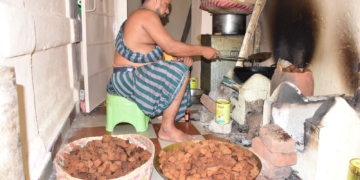
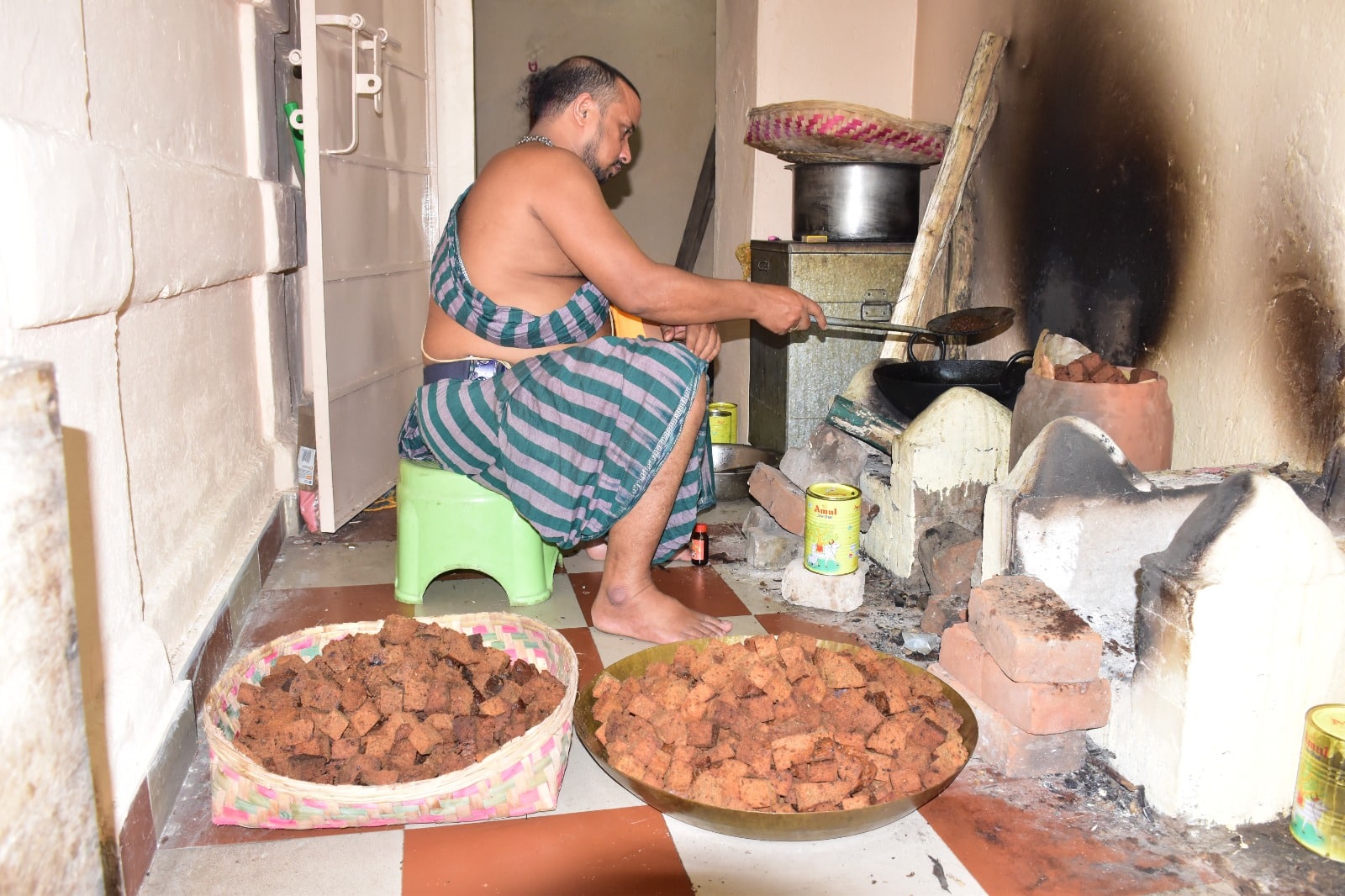
Following age-old rituals, the three chariots halt near Mausi Ma’s temple for a brief period. Here, the deities are offered the fragrant Podapitha lovingly prepared by the temple priests. Once offered, it turns into Mahaprasad and is later distributed among devotees — a cherished moment that blends faith, flavour, and tradition.
Priest Bishwanath Mishra, who oversees the preparation, explains that this Podapitha is no ordinary sweet. Despite its name, it is not baked directly over fire. Instead, it follows a meticulous, time-honoured process: the mixture is shaped into cakes and steamed slowly in a special bamboo steamer for nearly eight hours. After cooling, the pieces are gently fried in pure desi ghee, imparting a rich aroma that has already begun to enchant the entire Grand Road.
Ingredients of Devotion
The sacred recipe includes:
- Flour (atta)
- Fresh chhena (cottage cheese)
- Sugar
- Pistachios and almonds
- Cardamom (elaichi)
- Cloves (lavanga)
- Pure country ghee
Everything is blended with devotion and offered in three special containers to the sibling deities.
Devotees from across India have already started thronging the Bada Danda, eager to witness the Bahuda procession and receive a piece of this divine prasadam. The entire stretch is alive with anticipation, chants, and the unmistakable scent of ghee-roasted goodness.
This heartwarming tradition remains one of the most unique and endearing aspects of Shree Jagannath culture, drawing millions into a shared experience of faith and festivity.