

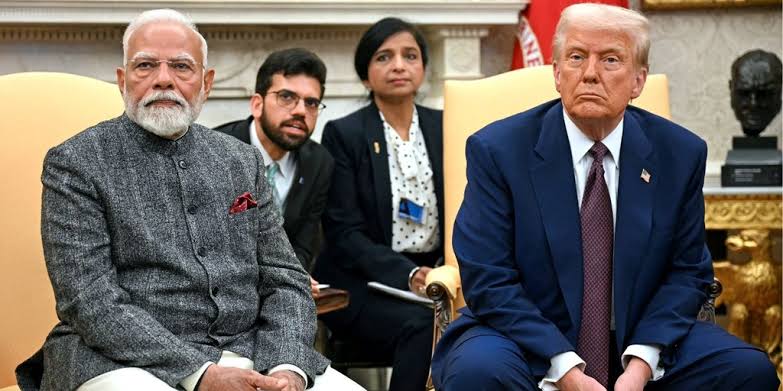
A new book has revealed a tense exchange between US President Donald Trump and Commerce Secretary Howard Lutnick over tariffs imposed by India on American goods, offering fresh insight into the trade disputes that shaped relations between Washington and New Delhi.
According to the book Regime Change: Inside the Imperial Presidency of Donald Trump, Trump repeatedly questioned official government figures on Indian tariffs and argued that the actual numbers were far higher than what his advisers presented.
Trump Rejected Official Tariff Figures
The book, authored by journalists Maggie Haberman and Jonathan Swan, claims Trump became frustrated during discussions about international trade barriers.
When officials presented tariff data from the Office of the United States Trade Representative (USTR), Trump reportedly dismissed the figures and insisted that India imposed much higher duties on American products.
The report states that Trump believed tariffs on some US goods entering India were as high as 175 percent or even more.
His disagreement reportedly led to a heated verbal exchange with Commerce Secretary Howard Lutnick, who attempted to explain the official numbers used by the administration.
India Long Viewed as High-Tariff Economy
For years, India has faced criticism from US policymakers over import duties on certain products.
According to a White House fact sheet released during bilateral trade discussions, India maintained some of the highest tariffs among major economies. The document highlighted average agricultural tariffs of around 37 percent and duties exceeding 100 percent on certain automobile imports.
Several American officials have previously argued that such trade barriers limited access for US exporters and created an uneven competitive environment.
Trade Tensions Escalated Under Trump
The disagreement described in the book reportedly occurred before Trump’s major tariff initiatives, often referred to as “Liberation Day” measures.
Trade tensions later intensified when the Trump administration imposed additional tariffs on Indian goods. The situation worsened after Washington criticized New Delhi’s continued purchase of Russian crude oil.
In August 2025, the United States announced an additional tariff increase on Indian imports, pushing total tariffs to some of the highest levels applied to a major trading partner.
The move triggered strong reactions from India and complicated ongoing trade negotiations between the two countries.
India and US Later Reached Trade Understanding
Despite the tensions, both countries continued negotiations aimed at strengthening economic ties.
In February 2026, India and the United States announced a framework for a bilateral trade agreement designed to reduce trade barriers and improve market access.
Under the proposed framework, tariff rates were expected to decline significantly. India also agreed to lower duties on several American products, including agricultural goods, processed foods, nuts, fruits, wine, and spirits.
The agreement was viewed as an important step toward stabilizing economic relations between two of the world’s largest democracies.
Trade Deal Discussions Continue
While the broad framework has been announced, discussions on implementation are still ongoing.
Recent meetings between US Trade Representative Jamieson Greer and India’s Commerce Minister Piyush Goyal focused on finalizing details of the agreement and ensuring smooth execution of tariff reductions.
The revelations in the new book provide a behind-the-scenes look at the strong views Trump held on international trade and his belief that existing tariff structures unfairly disadvantaged American businesses.
As India and the United States move forward with their trade partnership, the episode highlights how tariff disputes became one of the defining issues in the economic relationship between the two countries.