

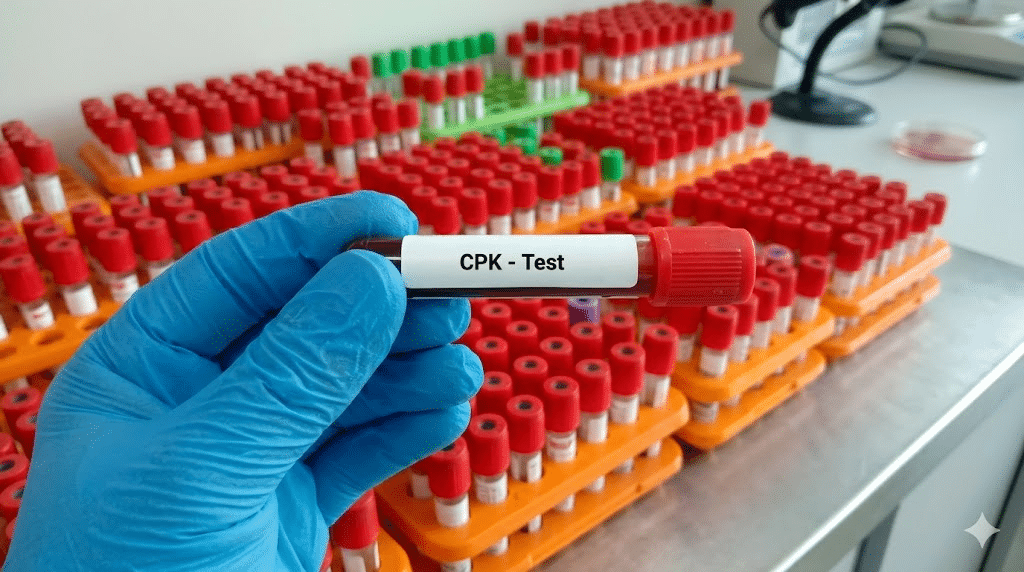
Doctors in emergency rooms across India rely on a combination of clinical assessment, ECG findings, and specific blood markers to confirm whether a heart attack is taking place. Among these blood markers, one enzyme test has been used for decades to detect heart muscle damage and continues to support cardiac diagnosis even today. The test CPK-MB measures a specific isoenzyme released when heart cells are injured, helping clinicians decide on treatment quickly. Understanding how this test works, when it is most useful, and what its results mean offers a valuable perspective on cardiac care.
What is CPK-MB?
Creatine phosphokinase (CPK), also known as creatine kinase, is an enzyme that helps muscle cells produce energy. It exists in three forms, each found in different tissues. CK-MM is mostly in skeletal muscles, CK-BB is concentrated in the brain, and CK-MB is found largely in heart muscle. When heart cells are damaged by reduced blood flow, cell membranes break down, and CK-MB leaks into the bloodstream. A blood sample then reveals an enzyme level higher than normal in circulation, providing biochemical evidence of cardiac injury.
How the Test Detects a Heart Attack
The test CPK-MB detects heart attacks based on a predictable time pattern in the bloodstream:
1. Early Rise
CK-MB levels begin to rise within four to six hours of heart muscle injury. This makes the test useful in patients arriving at the hospital several hours after symptoms started.
2. Peak Phase
The enzyme usually peaks at around 18 to 24 hours after the cardiac event. The peak size gives doctors a rough sense of the extent of muscle damage.
3. Return to Baseline
CK-MB usually returns to normal within 48 to 72 hours. Its faster clearance compared to troponin actually helps detect a second heart attack soon after the first.
This characteristic rise-and-fall pattern is what gives CPK-MB its diagnostic value, especially when serial samples are taken over a 12 to 24-hour window.
What to Expect During a CPK-MB Blood Test
The test is simple and requires minimal preparation, as the procedure usually involves:
Patients should mention any recent intense exercise, intramuscular injections, or surgeries, since these can affect total CPK and indirectly influence interpretation.
Reading the Results
Reference ranges differ between laboratories, but in general:
Doctors review CPK-MB results alongside the ECG, troponin levels, and clinical symptoms. A heart attack diagnosis is rarely made on the basis of a single test.
Where CPK-MB Fits in Cardiac Care
Troponin has become the primary biomarker for diagnosing acute myocardial infarction because of its greater specificity to cardiac muscle. However, CPK-MB still plays a role in several scenarios:
When used together with troponin and ECG, the test contributes to a clearer overall picture of cardiac status.
When the Test is Suggested
Doctors usually order a CK-MB test in the following situations:
However, the test should not be used as a routine screen in healthy individuals without symptoms or risk factors.
Why Accurate Diagnostics Matter
A heart attack diagnosis shapes urgent treatment decisions such as thrombolysis, angioplasty, or medical management. Reliable laboratory results are central to this process. Diagnostic accuracy depends on assay quality, sample handling, and timely reporting, and diagnostic centres such as Lupin Diagnostics offer cardiac biomarker testing. It includes CK-MB and troponin, across India through its National Accreditation Board for Testing and Calibration Laboratories (NABL) accredited labs, with free home sample collection available in major cities.
Conclusion
The CPK-MB test remains a valuable cardiac marker for confirming heart muscle injury and tracking recovery. While troponin has taken the lead in initial heart attack diagnosis, CK-MB still supports clinical decision-making in specific situations, such as detecting reinfarction and post-procedural injury. Anyone experiencing chest pain or related symptoms should seek medical attention immediately and discuss the appropriate cardiac evaluation with a qualified physician.