
India’s aviation regulator has mandated stringent Ebola screening protocols for passengers arriving from high-risk African nations, reflecting the WHO’s emergency declaration on the Bundibugyo strain outbreak.
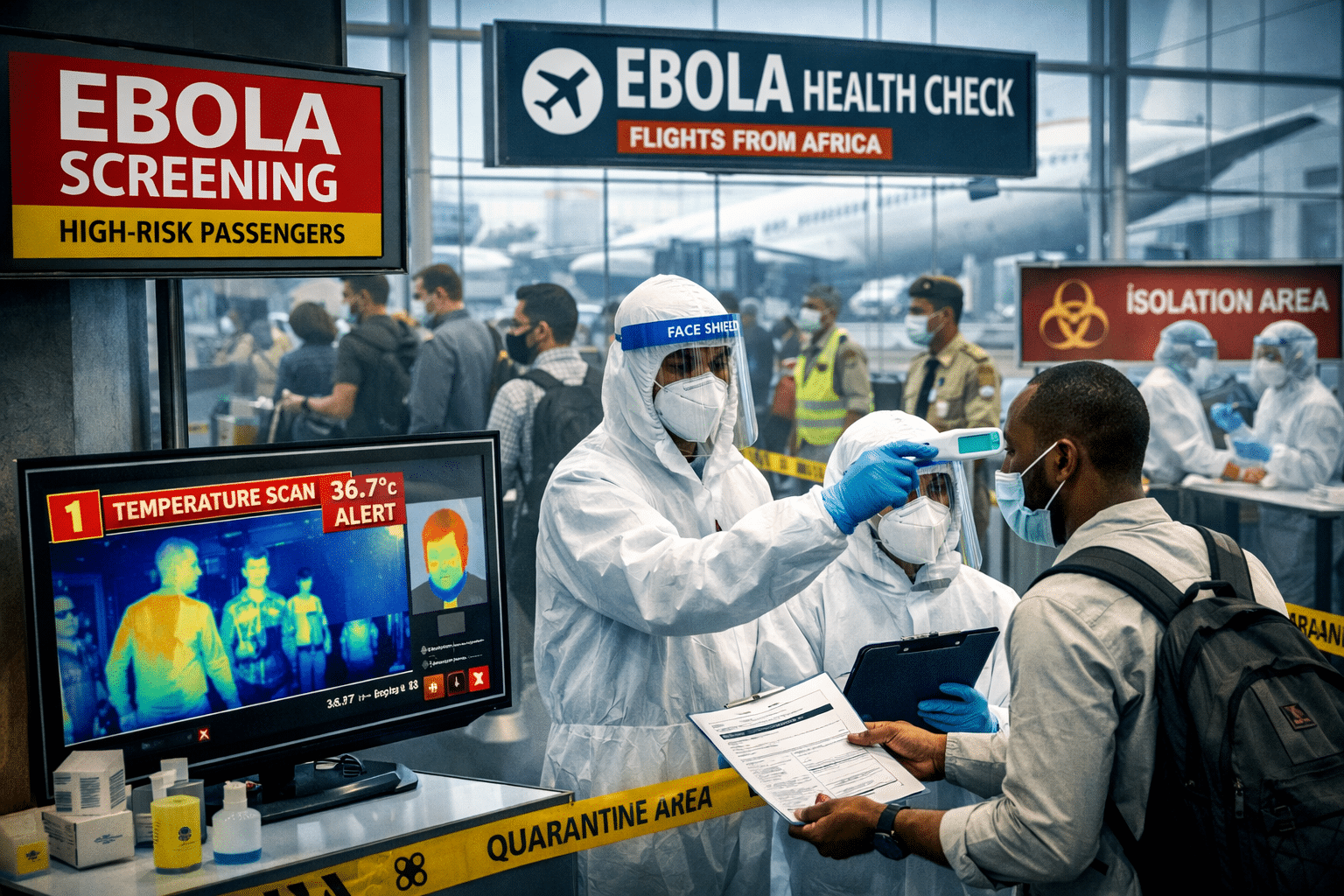
The Directorate General of Civil Aviation (DGCA) issued detailed SOPs requiring passengers from affected countries to submit self-declaration forms before de-boarding, undergo thermal screening, and listen to in-flight health announcements on symptom reporting. Airlines must isolate symptomatic passengers to the rear of the aircraft, keep surrounding rows vacant, designate separate lavatories, and alert air traffic control for special bay parking. Aircraft disinfection and protective gear for crew are also mandatory, mirroring pandemic-era containment strategies.
Gujarat has activated intensive screening at Ahmedabad airport during peak arrival hours, targeting passengers from Uganda, Congo, and South Sudan. The state designated 32 beds at Ahmedabad Civil Hospital, 10 at Surat Civil Hospital, and a 60-bed isolation ward at SVP Hospital. Officials emphasised that no Ebola cases exist in India, urging calm while ensuring readiness for suspected cases.
The WHO declared the Bundibugyo Ebola strain outbreak in Africa a Public Health Emergency of International Concern, citing high mortality and lack of a vaccine. India’s health ministry advised avoiding non-essential travel to affected regions and urged travellers with symptoms or exposure history to report before immigration clearance.
Union Health Minister J.P. Nadda reviewed preparedness with senior officials, directing strict screening at airports, seaports, and land borders. The Indian Council of Medical Research and the National Centre for Disease Control were tasked with constant readiness for tracking, testing, and surveillance. The upcoming India–Africa Forum Summit was postponed to prioritise public health safety.