India is on track to become the world’s second-largest solar market by 2026, overtaking major economies through record-breaking capacity additions and strong policy support.
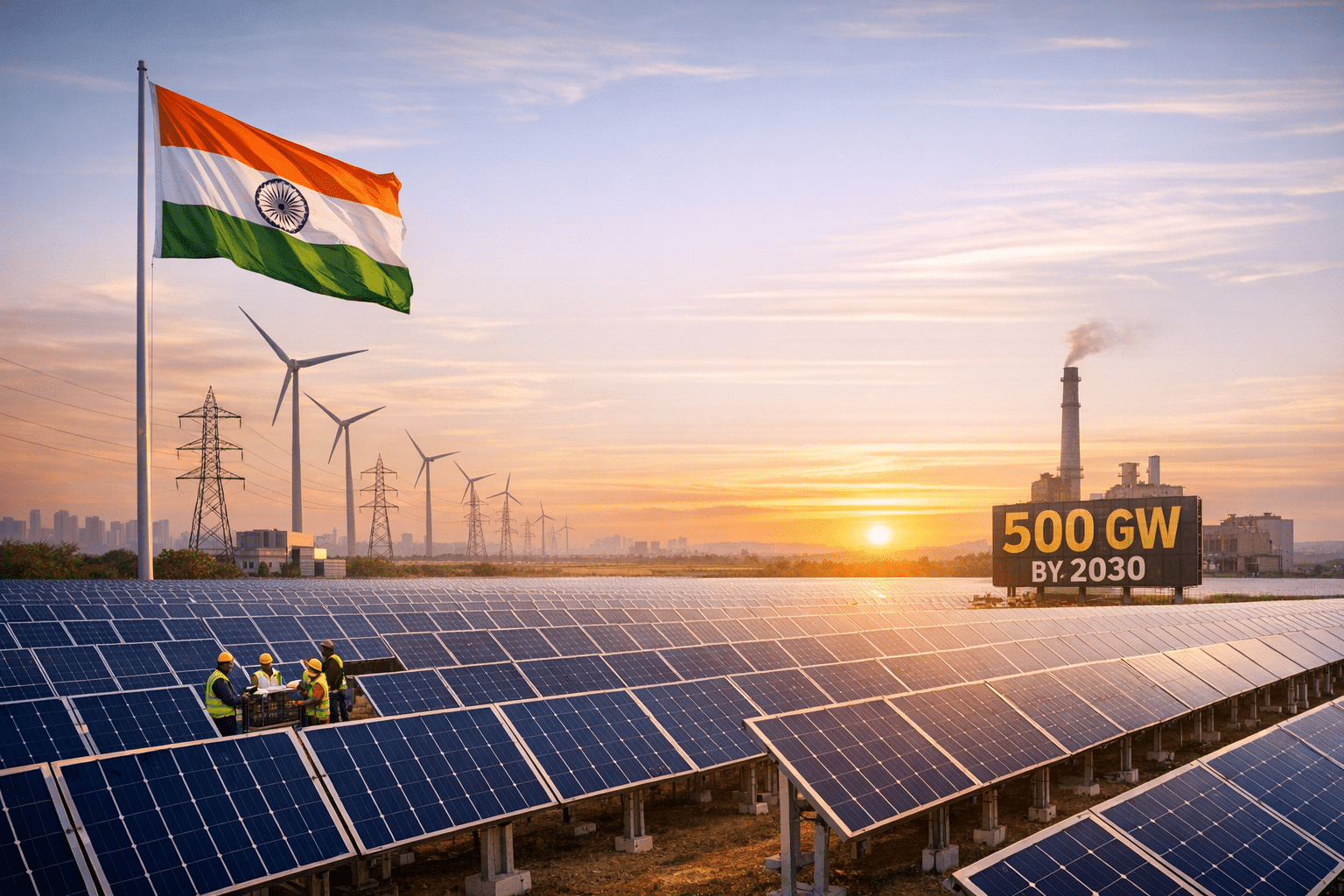
The country added 50 GW of solar power in just 14 months, raising total installed capacity to 150 GW. It now targets 280–300 GW by 2030 as part of its 500 GW non-fossil energy goal.
The National Solar Energy Federation of India projected that India will surpass the United States and the European Union in annual solar installations. Distributed Renewable Energy and the Commercial & Industrial segments are expected to lead growth, supported by initiatives like Green Energy Open Access and Renewable Consumption Obligations.
GAIL (India) Limited has committed Rs 3,800 crore to develop 700 MW of solar projects in Uttar Pradesh and Maharashtra, each integrated with battery storage systems. These projects will meet captive energy needs for GAIL’s petrochemical and PDH-PP plants, increasing its renewable capacity from 147 MW to over 1,000 MW.
Rajasthan remains India’s solar hub, with 60 GW of renewable projects awaiting transmission connectivity. Regulatory measures now allow developers to withdraw applications and recover bank guarantees to maintain investor confidence.
India achieved 50% of its installed power capacity from non-fossil sources in 2025, five years ahead of schedule. The country continues to advance toward 500 GW by 2030 and net-zero by 2070 through initiatives like the National Green Hydrogen Mission and pumped storage hydropower development.