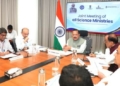

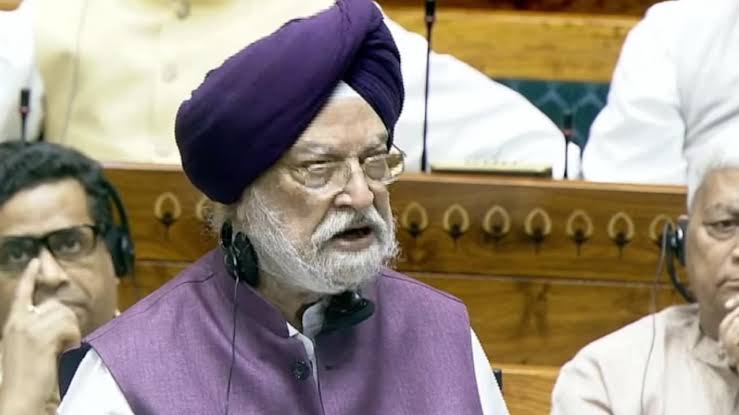
Union Petroleum and Natural Gas Minister Hardeep Singh Puri told Parliament that India has actively diversified its liquefied petroleum gas (LPG) imports to maintain stable supplies during the ongoing geopolitical tensions in West Asia.
Speaking in the Lok Sabha, the minister said India now sources LPG from multiple countries including the United States, Norway, Canada, Algeria, and Russia, in addition to traditional suppliers in the Gulf region.
Previously, about 60% of India’s LPG imports came from Gulf countries such as Qatar, United Arab Emirates, Saudi Arabia, and Kuwait, while roughly 40% was produced domestically.
Government Responds to Global Energy Supply Disruption
The minister addressed Parliament amid concerns over disruptions to global energy supply following the ongoing conflict involving Iran, Israel, and the United States.
He highlighted that shipping routes through the Strait of Hormuz, which handle nearly 20% of the world’s crude oil, natural gas, and LPG trade, have been affected. Despite these disruptions, the government said India’s crude supply remains secure.
According to Puri, before the crisis nearly 45% of India’s crude imports passed through the Strait of Hormuz. However, thanks to diversified procurement and diplomatic outreach, alternative sources now account for nearly 70% of crude imports.
No Shortage of Fuel Across the Country
The government assured that there is no shortage of major fuels such as petrol, diesel, kerosene, aviation turbine fuel, or LPG. Indian refineries are operating at high capacity to meet domestic demand.
India currently sources crude oil from around 40 countries, a significant increase from 27 suppliers in 2006–07. This expanded network has provided flexibility in managing supply during global disruptions.
State-run oil marketing companies including Indian Oil Corporation, Bharat Petroleum Corporation Limited, and Hindustan Petroleum Corporation Limited continue to supply fuel nationwide through nearly 100,000 retail outlets.
Measures Taken to Protect LPG Supply
To further strengthen supply, the government issued an LPG Control Order directing refineries to maximise LPG production and route it exclusively to oil marketing companies for domestic cooking gas.
As a result, LPG production has increased by about 28% in recent days. Authorities are also securing additional imports to maintain steady availability.
India currently serves more than 33 crore domestic LPG consumers through over 25,000 distributors. The standard delivery cycle for household LPG cylinders remains about 2.5 days, unchanged from normal conditions.
Priority Allocation of Natural Gas
The government has also implemented a priority allocation system for natural gas to ensure essential services remain uninterrupted.
-
Domestic piped gas and CNG for vehicles will receive full supply.
-
Industrial users will receive up to 80% of their average consumption.
-
Fertiliser plants will receive around 70% to support the agricultural sector.
Hospitals and educational institutions have also been placed under priority supply to ensure uninterrupted operations.
Government Urges Citizens to Avoid Panic
The minister noted that some reports of LPG shortages were caused by panic buying and hoarding rather than actual supply disruptions. Authorities have introduced temporary controls on commercial LPG distribution to prevent black marketing and ensure fair allocation.
The government has also suggested alternative fuels such as kerosene, biomass, and RDF pellets for commercial users during the current period of global energy disruption.