In a significant move to strengthen Early Childhood Care, Education, and Development (ECCED) through inter-state collaboration, the Governments of Odisha and Meghalaya have signed a Memorandum of Understanding (MoU).
This agreement aims to promote mutual learning, build capacity, and exchange best practices in Early Childhood Development (ECD).
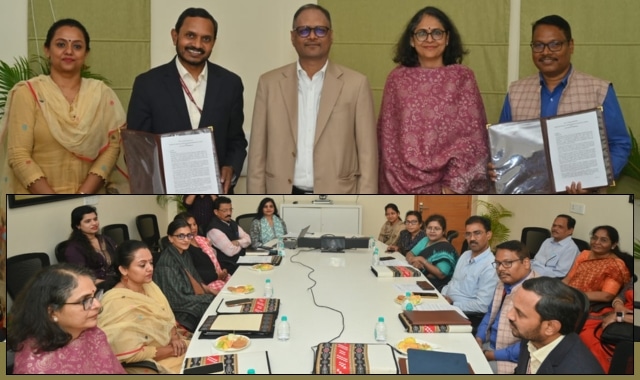
The MoU was signed in the presence of several dignitaries, including D.K. Singh, IAS, Development Commissioner and Additional Chief Secretary, Odisha; Dr. Sampath Kumar, IAS, Principal Secretary of the Health, Social Welfare, Community and Rural Development Departments, and Development Commissioner, Planning Department, Government of Meghalaya; Shubha Sarma, IAS, Principal Secretary of the Women and Child Development Department, Government of Odisha; and Monisha Banerjee, IAS, Director of ICDS and Social Welfare.
The agreement was formally executed by Sampath Kumar, IAS, Principal Secretary of the Government of Meghalaya, and Ananta Narayan Singh Laguri, Additional Secretary of the Women and Child Development Department, Government of Odisha.
The MoU aims to enhance holistic Early Childhood Care, Education, and Development interventions across both states. It encompasses areas such as nutrition, health, early learning, responsive caregiving, community engagement, and institutional capacity building. The framework includes knowledge exchanges, joint research, exposure visits, documentation of best practices, and capacity development for personnel at various levels.
During the signing ceremony, the dignitaries emphasised the critical importance of early childhood years as the foundation for lifelong health, learning, and well-being. They also highlighted the value of state-to-state learning in developing contextually relevant and community-driven solutions.
The partnership seeks to leverage Odisha’s experience in community-based and culturally responsive ECD initiatives and Meghalaya’s innovative approaches to delivering social sector services in challenging tribal and geographical contexts. This collaboration fosters a two-way learning process.
Overall, this agreement reflects the shared commitment of both states to advancing equitable and inclusive early childhood outcomes, aligned with national priorities for human capital development.
The MoU is expected to translate into actionable learning and have an on-ground impact, benefiting young children, caregivers, and frontline workers across both states.