

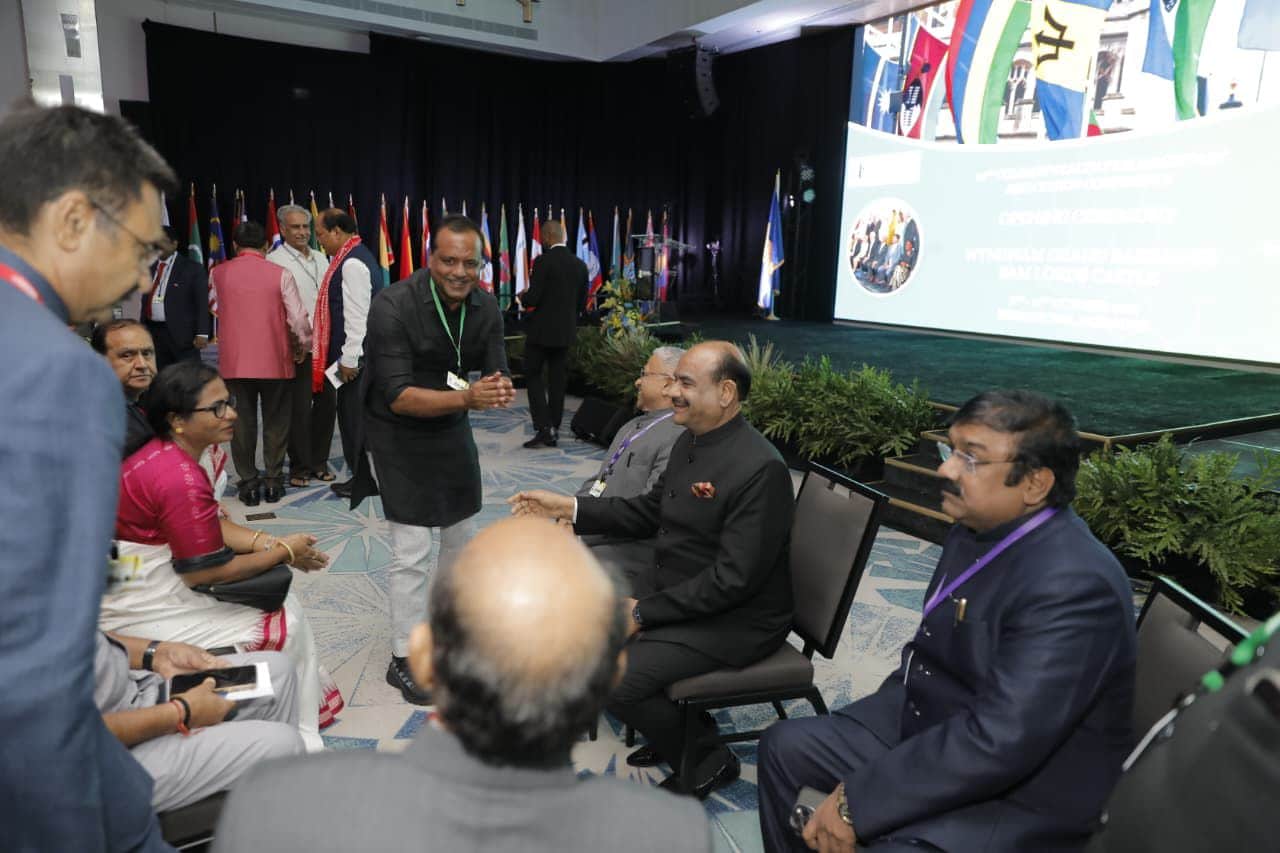
In a compelling address at the Commonwealth Parliamentary Association (CPA) conference in Bridgetown, Barbados, Odisha Assembly Speaker Surama Padhy called for unified global efforts to safeguard the environment amid escalating climate challenges.
Speaking while on an official visit, Padhy highlighted the urgent need for long-term solutions to combat climate change and its profound impacts on global health, underscoring that failure to act could lead to catastrophic consequences in the future.
Padhy painted a stark picture of the crisis, noting the increasing frequency of untimely cyclones, floods, and heatwaves disrupting environmental balance and claiming lives worldwide. “Climate change and its long-term adverse effects are a clarion call and a major concern for the entire world today,” she stated. “If we do not become aware and determine paths to resolve it, we will have to bear its terrible consequences in the coming days.”
Drawing from Odisha’s own experiences, the Speaker recounted the devastating 1999 super cyclone, which claimed over 10,000 lives and left lasting scars. In contrast, she praised the state’s proactive measures during the 2013 Phailin and 2019 Fani cyclones, where advance forecasting and government interventions minimised casualties and damage. “Odisha’s role in disaster management has been crucial,” Padhy affirmed, emphasising the importance of early warning systems and preparedness.
On the environmental front, Padhy spotlighted Odisha’s initiatives, including Bhubaneswar’s ranking as India’s fourth cleanest city in air quality indices. She also lauded conservation efforts for Chilika Lake—a Ramsar site—and Similipal’s biodiversity hotspot, which has earned UNESCO recognition. “In the coming days, Commonwealth states will certainly focus on this direction and work collectively with a broader goal,” she added, advocating for collaborative state-level actions.
Shifting to the second theme of the session—”Protecting and Preserving the Separation of Powers between National Parliaments and Regional, Territorial, and Devolved Assemblies”—Padhy stressed the cornerstone of India’s democracy: decentralisation of power. With a population of 1.4 billion spread across 28 states and 8 union territories, she said India’s Constitution is built on the principle of power devolution between the centre and states, fostering unity in diversity.
“In a federal system, coordination and harmony between the centre and states are essential,” Padhy remarked. “India has always prioritised the interests and security of states and union territories, enabling peaceful coexistence.”
The CPA, a united platform involving 56 countries, serves as a vital forum for promoting global brotherhood among member nations, Padhy noted, reinforcing its role in advancing shared democratic values.