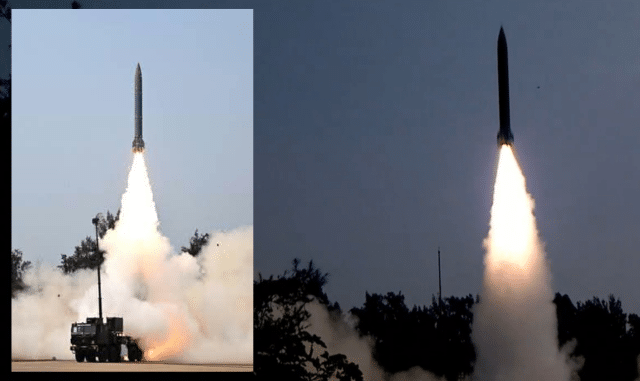
In a major boost to India’s tactical deterrence and indigenous defense capabilities, the Defence Research & Development Organisation (DRDO) successfully conducted a key flight test of the surface-to-surface quasi-ballistic missile ‘Pralay’ off the coast of Odisha.
The launch took place at approximately 11:10 AM on November 5, 2026, from Dr APJ Abdul Kalam Island. According to the Ministry of Defence, all flight objectives were fully met. Range monitoring instruments deployed by the Integrated Test Range (ITR), Chandipur, tracked the missile’s trajectory and confirmed complete success across all performance parameters.
Edge in Next-Gen Warfighting
Developed indigenously by the Research Centre Imarat (RCI), Hyderabad, in collaboration with multiple DRDO laboratories, ‘Pralay’ represents a crucial leap in India’s conventional strike matrix. The system is produced by Bharat Dynamics Limited (BDL) as one of the primary Development-cum-Production Partners.
The flight test was carried out as part of comprehensive user evaluation trials, witnessed by senior officials from the DRDO, representatives from the Indian Armed Forces, and industrial partners. Defense officials confirmed that with the successful completion of these trials, the induction of ‘Pralay’ into military service is now imminent.
Unlike standard ballistic missiles that follow a predictable parabolic path, a quasi-ballistic missile like ‘Pralay’ can maneuver mid-flight to defeat enemy air defense systems, making it a formidable asset along contested borders.
Leadership Commends Defense Milestones
Complimenting the DRDO, the Armed Forces, and industry collaborators, Raksha Mantri Rajnath Singh emphasized the strategic value of the test:
“The missile, equipped with advanced indigenous technologies, will further enhance the technological capabilities and operational preparedness of the military against emerging battlefield threats.”
Echoing these sentiments, Rajesh Kumar Singh, Defence Secretary and Chairman of DRDO, congratulated the scientific and production teams behind the trial, highlighting the collaborative synergy between defense R&D and Indian manufacturing under the Azadi Ka Amrit Mahotsav spirit.