The Odisha government has swung into full action mode to handle potential severe weather and cyclone conditions across the state.
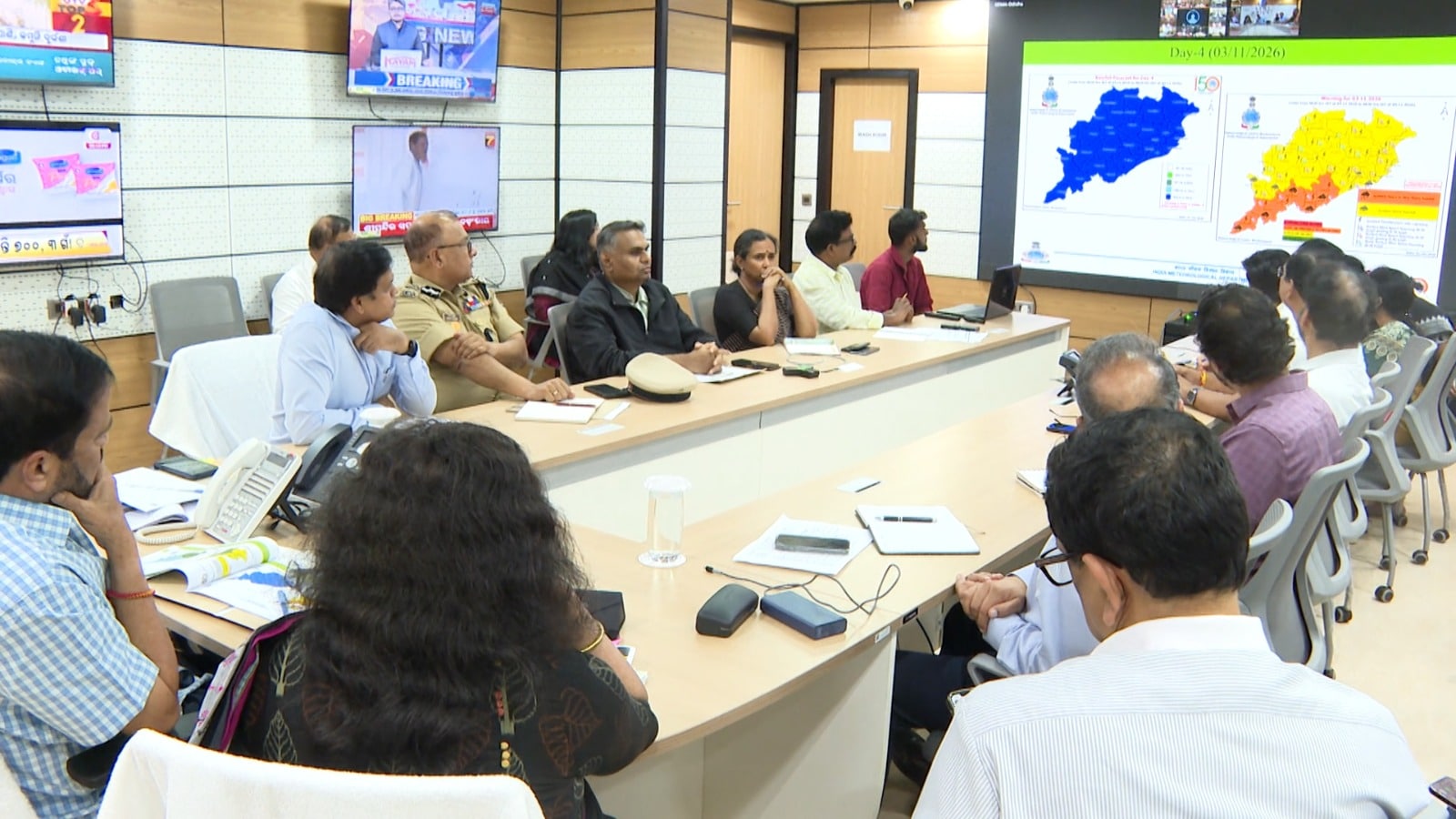
Revenue and Disaster Management Minister Suresh Pujari chaired a comprehensive high-level review meeting at Rajiv Bhavan to evaluate emergency readiness, shelter setup, and critical infrastructure safeguards.
The high-level meeting was attended by Chief Secretary Anu Garg, Additional Chief Secretary (Revenue & Disaster Management) Dr. Arabinda Kumar Padhee, Special Relief Commissioner (SRC) Rajesh Prabhakar Patil, alongside Principal Secretaries of key state departments.
Collectors from high-vulnerability districts—including Ganjam, Gajapati, Rayagada, Koraput, Nabarangpur, Malkangiri, Kandhamal, Khordha, and Puri—joined the proceedings via video conference.
Meteorological Outlook & Evacuation Directives
During the briefing, the Director of the Regional Meteorological Centre in Bhubaneswar delivered a virtual report on incoming rainfall and potential cyclonic circulation patterns, noting that more precise tracking data will be updated continuously.
In response, Minister Pujari issued strict instructions to District Collectors to immediately evacuate residents living in low-lying zones, riverbanks, and unsafe housing to fortified cyclone and flood shelters.
“Priority evacuation is underway for pregnant women, the elderly, and children, ensuring they are safely housed in nearby health centers or designated emergency shelters,” Minister Pujari stated.
Rescue Teams, Food Security, and Health Preparedness
To manage ground-level contingencies, teams from the Odisha Disaster Rapid Action Force (ODRAF), National Disaster Response Force (NDRF), and Odisha Fire Services have been pre-positioned across vulnerable coastal and southern districts.
key relief arrangements highlighted during the review include:
- Food & Nutrition: Free kitchens, schools, and hostels are being utilized to supply cooked meals and dry rations. Special arrangements for milk and infant food have been mandated for displaced children.
- Clean Water & Sanitation: Safe drinking water is being dispatched via water tankers and sealed pouches. Local administration units are conducting extensive halogenation and chlorination of tubewells, alongside spraying bleaching powder to prevent water contamination.
- Power Restoration & Backup: Line crews are on standby for quick power restoration. Generators (DG sets) are deployed at all major hospitals, water utility projects, and relief shelters to guarantee uninterrupted electricity.
- Medical Countermeasures: Mobile Health Units and medical teams are active in high-risk zones. District Health Officers have stockpiled Anti-Snake Venom (ASV), ORS packets, anti-diarrheal medicines, and skin treatment ointments.
High-Risk Zones and Coastal Warnings
The administration has placed special emphasis on southern inland and coastal districts where heavy to extremely heavy rainfall is predicted. Districts under close monitoring include Rayagada, Koraput, Malkangiri, Gajapati, Ganjam, Kalahandi, Kandhamal, Nabarangpur, Puri, and Khordha.
Due to anticipated rough sea conditions, fishermen have been strictly advised against venturing into the sea until further notice.
Districts with hilly terrain—particularly Koraput, Rayagada, and Gajapati—have been alerted to prepare for localized waterlogging and potential landslides. Senior state officials, BDOs, and Collectors are directly conducting field inspections, while 24/7 emergency control rooms remain operational to monitor real-time developments.