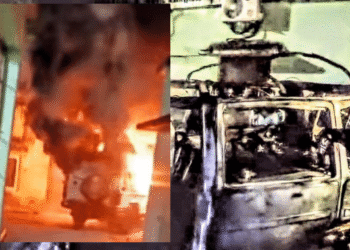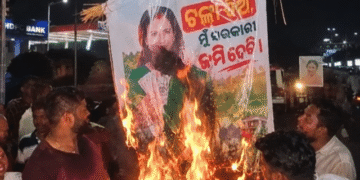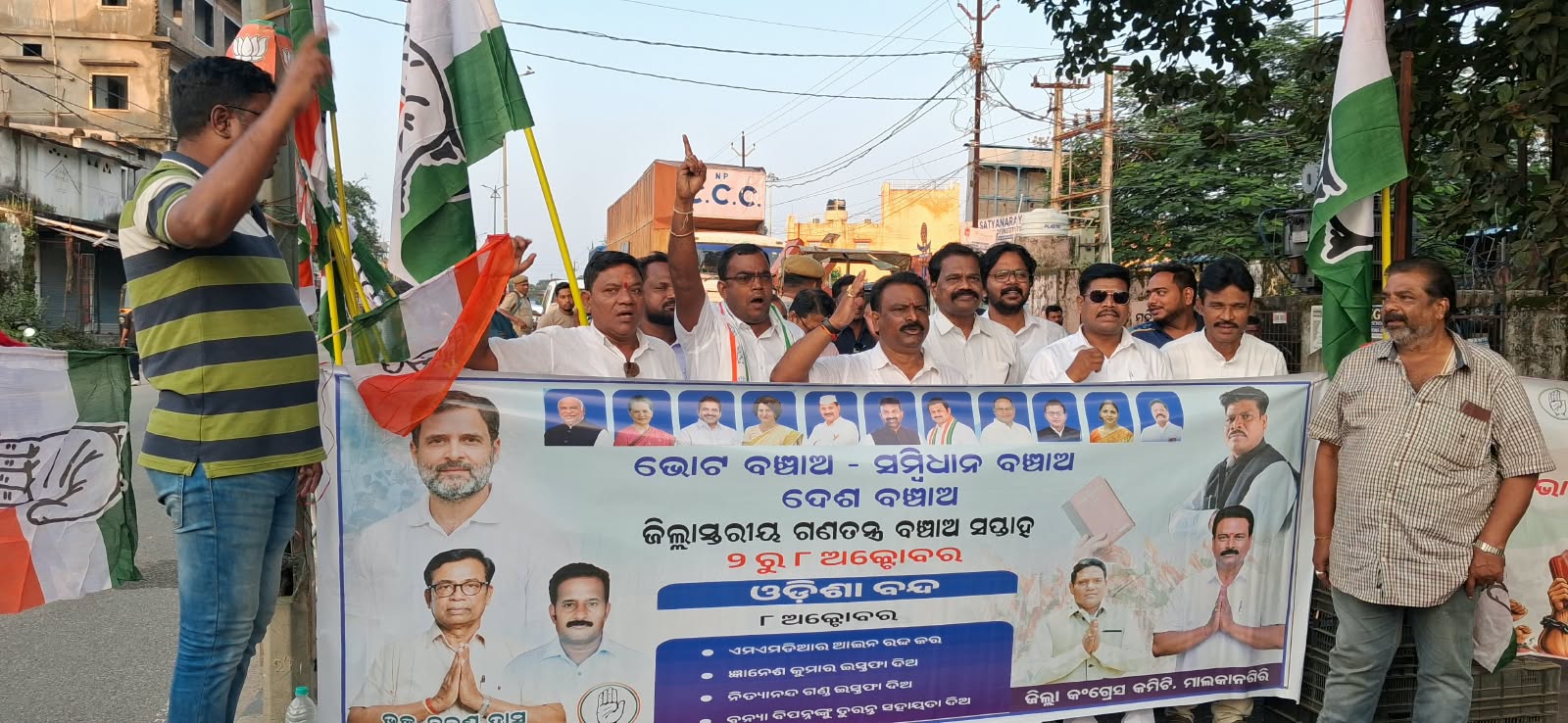
Public movement and commercial activities came to a near standstill across the state capital on Thursday morning as the Congress and its INDIA bloc partners enforced a 12-hour statewide ‘Odisha Bandh’.
The shutdown, scheduled from 6:00 AM to 6:00 PM, has been called to protest the Mines and Minerals (Development and Regulation) Amendment Act, 2026, alleged errors in state school textbooks, and the Special Intensive Revision (SIR) of electoral rolls. Protesters are also demanding the resignation of Education Minister Nityanand Gond and Chief Election Commissioner Gyanesh Kumar.
Commuters Stranded as Protesters Block Roads and Buses
In Bhubaneswar, major intersections including Master Canteen Square and Palasuni Square witnessed heavy blockades by Congress activists. Demonstrators stopped public and private vehicles, urging commuters to support the agitation.
In one instance, an Ama Bus was halted by protesters and passengers were asked to disembark, while an autorickshaw driver claimed his vehicle’s windshield was damaged despite carrying a patient.
High Tension at Railway Stations
Tense scenes unfolded at the Bhubaneswar Railway Station when Congress workers and All India Forward Bloc (AIFB) members, joined by senior leader Sura Routray, attempted to stage a Rail Roko protest. A strong contingent of Odisha Police and Railway Protection Force (RPF) personnel intervened, turning back the demonstrators before they could access the tracks.
Meanwhile, train movement was temporarily disrupted at the Sambalpur Railway Station after Congress activists successfully halted the Sambalpur–Puri express train.
BJD Maintains Equidistance, Security Heightened
The former Chief Minister Naveen Patnaik-led Biju Janata Dal (BJD) chose to stay away from the agitation. Party media coordinator Lenin Mohanty stated that while the BJD opposes the new mining law and textbook errors, it maintains an equal distance from both the ruling BJP and the opposition Congress.
To prevent major law-and-order breakdowns, the Bhubaneswar-Cuttack Police Commissionerate deployed around 150 officers across strategic locations in the capital, while district collectors state-wide were directed to keep essential services—including hospitals, fire services, and medicine shops—fully operational.