A dramatic rescue operation unfolded off Russia’s Black Sea coast after an oil tanker carrying an all-Indian crew came under a high-stakes sea drone attack.
All 23 Indian mariners aboard the Liberian-flagged vessel Aframax Rio were safely evacuated to shore, averting what could have been a catastrophic human tragedy in increasingly perilous international waters.
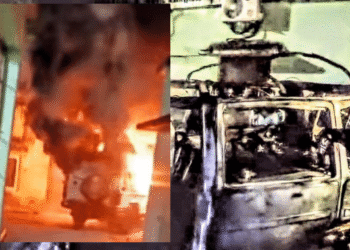
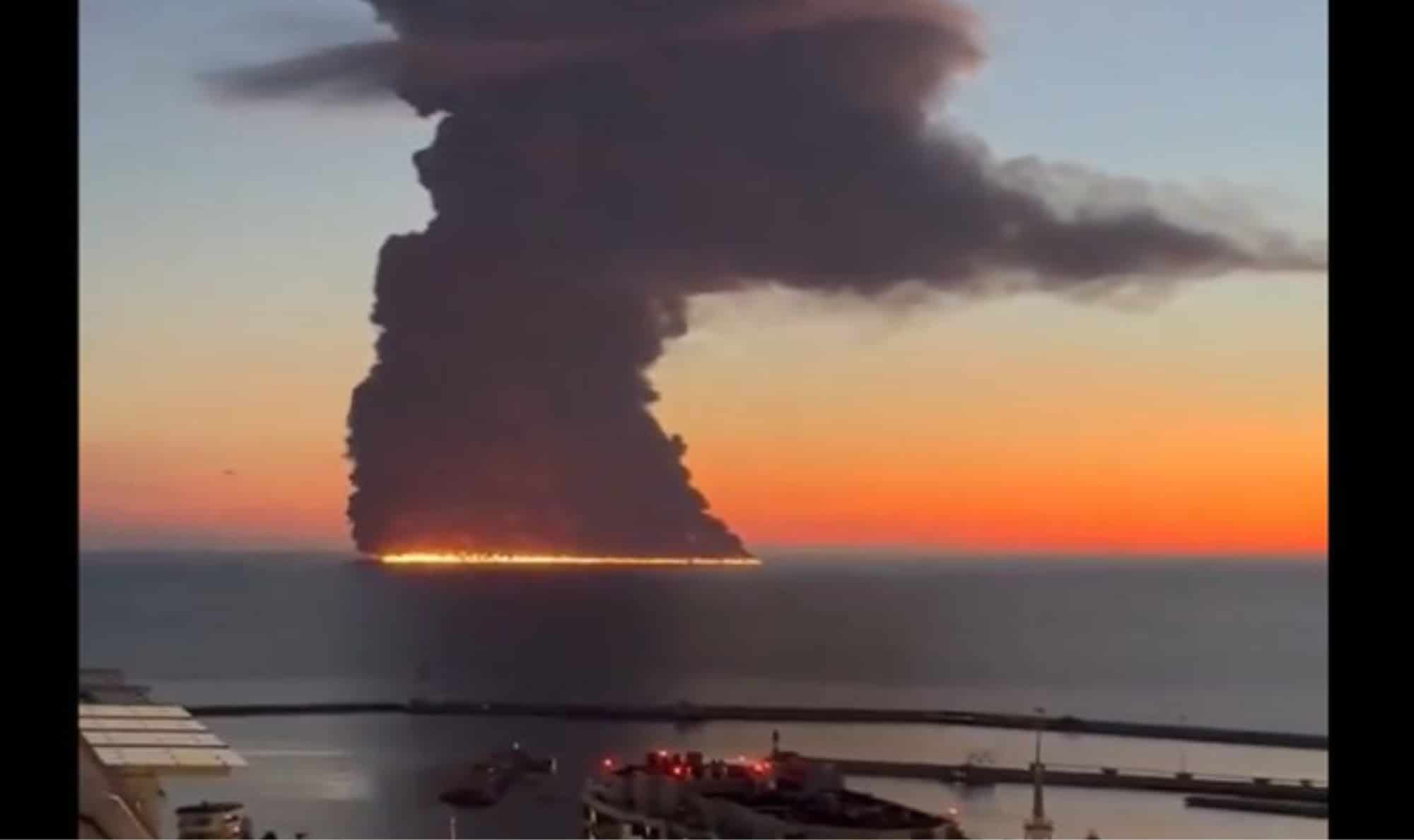
According to statements from Russian transport authorities, the commercial vessel was struck by unmanned surface vessels (USVs) near the resort city of Sochi. The strike instantly ignited a fierce fire fueled by open crude oil burning across the water’s surface, filling the skyline with heavy plumes of smoke visible from the coastal city.
High-Temp Emergency Response & Coastal Lockdowns
The intensity of the inferno initially prevented maritime firefighters from approaching the vessel. Russian Transport Minister Andrey Nikitin convened a high-level emergency headquarters meeting to coordinate containment strategies, noting that active firefighting efforts could only commence once the blaze’s thermal intensity diminished enough to allow rescue ships to safely get near.
In response to the towering smoke and potential environmental hazards, Sochi Mayor Andrey Proshunin invoked emergency measures, temporarily shutting down public access to the city’s popular beaches and waterfront embankments.
“The city’s emergency response centre has made a decision to temporarily ban access to the beaches and sea embankments. Sochi residents and guests are kindly requested not to expose themselves to risk and wait for an official decision,” Mayor Proshunin announced on his official Telegram channel.
Rising Conflict in Crucial Maritime Routes
The strike on the Aframax Rio highlights an escalating pattern of maritime violence in the region. Just two days prior, a Russian drone strike hit a Turkish-owned civilian cargo ship in the Black Sea, leaving at least two dead and injuring several crew members—including an Indian national.
The Black Sea serves as one of the world’s most vital energy and agricultural transit choke points, and deteriorating safety conditions are straining global supply chains and putting non-combatant merchant mariners directly in the crosshairs.
India Raises Serious Global Alarm
In the wake of back-to-back attacks impacting its citizens, India’s Ministry of External Affairs (MEA) issued a sharp statement underscoring its deep apprehension over the safety of commercial shipping lanes.
“The targeting of traffic in international waterways is severely undermining global commerce and welfare of people across the world,” the Ministry stated, urging all parties to return to constructive channels. “We continue to call for dialogue and diplomacy to bring an end to the ongoing conflicts.”
The incident coincides with intensified diplomatic manoeuvres by New Delhi. External Affairs Minister S. Jaishankar highlighted that India has moved past quiet advocacy, actively stepping up mediation engagement with both Kyiv and Moscow to seek a resolution to the Black Sea crisis and wider regional war.
As rescue teams work to extinguish the remaining fire and assess potential oil spill hazards along Sochi’s shores, the safety of international commercial crews remains on a razor-thin edge.