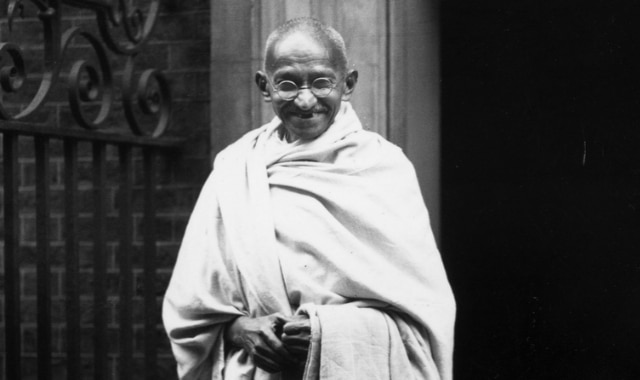
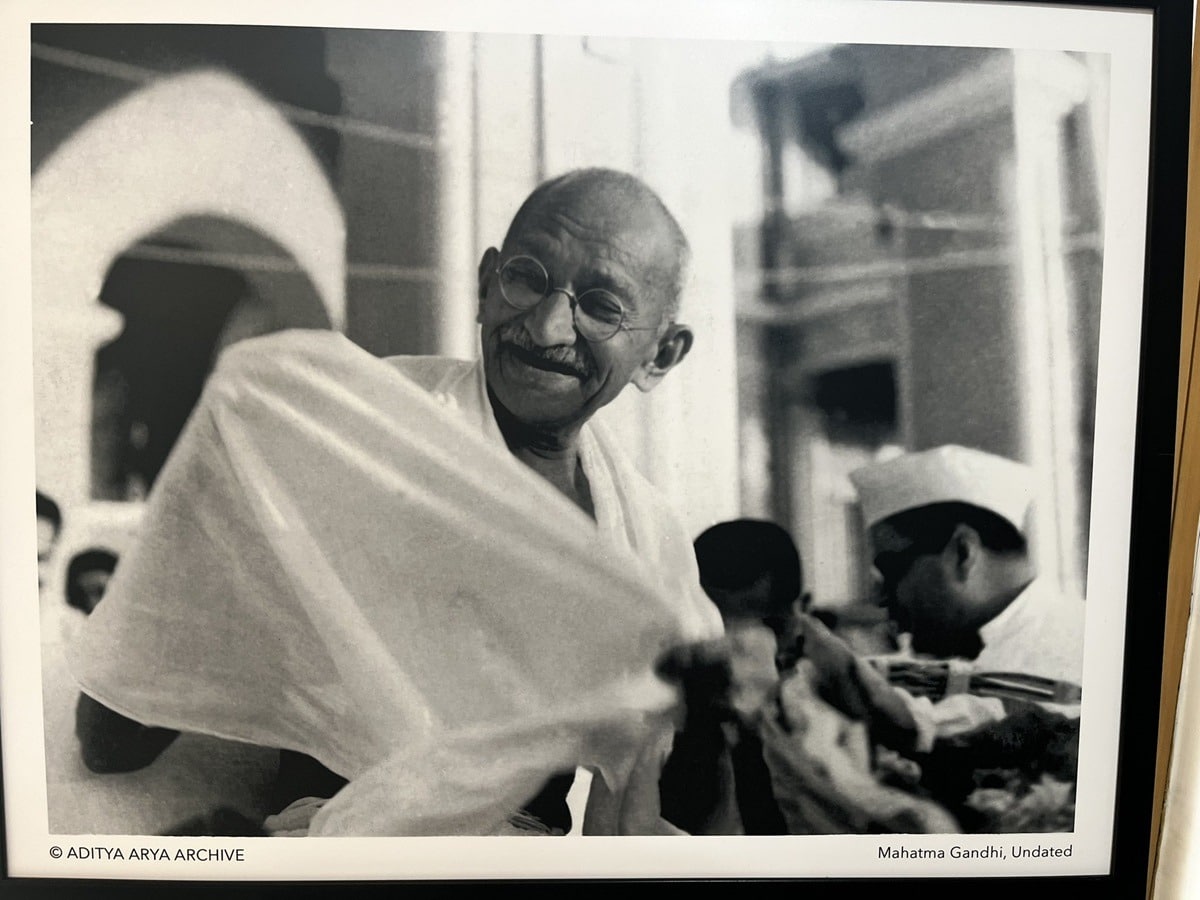
One hundred and fifty-seven years after Mohandas Karamchand Gandhi was born in Porbandar, and seventy-eight years since Nathuram Godse fired three shots at him on the way to a prayer meeting in Delhi, India still marks 2 October as his birth anniversary.

The United Nations marks the same date as the International Day of Non-Violence. No descendant sits in a seat of power. No party machine runs on his bloodline. Yet the name keeps walking back into courtrooms, classrooms, protest squares and diplomatic speeches on every continent.
The puzzle is not that he lived. The puzzle is that he has not finished living.
Albert Einstein, writing around Gandhi’s seventieth birthday in 1939, caught the unease in a line that still circulates: generations to come, it may well be, will scarce believe that such a man as this ever in flesh and blood walked upon this earth. The disbelief was already forming while he was alive. It has only deepened since.

A title borrowed from a rival’s microphone
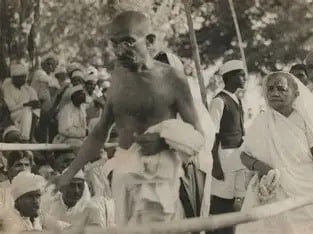
Who made him “Father of the Nation,” and on what warrant? The clearest public claim came from an unexpected quarter. On 6 June 1944, Subhas Chandra Bose, speaking from Singapore on Azad Hind Radio to Indians at home and in the Indian National Army, addressed Gandhi as Rashtrapita and asked for his blessings in an armed struggle: “Father of our Nation, in this holy war for freedom, we ask for your blessings and good wishes.”
Bose and Gandhi had differed sharply on means. The honour stuck anyway. From that broadcast, the phrase slipped out of one man’s respect and into common speech.
The earlier title “Mahatma” is usually linked to Rabindranath Tagore in 1915, though scattered earlier uses exist. Both labels are secondary. Gandhi does not persist because a poet or a soldier coined a name. He persists because the method he tested on himself—truth-seeking paired with a refusal of violence—kept producing results other leaders could borrow without inheriting his party or his family.

The boy the legend sanded smooth
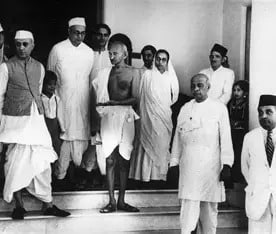
The diaries are rougher than the statues. As a schoolboy he was good at English, fair in arithmetic, weak in geography, and cursed with bad handwriting. When a teacher nudged him to copy a classmate’s spelling in an inspector’s test, he refused; he later wrote that he could not tell a lie. The family called him Monu. At thirteen, he was married to Kasturba, then fourteen. Their first child died in infancy; four sons survived.

London in 1888, in the shadow of the Jack the Ripper murders, found him taking dancing lessons and joining the Vegetarian Society. Back in India, his first court appearance collapsed: nerves froze him mid-cross-examination, and he returned the fee.
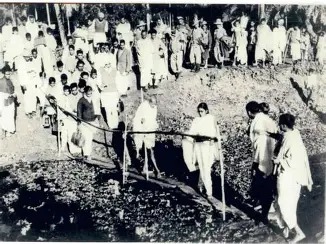
South Africa made the activist. Thrown off a train at Pietermaritzburg in 1893 despite a first-class ticket, he stayed twenty-one years. He organised the Indian Ambulance Corps in the Boer War, founded football sides called Passive Resisters, and earned a substantial legal income before shedding it. In 1905 he wrote to Johannesburg’s medical officer protesting the housing of Black Africans—“Kaffirs,” in the language of the letter—inside the Indian location, calling the mixture unfair to Indians. Those sentences remain in the archive. His later positions shifted; the early ones are not erased by the shift. In 1897, a white mob nearly lynched him in Natal. He declined to prosecute.

A body used as a laboratory
He treated his own flesh as an experiment. In 1893 he logged a raw-food trial: two tablespoonfuls of soaked wheat, one of peas, one of rice, two of sultanas, about twenty nuts, two oranges and cocoa. After eleven days of depression and a foul taste, he quit. With Hermann Kallenbach at Tolstoy Farm, he renounced milk, tying the vow to self-control and to his belief that diet fed desire. From 1906, he held a brahmacharya vow of celibacy. Decades later he conducted tests in which he slept beside young women, including his grand-niece Manu, to see whether desire had died. The notes are his. Biographies such as Joseph Lelyveld’s record them. The episodes remain disputed.
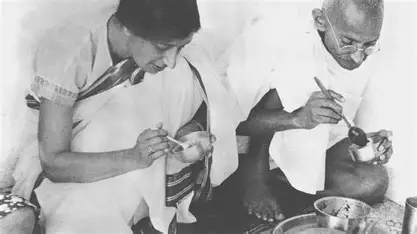
He travelled with goats so the milk he finally accepted would not be cow’s or buffalo’s. Every Monday he kept silence and wrote notes. False teeth rode in a fold of his dhoti. A silver Zenith alarm watch stolen at Kanpur in 1947 was returned by the thief and later auctioned. British officials limited photographs of his long fasts, fearing the pictures; nutritionists were summoned to explain a twenty-one-day fast.

Why the name will not leave
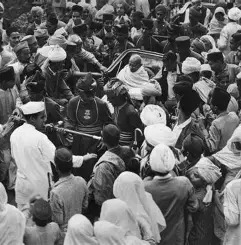
The day before he was killed, he was still talking of dissolving the Congress, which he thought had drifted from its first purpose. His ashes were divided among rivers and sites; relics remain in the Gandhi Memorial Museum at Madurai. Martin Luther King Jr., Nelson Mandela and the Dalai Lama took the method without taking the man. Steve Jobs kept a portrait. Richard Attenborough made the film. None of them needed a Gandhi dynasty in office.
That is the practical answer to the recurring question. Titles can be disputed. Heirs can be absent. The body was mortal and was ended. The proposition he kept failing and retrying in public—that power can be confronted without matching its violence, and that the confronter must first submit to the same rule—does not require a successor in a ministry to stay available.
People reach for it when other tools jam. They also reach for the contradictions: the early letters, the strange experiments, the fasts, the radio blessing from a man who chose a different road. Both the reach and the argument keep the name in circulation.
Seventy-eight years after the shots, the argument has not adjourned.
The Shy Boy and Early Life
-
Born in Porbandar in 1869, Mohandas was a timid child who disliked crowds and avoided eye contact.
-
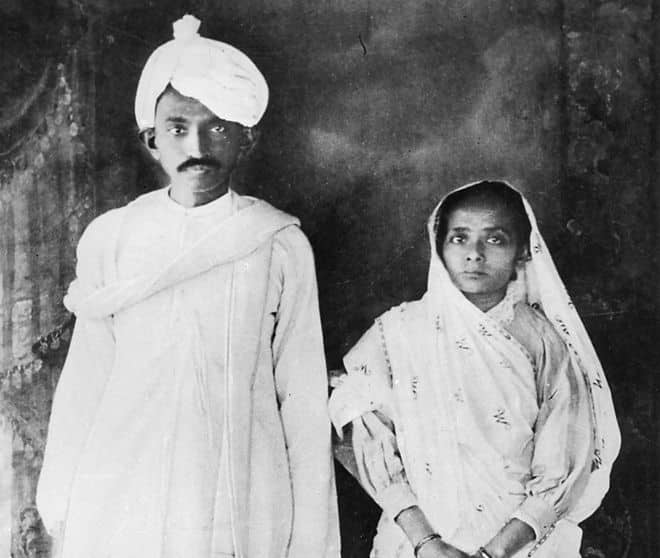
At thirteen, he married Kasturba Makhanji, establishing a lifelong partnership and raising four sons.
Studies and Early Awakening
-
Prevented by his family from studying medicine due to dissection concerns, he chose law and studied in London starting in 1888.
-
In England, vegetarianism transitioned from a cultural upbringing into a conscious ethical philosophy and public argument.
Crucible in South Africa
-
Ejected from a first-class train carriage in 1893 because of his race, he faced a violent white mob in Durban in 1897 but refused to press charges.
-
Paradoxically, during the Boer War, he served as a stretcher-bearer and earned the Queen’s South Africa Medal.
-
He coined satyagraha (truth-force) during the 1906 Transvaal campaign, laying the foundation for his lifelong method of nonviolent resistance.
The Uniform of Resistance in India
-
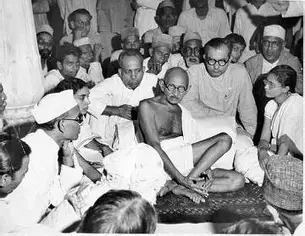
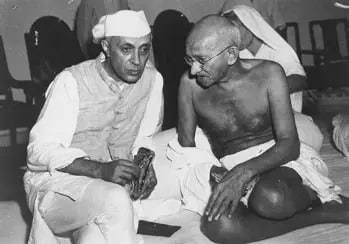
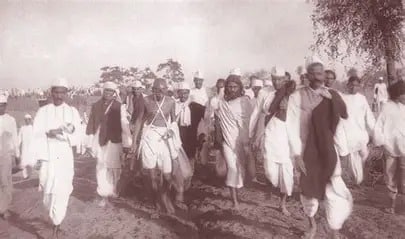
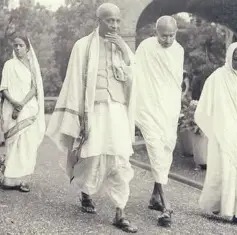
Returned to India, he championed khadi (hand-spun cloth) and simple ashram life to promote self-reliance over colonial dependency.
-
He integrated women into the national movement, promoted village girls’ education, and campaigned against untouchability, though his incremental approach drew criticism from B. R. Ambedkar.
-
He utilised long fasts as powerful public arguments against communal violence and political deadlock.
Imprisonment and Global Legacy
-
He spent over 2,000 days in prison, using confinement to write sections of his autobiography despite his notoriously poor handwriting.
-
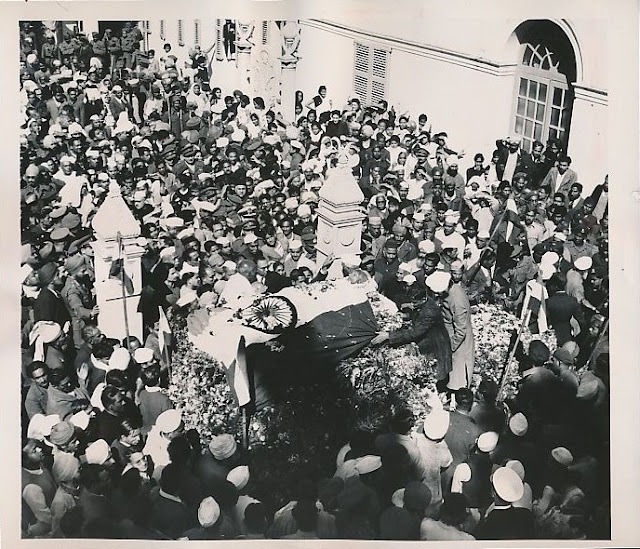
Nominated multiple times for the Nobel Peace Prize, he never received it before his assassination on 30th January 1948.
- His philosophy of nonviolent refusal lived on, directly inspiring global leaders like Martin Luther King Jr. and Nelson Mandela.
Edited by Yajati K Rout
ALSO READ:
The Land of My Love: How Mahatma Gandhi Forged an Unbreakable Bond with Odisha