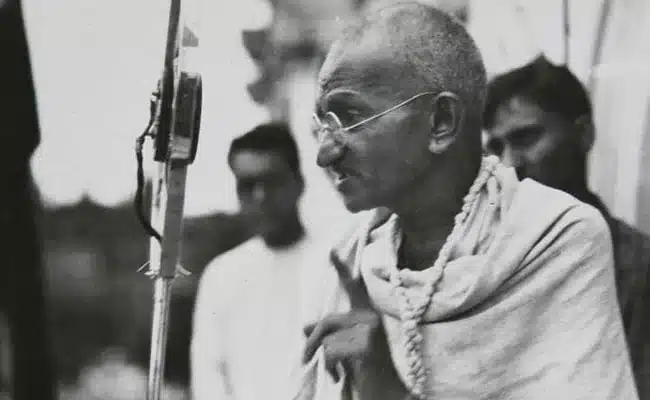
When Mahatma Gandhi stepped onto the sandy bed of the Kathajodi River in Kataka on 23 March 1921, he was not merely addressing another provincial gathering.
Accompanied by Kasturba and received by Utkalmani Gopabandhu Das, he spoke to a crowd that had waited through the night. The words that followed did more than launch the Non-Cooperation Movement in Odisha; they began a relationship Gandhi himself later described with unusual tenderness. He called the region the “land of my love,” seeing in its stark poverty the sharpest mirror of India’s condition—and, paradoxically, the clearest invitation to stay and work.
Between that first arrival and his final visit in 1946, Gandhi returned eight times. Each journey left a distinct imprint.
A Riverbed That Changed the Map
Political awakening began almost at once. Gandhi recognised that the Odia-speaking people possessed a cultural and linguistic identity that the existing provincial map had fragmented. He backed the principle that administrative boundaries should follow language, and he helped draw the Odia districts firmly into the mainstream of the Indian National Congress. Gopabandhu Das captured the moment in a single image: “Like Bhagirath brought the Ganges to the earth, Gandhi brought the Congress to Utkal.” The comparison was not ornamental. Before 1921, the Congress presence in the region had been thin; after the Kathajodi meeting, it became a mass force.

Walking Against Untouchability
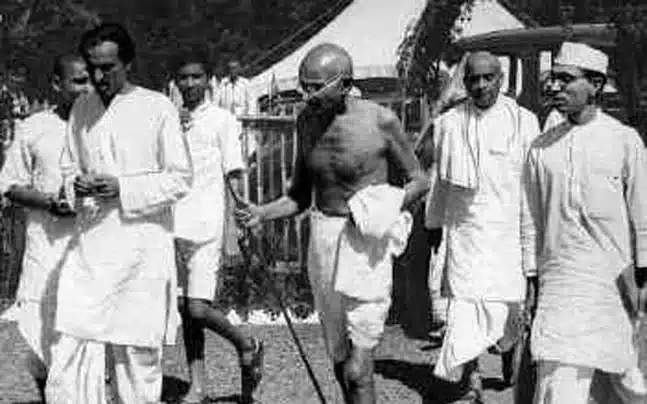
Social reform followed the same pattern of direct contact. In 1934 Gandhi undertook the Harijan Padayatra—locally remembered as the Patitapabana Yatra—walking through villages to confront untouchability face to face. He stayed in the homes of those labelled “untouchable,” drank from their wells, and insisted that temple doors and public wells open to all. The message took root so deeply that, decades later, small temples in districts such as Sambalpur and Ganjam still house idols of Gandhi that are worshipped daily—an unusual form of reverence that treats the reformer as both political leader and moral presence.

Women, the Charkha and the Streets
Women entered the movement in numbers that surprised even seasoned organisers. At Gandhi’s direct urging, Rama Devi and others led Odia women into processions, picket lines and spinning centres. Foreign cloth was publicly burnt; the charkha became both a household tool and a political statement. The participation was not symbolic. It altered the social geography of the freedom struggle in a region where women’s public roles had been tightly circumscribed.

Khadi as an Economic Weapon
On the economic front, Gandhi found a ready collaborator in Utkal Gourav Madhusudan Das. Where Gandhi stressed the dignity of labour and the strategic value of khadi, Madhusudan Das had already pioneered cottage and small-scale industry as a path out of rural destitution. Their overlapping convictions turned Odisha into an early testing ground for the idea that political swaraj would remain incomplete without economic self-reliance at the village level. Spinning, weaving and simple rural crafts were promoted not as nostalgia but as practical weapons against poverty and dependence.

A Bond That Outlasted the Visits
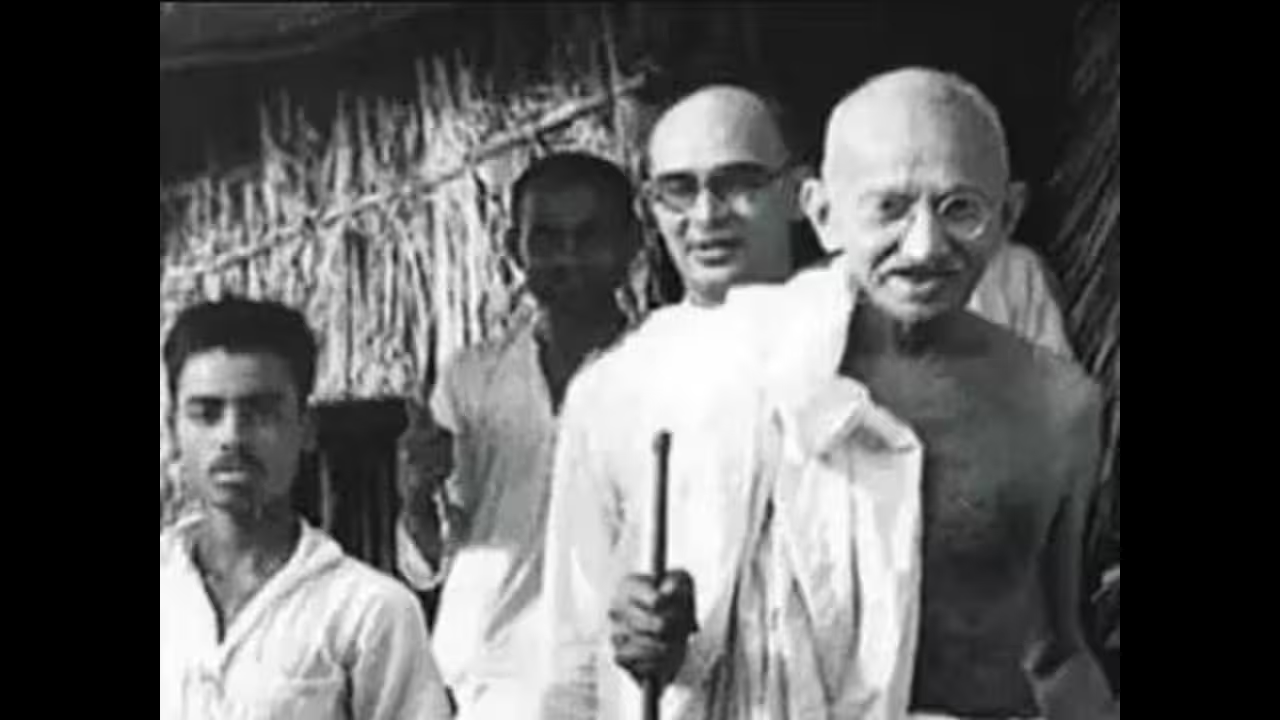
Gandhi’s last visit, in 1946, came when independence was no longer a distant slogan. By then the relationship had long ceased to be a series of political stopovers. The poverty that first drew his attention had become the shared ground of a longer experiment—in organisation, in social equality, and in the everyday discipline of the charkha. Odisha’s continued public memory of those years, from riverbed meetings to village temples, suggests the bond was mutual. He gave the region a national language of protest and reform; the region gave him, in his own words, a land of love.

Gandhi’s eight visits did not merely pass through Odisha; they settled into its political habits, social conscience and village economy. From the Kathajodi sands of 1921 to the quiet farewell of 1946, the poverty that first drew him became the ground of a shared experiment in non-cooperation, dignity and self-reliance. Long after the meetings ended, the memory remained—in Congress organisation, in temples that still honour him, in the charkha, and in the phrase he left behind.
Odisha was, for him, the land of his love; for Odisha, he remains part of the story of how freedom was made local.


Edited by Yajati K Rout