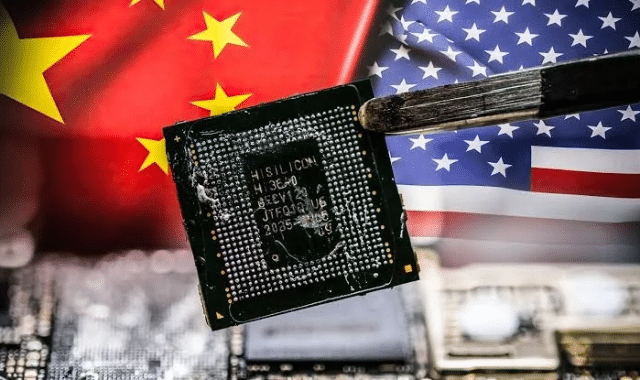
The US-China chip war has entered a sharper phase after Washington tightened export controls on advanced artificial intelligence (AI) processors to five countries, aiming to stop Chinese firms from accessing American computing power via overseas data centres.
According to Jefferies’ November 19 GREED & fear report, the US Bureau of Industry and Security (BIS) now requires export licences for AI chips shipped to Malaysia, Thailand, Indonesia, Singapore, and Brazil, barring qualifying shipments to US companies.
The crackdown targets indirect access loopholes; Jefferies estimates up to 240,000 Nvidia AI chips may have been diverted to China since 2024, while Singapore-based Megaspeed allegedly rented roughly 86,000 GPUs to Alibaba and other Chinese clients.
The curbs arrive alongside growing regulatory pressure on Nvidia, whose shares tumbled on November 20 following reports of a US Securities and Exchange Commission (SEC) probe into potential accounting and disclosure issues. Jefferies noted Nvidia’s deep financial exposure to the AI ecosystem—including $61 billion in equity stakes and $164.5 billion in lease guarantees and cloud backstops—warning that tighter financing could strain smaller cloud operators.
AI cloud provider CoreWeave has already suffered a 25% stock drop, with bond yields climbing to 15.7%.
The move also threatens Southeast Asia’s data-centre boom—including Malaysia’s 61 announced projects and Thailand’s surge in digital infrastructure investment—while incentivising China to accelerate domestic chipmaking across players like SMIC, HiSilicon, and Naura.