
US President Donald Trump’s new stance on the H-1B visa program aims to reshape how skilled immigration supports America’s workforce.
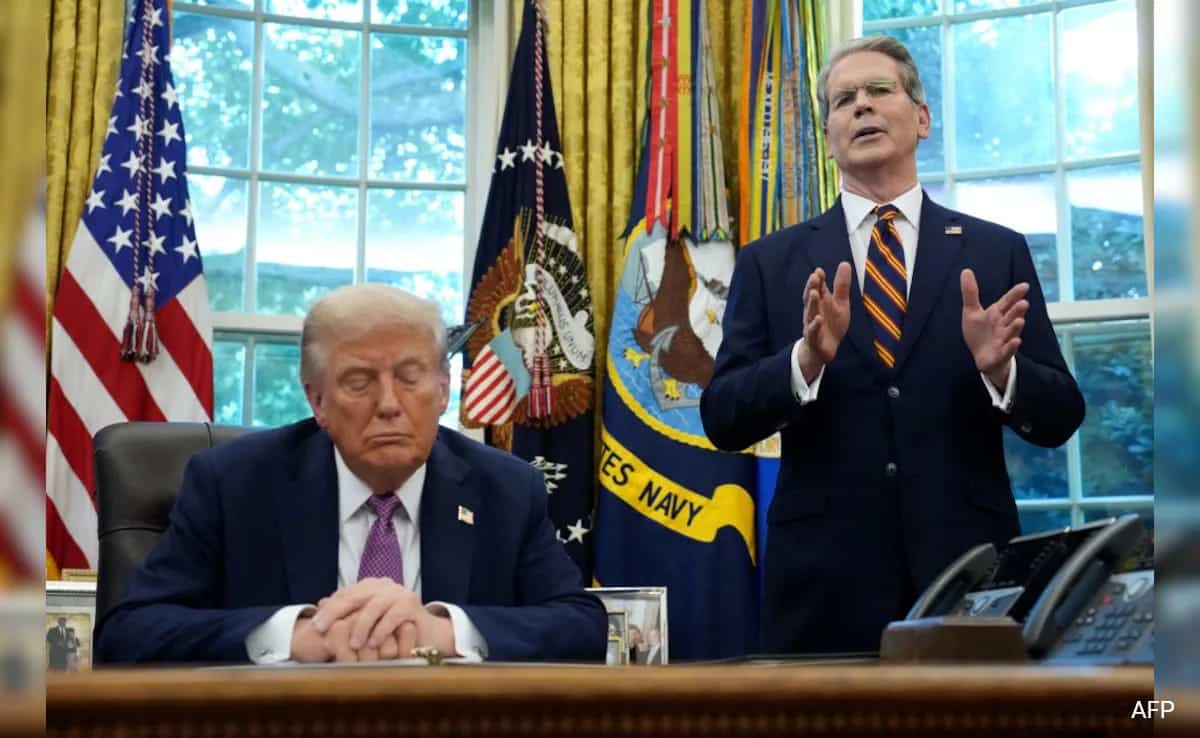
According to US Treasury Secretary Scott Bessent, the administration’s plan encourages skilled foreign professionals to come to the United States, train American workers, and then return home — instead of permanently replacing US talent.
Bessent’s clarification comes after Trump’s recent comments during a Fox News interview appeared to signal a softening of his administration’s immigration policy.
‘Knowledge Transfer,’ Not Job Replacement
In an interview with Fox News host Brian Kilmeade, Bessent said that the president’s H-1B approach is focused on “knowledge transfer.”
“The president’s vision is to bring in overseas workers with specialized skills for three to seven years to train US workers. Once that’s done, they’ll return home, and American workers will fully take over,” Bessent explained.
Addressing criticism that foreign workers may take away American jobs, Bessent emphasized that certain industries currently lack skilled talent due to decades of decline in advanced manufacturing and semiconductor production.
“An American can’t have that job — not yet. We haven’t built ships or semiconductors in years. Overseas experts can help train our workforce and then go back home. That’s a home run,” he said.
Trump Defends Skilled Immigration
During his interview with Fox News, President Trump acknowledged the need for skilled professionals from around the world, saying,
“We have to bring talent into the country. We don’t have certain skills yet — people have to learn.”
Trump also noted that the US cannot immediately fill highly technical jobs in defense and manufacturing with long-term unemployed citizens without first investing in training and skill development.
While his comments initially appeared to soften the tough stance on H-1B visas associated with his previous term, administration officials insist that the goal is not to reduce opportunities for Americans, but to bridge the skills gap through temporary expertise.
Background on the H-1B Visa Program
The H-1B visa allows US companies to employ foreign professionals in specialized fields such as technology, engineering, and medicine. In recent years, the policy has been at the center of debate — balancing the need for global talent against domestic employment priorities.
Under Trump’s new directive, the administration appears to be promoting a rotational skill-building model, where international experts temporarily assist in rebuilding US industrial capabilities.