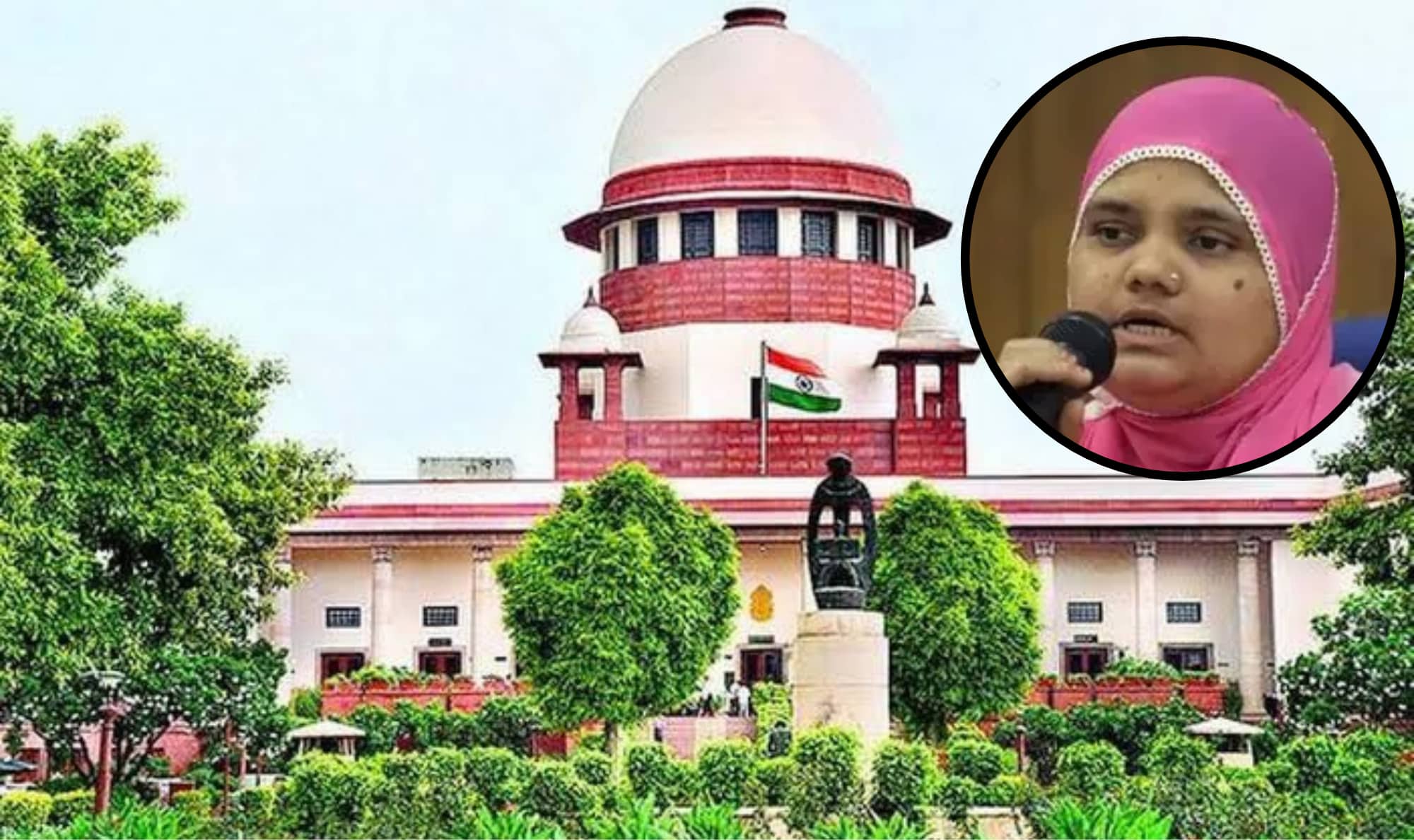
The Supreme Court has granted bail to two convicts in the Bilkis Bano case after noting that they have spent more than 17 years in prison and that their appeals raise substantial questions of fact and law requiring detailed consideration.
In an order passed on October 28, the apex court granted relief to Bipinchand Joshi and Pradip Modhiya, who had challenged a May 2017 Bombay High Court judgment that upheld their convictions and life sentences.
While suspending their life imprisonment and granting bail, the Supreme Court also considered the severe physical disability of one of the appellants, Bipinchand Joshi.
During the hearing, the prosecution opposed the bail plea, stressing the seriousness of the offences and pointing to the concurrent findings of guilt recorded by both the trial court and the Bombay High Court.
However, counsel for the two convicts argued that one of the appellants was not named in the initial First Information Report (FIR) and was implicated nearly three years after the incident. The defence further contended that the survivor had not named the two petitioners in her police statement or in the statement recorded during her medical examination.
The defence maintained that no specific overt act had been attributed to either of the accused and that the evidence against them was limited to their alleged presence in the mob at the time of the crime.
The two men were among the 11 convicts whose premature release under remission was quashed by the Supreme Court in January 2024. The court had ruled that the Gujarat government lacked jurisdiction to grant remission in the case and directed all 11 convicts to surrender within two weeks.
The Bilkis Bano case remains one of India’s most significant criminal cases. Bilkis Bano was 21 years old and five months pregnant when she was gang-raped during the 2002 Gujarat riots. Her three-year-old daughter was among seven members of her family who were killed in the violence.
The latest order pertains to the bail application of two convicts while their appeals against conviction remain pending before the Supreme Court.