

The Strait of Hormuz, the world’s most critical oil chokepoint, faces possible closure amid rising US-Iran tensions. Here’s how it impacts global oil prices, trade, and India’s economy.
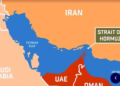
The Strait of Hormuz is a narrow but strategically vital waterway between Iran and Oman. It connects the Persian Gulf to the Gulf of Oman and the Arabian Sea.
At its narrowest point, the strait is just 33 kilometres wide, with shipping lanes only about 3 kilometres wide in each direction. Despite its size, nearly 20% of the world’s oil and gas supply — roughly 20 to 21 million barrels per day — passes through it.
It is also a critical export route for liquefied natural gas (LNG), particularly from Qatar.
Why Is It Crucial to Global Energy Markets?
Most oil exports from OPEC producers — including Saudi Arabia, Iraq, Kuwait, the UAE and Iran — transit through the Strait of Hormuz, primarily bound for Asian markets.
Even the threat of disruption can push oil prices higher. Brent crude prices often react immediately to geopolitical risks because energy markets are forward-looking. Traders price in uncertainty, insurance premiums surge, freight rates spike, and shipping slows — all of which tighten supply.
Reports of tankers waiting outside the Gulf reflect how uncertainty alone can disrupt flows, even without an officially declared closure.
Iran’s Strategic Leverage — and Its Risks
Iran holds the world’s fourth-largest proven oil reserves, estimated at around 170 billion barrels. Beyond its reserves, its geographic position gives it strategic influence over one of the world’s most important maritime chokepoints.
Iran has previously warned it could block the strait in response to military escalation. It possesses capabilities including sea mines, fast attack vessels, submarines, drones and missile systems that could significantly disrupt shipping.
However, a full closure would also hurt Iran’s own economy by halting exports and potentially straining ties with major buyers such as China. Analysts suggest that a complete shutdown would likely be a last-resort measure in an extreme conflict scenario.
Why India Is Particularly Vulnerable
India sources around 55% of its crude oil imports from the Middle East, amounting to roughly 2.7 million barrels per day. While the government has indicated that total storage capacity could last about 74 days, industry estimates suggest effective inventories may cover closer to 20–25 days under current conditions.
A prolonged disruption in the Strait of Hormuz could therefore have significant economic consequences for India:
-
Higher fuel prices: Rising crude costs directly impact petrol and diesel prices.
-
Inflationary pressures: Transport and manufacturing costs increase, affecting food and essential goods.
-
Wider trade deficit: More expensive imports strain foreign exchange reserves.
-
Pressure on public finances: Fuel subsidies may increase if retail prices are moderated.
-
Currency volatility: Elevated oil import bills can weaken the rupee.
Although India has diversified its sourcing, including higher imports from Russia, Middle Eastern crude remains central to its energy mix. A sustained disruption would likely intensify global competition for alternative supplies.
Broader Global Impact
Asia purchases nearly 90% of Middle Eastern oil exports. Countries such as Japan and South Korea are highly dependent but maintain substantial strategic reserves.
While Europe and the United States import less Gulf crude directly, oil prices are globally benchmarked. Any disruption in the Strait of Hormuz affects global pricing, shipping costs and energy markets worldwide.
Freight rates for very large crude carriers (VLCCs) and LNG vessels have reportedly surged amid tensions. Insurance premiums have also climbed, and shipping companies are reassessing Gulf routes. Prolonged instability could strain global supply chains.
A Historical Flashpoint
The Strait of Hormuz has long been a geopolitical pressure point:
-
During the 1980–88 Iran-Iraq War, both sides targeted oil tankers in what became known as the “Tanker War.”
-
In 2012, Iran threatened to block the strait amid sanctions tensions.
-
In recent years, vessels have been seized or attacked during regional escalations.
However, a complete and sustained closure would be unprecedented in modern energy markets — and could trigger severe global economic consequences.