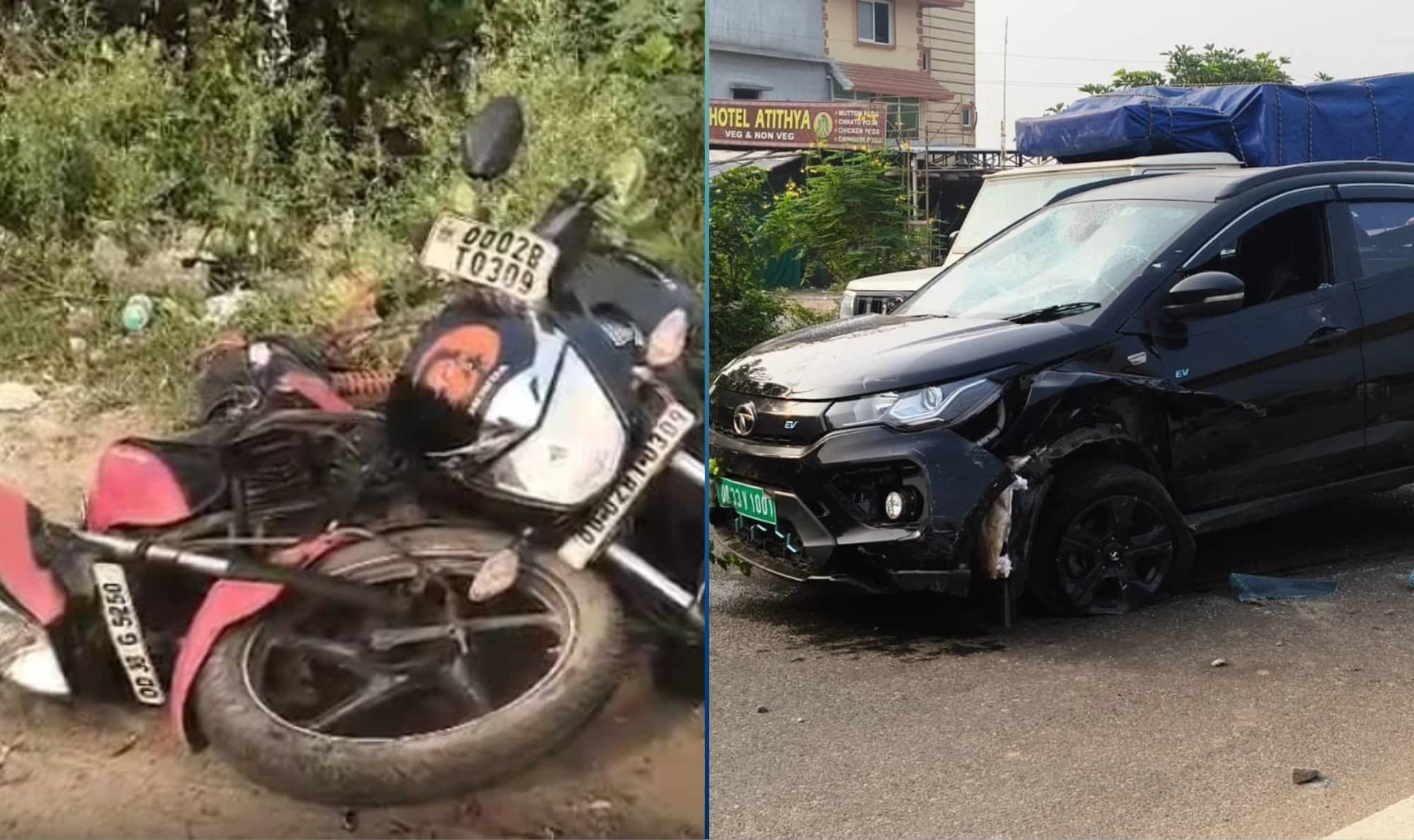
Bhubaneswar witnessed fresh panic on the Puri Bypass after an electric car, bearing registration number OD 33 Y 1001, allegedly driven by repeat offender Soumya Ranjan Rath, went on a violent rampage.
The speeding vehicle smashed into multiple vehicles and crushed seven parked bikes, leaving over three people injured.
Eyewitnesses and local reports suggest the incident was not merely a series of reckless collisions, but a deliberate murder attempt following a heated argument with local dhaba employees near Dhauli. Furious locals overpowered the driver, who allegedly attempted to flee, and handed him over to Badagada police amid intense public tension and traffic gridlock.
The Shadow of the Shastri Nagar Fatality
This latest episode comes on the heels of a July tragedy where Rath, allegedly driving a luxury Mercedes under the influence of alcohol, struck and killed AC mechanic Debiprasad Routray near the Shastri Nagar traffic square. Despite public outcry and an initial arrest under Kharavel Nagar PS Case No. 512/2026, critics point out that the application of bailable provisions allowed the accused to secure quick freedom, enabling him to commit another violent offence.
Legal Framework: BNS Acts and MV Provisions
The growing public outrage has put police handling under a severe scanner regarding the applicable penal sections:
-
BNS Section 281: Addresses rash or negligent driving that endangers human life, carrying minor custodial penalties and fines.
-
BNS Section 105: Invoked when death or grave endangerment occurs with knowledge or intent of fatal consequences, carrying severe imprisonment terms ranging from five to ten years or life.
-
BNS Section 106(1): Deals specifically with death caused by negligence without explicit murderous intent, punishable by up to five years in prison.
-
MV Act Section 185: Sternly penalises drunk driving, prescribing progressive jail terms, heavy fines, and mandatory license cancellation for repeat offenders.
Legal experts highlight that while sections like 105 make bail significantly harder to secure, public trust now hinges on whether law enforcement will apply stringent non-bailable charges to curb repeat traffic violence.