
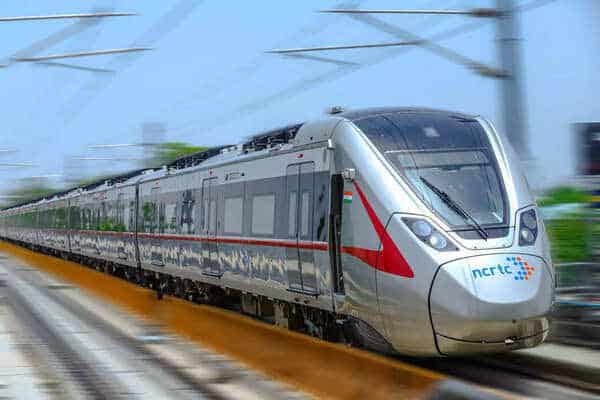
On Sunday, February 22, Prime Minister Narendra Modi flagged off the highly anticipated Namo Bharat Regional Rapid Transit System (RRTS) and the Meerut Metro, marking a significant step in enhancing connectivity between Delhi and Meerut. The inauguration was attended by Uttar Pradesh Chief Minister Yogi Adityanath, alongside other key dignitaries.
The project aims to reduce travel time between the national capital and Meerut, providing seamless and faster connectivity for people from nearby districts, thereby improving access to Delhi for commuters.
Key Highlights:
-
Inauguration Event: The Prime Minister flagged off the project from Shatabdi Nagar Namo Bharat Station in Meerut.
-
First Ride on Meerut Metro: PM Modi took a ride in the newly launched Meerut Metro, traveling from Meerut South Station. He also interacted with schoolchildren and local officials during the ride.
-
Nation’s Dedication: Following the inauguration, PM Modi dedicated various development projects in Meerut worth ₹12,930 crore.
Namo Bharat RRTS and Meerut Metro Details:
The Namo Bharat Regional Rapid Transit System (RRTS) and Meerut Metro have been developed at an estimated cost of ₹30,274 crore, covering a combined stretch of 82.15 km. The project includes around 70 km of elevated track and 12 km underground rail. The rapid transit system and metro service together aim to revolutionize urban transportation in the region.
The Delhi-Meerut RRTS will reduce travel time drastically, with the entire 82 km stretch now covered in just 55 minutes, significantly improving the daily commute for thousands. The fare for a full journey from Modipuram to Sarai Kale Khan has been fixed at ₹213, calculated at ₹2.60 per kilometre.
Project Features:
-
Delhi-Meerut Corridor: The new project includes a 5 km section between Sarai Kale Khan and New Ashok Nagar in Delhi, and a 21 km section between Meerut South and Modipuram in Uttar Pradesh.
-
Meerut Metro: This also marks the beginning of metro rail services in Meerut for the first time, a major step in modernizing the city’s transport system.
The project is part of a broader initiative to enhance infrastructure and transportation facilities in the National Capital Region (NCR) and surrounding areas.
Future Implications:
With the Namo Bharat RRTS and Meerut Metro now operational, the region can expect reduced traffic congestion, more efficient commutes, and enhanced urban mobility. The project is expected to attract more investments and contribute to the region’s economic development, while providing a modern and eco-friendly solution to transportation.
The inauguration of this project is a landmark achievement for the country, as it demonstrates India’s growing capabilities in implementing large-scale infrastructure projects that aim to benefit millions of citizens.