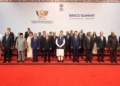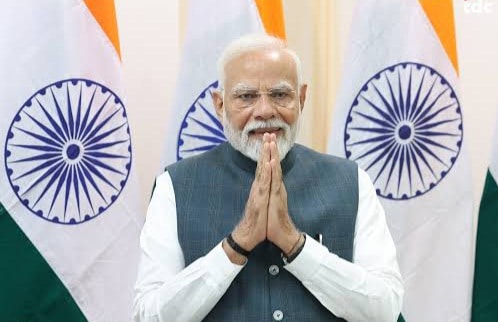
Prime Minister Narendra Modi on Wednesday completed 12 years in office, becoming India’s longest-serving elected Prime Minister in continuous service. The milestone marks a significant moment in Indian politics, highlighting more than a decade of governance, economic reforms, infrastructure expansion, welfare initiatives, and global engagement.
With 4,399 consecutive days in office, Modi has surpassed all elected Prime Ministers in terms of uninterrupted tenure. His leadership has transformed the political landscape, helping the Bharatiya Janata Party (BJP) expand its influence across the country and strengthen its position as India’s dominant political force.
Historic Milestone for Narendra Modi
Narendra Modi first took oath as Prime Minister on May 26, 2014. He returned to power with a larger mandate in 2019 and secured a third consecutive term in 2024.
While India’s first Prime Minister, Jawaharlal Nehru, served longer overall, his tenure included the period before India’s first general election. Modi’s latest milestone makes him the longest-serving continuously elected Prime Minister in the country’s history.
NDA to Honour PM Modi
The National Democratic Alliance (NDA) is expected to pass a special resolution recognising Modi’s leadership and contributions to national development.
Senior leaders from alliance partners and the BJP are scheduled to attend a meeting chaired by the Prime Minister. The event will also celebrate key achievements recorded during the last 12 years.
Major Achievements During Modi’s Tenure
Over the past decade, the Modi government has introduced several reforms and initiatives across sectors.
Key achievements highlighted by the government include:
- Expansion of digital governance through UPI and the JAM (Jan Dhan-Aadhaar-Mobile) framework.
- Large-scale infrastructure development, including highways, railways, airports, and ports.
- Welfare schemes targeting housing, sanitation, healthcare, and financial inclusion.
- Strengthening national security and counter-terrorism measures.
- Growth in defence manufacturing and exports.
- Economic reforms aimed at improving ease of doing business and boosting entrepreneurship.
- Enhanced global engagement through international partnerships and leadership forums.
The government also managed major challenges, including the COVID-19 pandemic and global geopolitical conflicts.
PM Modi Highlights Trust and Development
Marking the occasion, Prime Minister Modi said the 12-year journey has been dedicated to public trust, development, and welfare.
He emphasised the government’s efforts to empower youth, women, and farmers while accelerating infrastructure development and digital transformation.
According to Modi, these initiatives have helped strengthen India’s position on the global stage and create new opportunities for citizens.
BJP Highlights Welfare and Economic Progress
BJP leaders credited the government with lifting millions of people out of poverty through targeted welfare programmes.
The party highlighted achievements such as:
- Construction of millions of permanent homes.
- Expansion of affordable healthcare coverage.
- Financial support through Mudra loans.
- Large-scale sanitation projects.
- Increased defence exports.
- Growth in overall exports and manufacturing capabilities.
Party leaders also pointed to policy decisions such as the effective abrogation of Article 370 and initiatives aimed at strengthening national integration.
Global Leaders Congratulate Modi
World leaders sent congratulatory messages acknowledging Modi’s leadership and India’s growing role in global affairs.
Several leaders praised India’s economic growth, infrastructure expansion, and development-focused governance model. Others highlighted Modi’s advocacy for developing nations and his efforts to strengthen international cooperation.
Focus on Viksit Bharat
As part of the celebrations, BJP leaders plan to highlight achievements across governance, infrastructure, social welfare, technology, and economic development.
The Prime Minister is also expected to chair a meeting of NDA chief ministers and deputy chief ministers to review policy implementation and discuss the roadmap for achieving the vision of a developed India, or “Viksit Bharat.”
Political observers are also closely watching for possible changes in the Union Council of Ministers and the BJP organisation as the government enters the next phase of its third term.