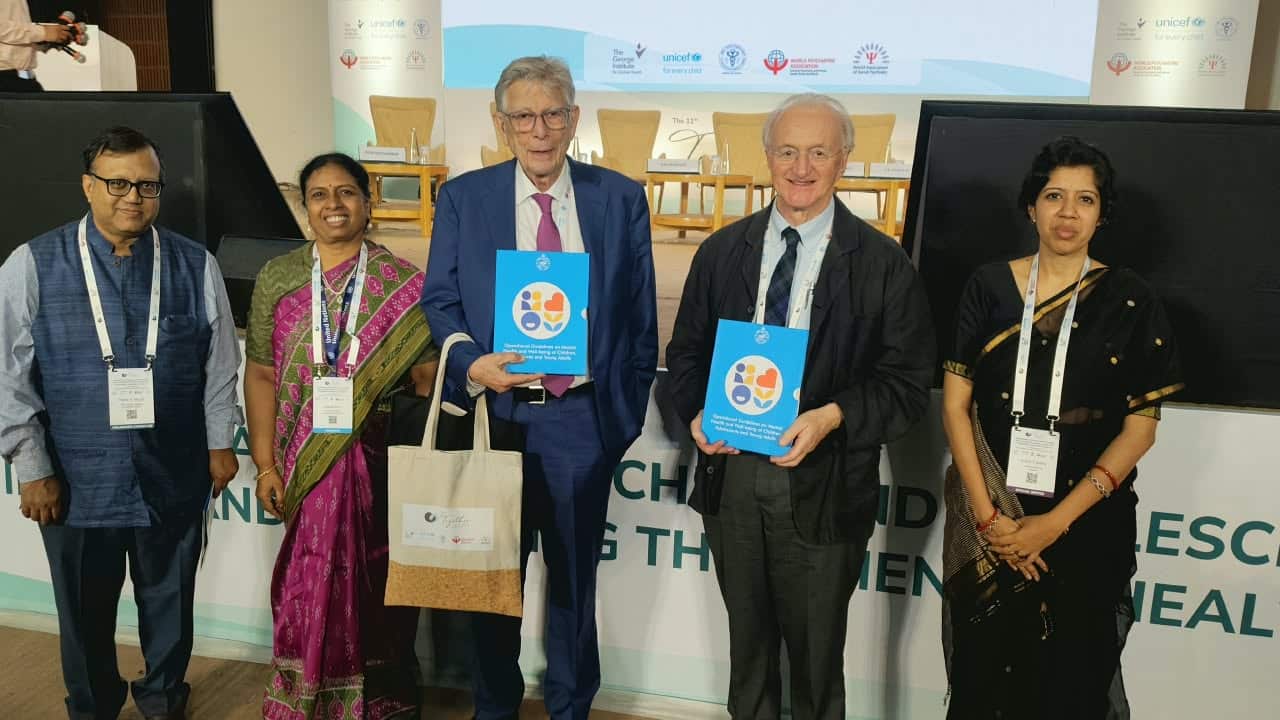
The Government of Odisha’s Standard Operating Guidelines on Mental Health and Wellbeing of Children, Adolescents and Young Adults have taken centre stage on an international platform following their presentation at the 11th Global Conference on Together Against Stigma (TAS) at AIIMS, New Delhi, supported by UNICEF India.
Launched by the Hon’ble Chief Minister of Odisha in September 2026, the guidelines were crafted by the state’s Department of Health and Family Welfare in collaboration with multiple development partners led by UNICEF Odisha. Bringing together diverse departments and stakeholders, the initiative underscores a coordinated, intersectoral response to the evolving mental health needs of young people.
Global Experts Weigh In on Intersectoral Coordination
At the conference, renowned psychiatrist Dr Norman Sartorius of Geneva and Prof. Sir Graham Thornicroft of King’s College London examined the objectives, design, and implementation architecture of Odisha’s guidelines. Both experts focused closely on the cross-departmental coordination anchoring the framework and commended the state government for putting together a structured blueprint for youth wellbeing.
Schools, Families, and Health Services Connected
Representing the state as a panellist in the session “360-degree Approach to Improve Care Seeking for Mental Health: Public & Private,” Ms Aruna Tripathy, Deputy Secretary in the Department of Health and Family Welfare, Government of Odisha, outlined how the guidelines translate policy into everyday support.
She highlighted Odisha’s push to embed mental health within school environments, catch distress early, and build clearer bridges connecting schools, families, and healthcare services. Rather than treating youth wellbeing as an isolated health issue, the model links everyday environments where children and young adults spend their time with timely clinical and psychosocial care.
Building Capacity Through Training
To help departments put the guidelines into practice consistently on the ground, a companion training manual is being developed. Designed around a structured Training of Trainers (ToT) approach, the manual aims to equip officials and staff across sectors with practical tools for coordinated roll-out.
Presenting the framework at the global conference allowed Odisha to share its approach to institutionalising multi-departmental action for children, adolescents, and young adults—prioritising prevention, early identification, timely intervention, and reducing stigma around mental health.