The Odisha government has accelerated its disaster preparedness on a war footing ahead of the impending Cyclone ‘Akvan’, which the India Meteorological Department (IMD) projects will make landfall between Puri and Gopalpur.
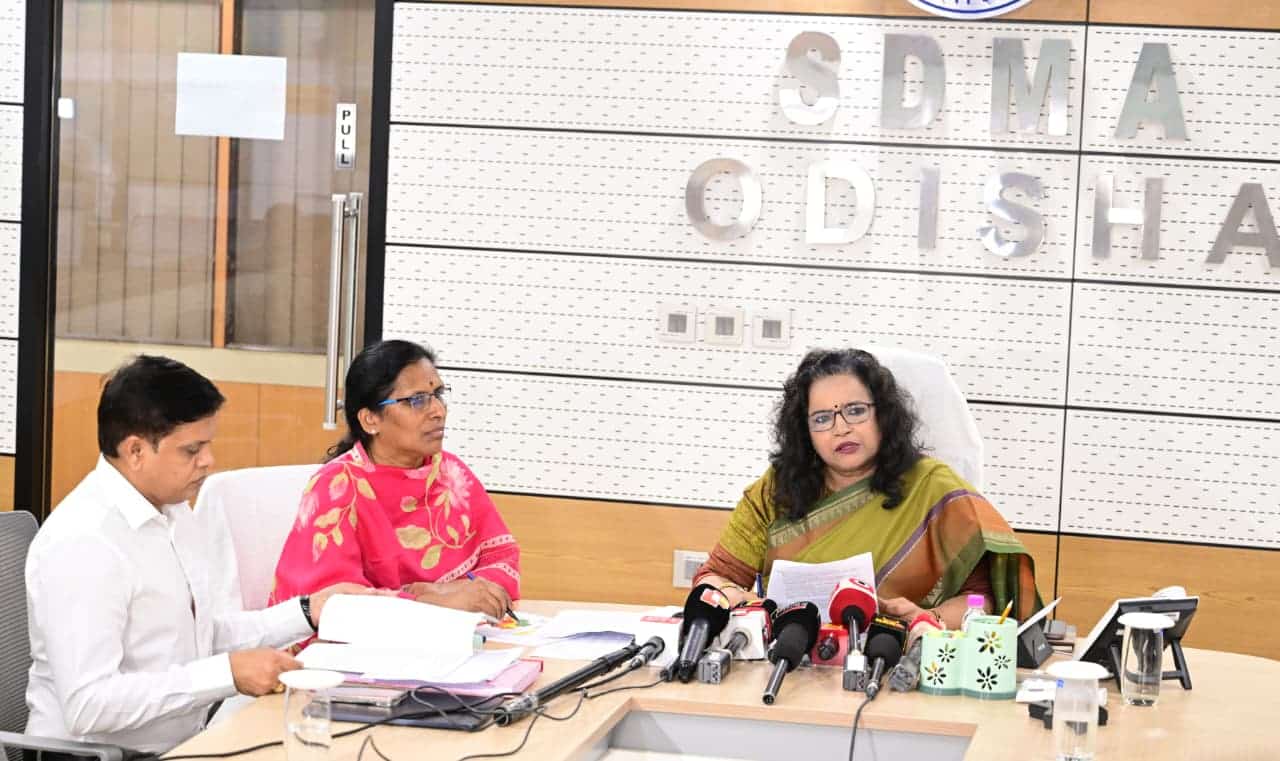
Briefing the media after reviewing the situation at the Special Relief Commissioner’s (SRC) office on Thursday morning, Chief Secretary Anu Garg affirmed that the administration is fully geared up with a singular focus: achieving zero casualties.
Mass Evacuations in Full Swing:
To safeguard residents in vulnerable zones, the state has identified 6,109 high-risk locations and initiated large-scale evacuations since Wednesday evening. So far, approximately 1,05,304 people have been shifted to 1,224 operational cyclone and flood shelters, with evacuation efforts continuing rapidly. Ganjam district leads the drive with 45,364 evacuees, followed by Gajapati with 18,000 people moved to safety. In hilly districts like Gajapati and Kandhamal, residents living in foothills and landslide-prone areas are being relocated on priority.
In total, 9,299 cyclone shelters have been identified across potentially affected districts. These centres are stocked with cooked and dry food, baby food, essential medicines, safe drinking water, and sanitary napkins. ASHA and Anganwadi workers have been deployed at the grassroots level, and as a crucial precaution, expectant mothers due by November 30 have already been shifted to nearby health centres.
Rescue Forces, Telecom, and Infrastructure Readiness:
To handle emergencies and post-cyclone restoration, the state has deployed 60 ODRAF teams, 14 NDRF teams, and 221 Fire Service units across vulnerable districts, alongside 100 teams from the Odisha Forest Development Corporation (OFDC) to clear uprooted trees and blocked roads.
Ensuring uninterrupted communication in network-shadow areas, the Telecom Department has arranged additional satellite phones and ‘Cell on Wheels’ (CoW) units. Meanwhile, the Indian Coast Guard is on standby, and arrangements have been made for helicopters and cranes if required.
Travel Restrictions and Flood Management:
Tourists have been strictly barred from visiting beaches, including Puri, Gopalpur, Satapada, and Chilika. Fishermen have been advised against venturing into the sea, with those previously out in deep waters having safely returned. Authorities have also closed traffic along vulnerable ghat routes, including Kalinga Ghati and Gazalbadi roads. Coordination with Railway authorities has led to the rescheduling and cancellation of several trains to ensure passenger safety.
Anticipating heavy rainfall and potential flooding, the Water Resources Department has activated 24-hour control rooms, night patrolling, and drainage clearing operations, deploying senior engineers to monitor river embankments and reservoirs.
Administrative Mobilisation:
Comprehensive measures are underway in coastal and adjoining districts—including Ganjam, Gajapati, Puri, Kandhamal, Kendrapara, Jagatsinghpur, Khordha, Balasore, and Mayurbhanj—particularly those under IMD’s Orange and Red warnings. Experienced senior IAS officers have been assigned to oversee operations in high-risk districts, government employees’ leaves have been cancelled, and 24×7 district control rooms are actively monitoring the situation with active support from local communities.