

Odisha Chief Minister Mohan Charan Majhi on Monday indicated that the strength of the Odisha Legislative Assembly could increase in the future following a possible delimitation exercise, potentially raising the number of MLAs from the current 147 to around 200.
According to official sources, the move is being considered to address future administrative, legislative, and governance requirements, alongside long-term infrastructure planning for the State.
Speaking at a public event, the Chief Minister said preparations are being made with future needs in mind. He pointed out that the new Legislative Assembly building currently under construction is being designed with seating capacity for nearly 300 members, significantly higher than the present strength, to accommodate any future increase.
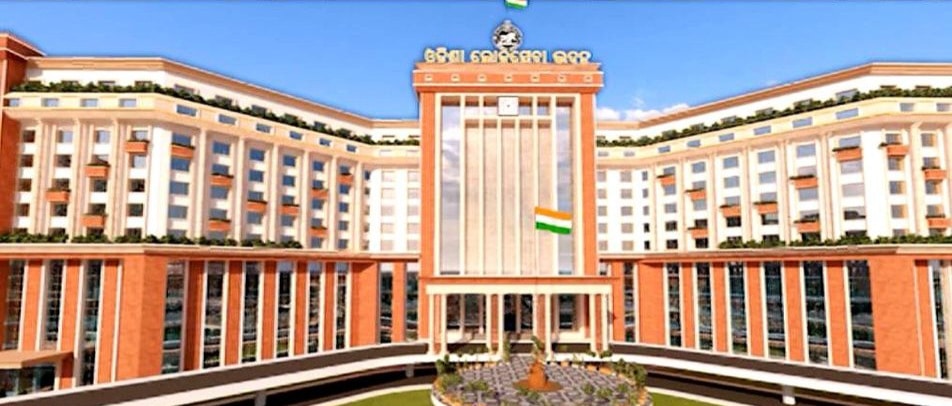
The Chief Minister laid the foundation stone for an ultra-modern administrative complex, which includes a new Lok Seva Bhawan and a new Assembly building, modeled on the Central Vista-style infrastructure framework. The project is being developed at an estimated cost of ₹3,623 crore.
The new complex will be built on approximately 71.13 acres of land, for which the Master Plan has already been approved. The proposed Lok Seva Bhawan will feature modern office infrastructure, advanced facilities, and underground parking.
The foundation stone for the project was laid at the Lok Seva Bhawan conference hall during the National Road Safety Programme.
The Chief Minister’s remarks have triggered discussions on future political and administrative reforms in Odisha, particularly regarding the expansion of legislative representation.
Referring to the possibility of delimitation, the Chief Minister noted that while the current Assembly has 147 seats, provisions are being made for future expansion. He observed that if delimitation leads to an increase, the Assembly strength could rise by 50 additional seats, taking the total close to 200 MLAs.
Emphasizing long-term planning, he stated that if governance needs are being assessed for the next 50 to 100 years, it is prudent to create adequate infrastructure in advance.