Reports of scrub typhus in Anugola have stirred worry in recent days. The Health Department now says the picture is more cautious than the first headlines suggested — and that panic is not warranted.
According to the Directorate of Public Health, the earliest “positive” cases were flagged by rapid kit tests. Those kits are screening tools. They are not confirmatory. In the first phase of laboratory validation, all 9 samples that had shown positive on the rapid test have come back negative on ELISA, the confirmatory test. Remaining samples are still being checked the same way.
That distinction matters. Rapid kits can raise an early flag during monsoon fever season, when headache, body ache and undifferentiated fever are common. Confirmatory ELISA is what decides whether a case is counted as scrub typhus. Until that result is in, a kit reading should not be treated as a confirmed outbreak number.
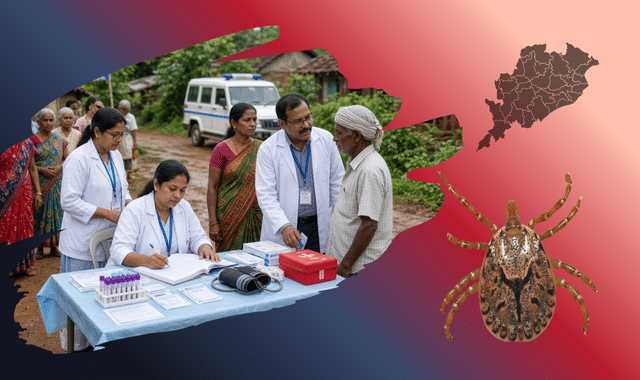
The department says it is monitoring the situation closely. A district health team is already on the spot to assess local conditions and ensure care for anyone with fever. Active surveillance, sample validation and public-health measures have been started without delay. Officials describe the situation as under continuous watch, with steps in place to protect public health.
Earlier local reports from Palalahada — including Sanabagadari (Sanabagdar) under Khamar CHC — had spoken of suspected and kit-positive infections and of a death under investigation at VIMSAR, Burla. District officials had already urged people not to panic, noting that scrub typhus is a known mite-borne illness in the region, often mistaken for malaria, and that it is treatable when identified in time.
The latest official line is simpler: **do not treat rapid-kit figures as confirmed cases**. Wait for ELISA. Follow fever advice. Seek care early if symptoms appear. Rely on health-department updates rather than rumours.
Residents are being asked to stay alert, not frightened: keep surroundings clear of overgrown grass and scrub where possible, avoid walking barefoot in bushy monsoon fields, and report persistent fever promptly. Teams will continue surveillance and confirmatory testing until the remaining samples are cleared.
The message from the Directorate is consistent: the first batch of nine rapid-positive reports did not hold up on confirmatory testing; the rest are being validated; and the district health machinery is already deployed.