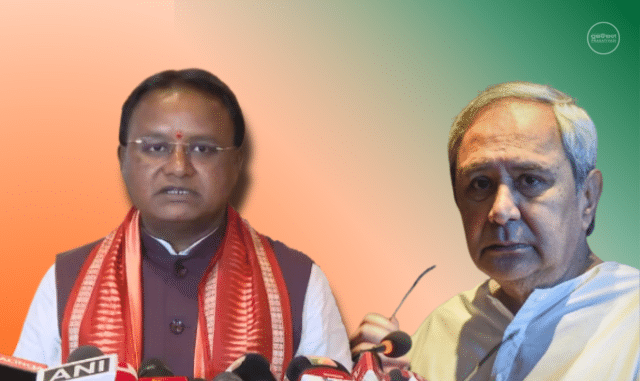
Leader of Opposition Naveen Patnaik has written again to Chief Minister Mohan Charan Majhi, asking him to summon a special session of the Odisha Legislative Assembly and pass a unanimous resolution seeking repeal of the Mines and Minerals (Development and Regulation) Amendment Act, 2026.
The two-page letter, dated 20 Sept 2026, is a follow-up to earlier correspondence in August. Patnaik argues that the amendment “effectively strips Odisha of its constitutional right to levy taxes on its mineral wealth” and that 20 BJP MPs from the state “supported this amendment against the people of Odisha.”
“This is what the mine owners wanted and had been fighting for,” he wrote.
With the passage of MMDR Amendment in the Parliament recently, #Odisha stands to suffer significant financial losses and faces an erosion of its constitutional rights. Reiterate my appeal to Hon’ble Chief Minister of Odisha Shri @MohanMOdisha ji to call a special session of the… pic.twitter.com/DY8KHC1rIG
— Naveen Patnaik (@Naveen_Odisha) September 20, 2026
The letter frames the dispute as a reversal of a long legal fight that Odisha had just won. Mining companies had challenged the states’ power to tax mineral wealth and mineral-bearing land. The BJD government fought the case for years in the High Court and the Supreme Court; the present government, Patnaik notes, also defended the state’s position before the apex court. A nine-judge Constitution Bench then upheld Odisha’s stand.
That July 2024 ruling in *Mineral Area Development Authority v. Steel Authority of India* held that royalty is not a tax and that states can tax mineral rights and mineral-bearing land. A later order allowed recovery of dues from April 2005, with payments staggered over 12 years from April 2026.
For Odisha, Patnaik says, the judgment opened the door to recovery of crores in past dues and a minimum recurring revenue of nearly Rs 12,000 crore every year — money he links to development and “a better future for our youth.” He believes the Majhi government held high-level discussions after the verdict on how those resources should be used.
Parliament then passed the 2026 amendment. The new Section 9D bars state governments from imposing any tax, cess or similar levy on mineral rights or mineral-bearing lands — whether based on quantity, value, royalty or otherwise — except on conditions prescribed by the Centre. Unrecovered past levies are treated as invalid from the outset; amounts already collected need not be refunded.
Patnaik calls the outcome a shock. Odisha, he writes, now faces “significant financial losses and … an erosion of its constitutional rights.” As Leader of the House, Majhi has a “moral responsibility” to convene a special session and move a unanimous resolution seeking repeal. That, he says, would reaffirm the rights the Supreme Court upheld and protect Odisha’s interests.
“The BJD will always stand with you in matters relating to the rights of Odisha and the future of our youth,” Patnaik wrote. “Let us come together to pass this resolution in the interest of our motherland, Odisha.” He closed by saying the people of the state “will remember this historic moment.”
The demand is not new. On 14 August, days after Parliament cleared the Bill, Patnaik first asked for an all-party meeting and a special session. The state government declined a standalone sitting, saying the issue could be taken up in the regular session. BJD later threatened an economic blockade if the law was not withdrawn; the BJP accused the party of spreading a “false narrative.”
The Centre’s public line has been that states already receive the bulk of mining revenue — royalty, auction premium, District Mineral Foundation payments and GST share — and that the amendment does not cut those streams. Officials have argued that multiple state levies raised costs, hurt investment and made mining less viable, and that a uniform framework will expand production and, over time, state receipts. BJP leaders in Odisha, including Sambalpur MP Dharmendra Pradhan, have rejected the Rs 12,000-crore-loss claim as alarmist.
The legal fight is unlikely to end in Bhubaneswar. Several mineral-rich states have called the law an override of the 2024 judgment, especially because it also restricts taxes on *land* (Entry 49 of the State List), not only mineral rights (Entry 50). Constitutional challenges are already being discussed.
For now, the political test in Odisha is narrower: whether the ruling BJP and the BJD can sit in the same House and pass one resolution on mineral rights — or whether the letter remains another unanswered file on the Chief Minister’s desk.
LoP Patnaik has urged CM Majhi, as Leader of the House, to convene a special Assembly session and a unanimous resolution seeking repeal of the MMDR Amendment.
Naveen Patnaik Sounds Alarm Over MMDR Bill, Urges CM Majhi to Defend Odisha’s Mineral Rights