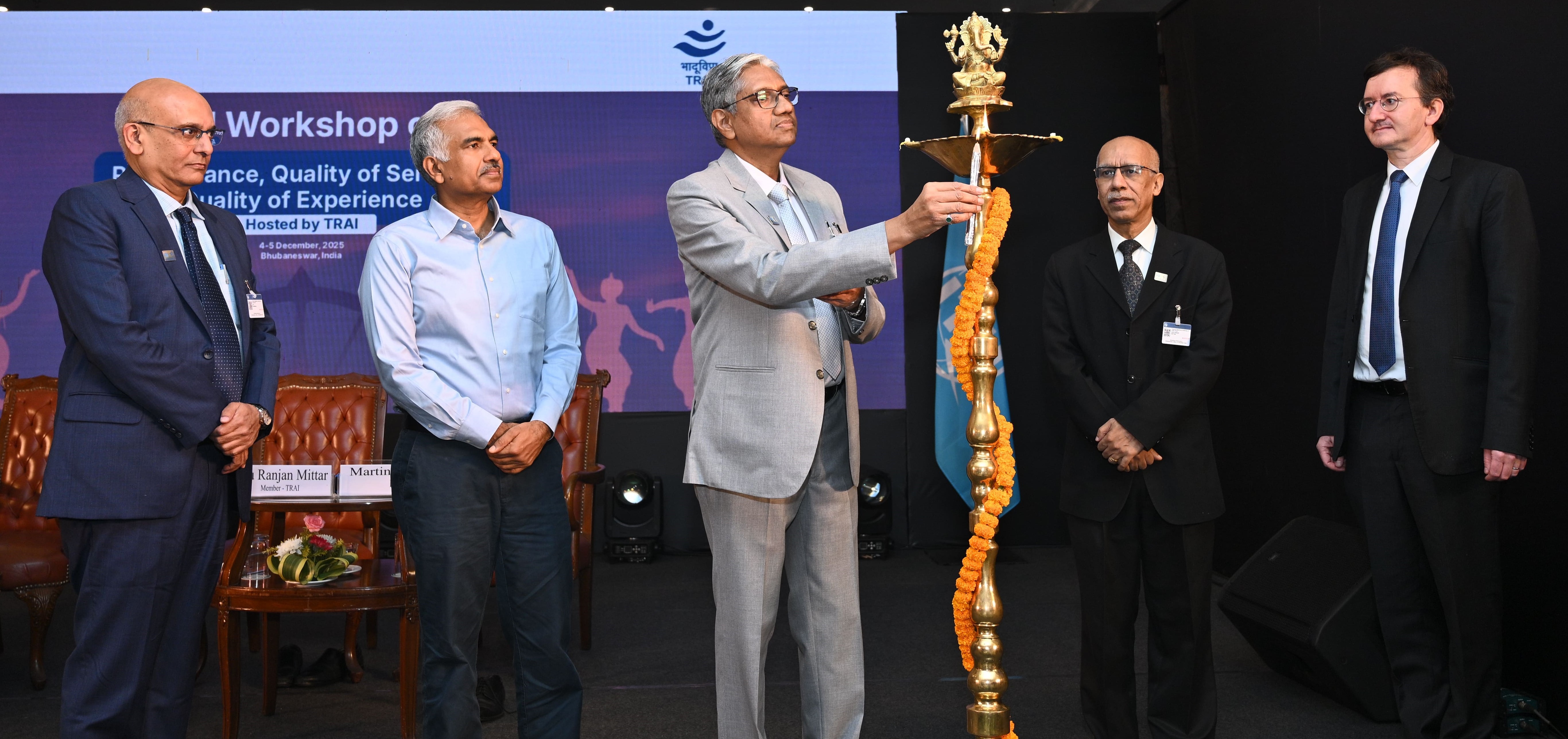
The Telecom Regulatory Authority of India (TRAI), in partnership with the International Telecommunication Union (ITU), today inaugurated the ITU–TRAI Workshop on Performance, Quality of Service and Quality of Experience in Bhubaneswar.
This two-day international programme brought together National Regulatory Authorities (NRAs), service providers and technical experts from across the world to advance collaborative efforts on telecom service-quality frameworks.
The workshop opened with a welcome address by Shri Atul Kumar Chaudhary, Secretary, TRAI, and the inaugural address by Shri Anil Kumar Lahoti, Chairman, TRAI, in the presence of senior representatives from ITU and the Government of Odisha.
In his welcome remarks, Shri Atul Kumar Chaudhary reaffirmed TRAI’s commitment to transparent and consumer-focused regulation. He underlined the importance of global cooperation in strengthening service-quality frameworks and noted that discussions on connectivity mapping, satellite-based quality assessment and regional regulatory approaches would contribute significantly to collective understanding.
A video message by Union Minister of State for Communications, Dr. Pemmasani Chandra Shekhar was shared during the inaugural session. He emphasised India’s focus on reliable and high-quality connectivity for citizens, highlighted ongoing efforts to strengthen service quality under the Telecommunications Act, 2023, and welcomed the joint work of TRAI and ITU in advancing global standards and best practices.
The session also featured a video message from Mr Seizo Onoe, Director, ITU Telecommunication Standardization Bureau (ITU-TSB), who highlighted the global importance of harmonised QoS standards in enabling equitable digital transformation. He reiterated ITU’s commitment to supporting member states in designing QoS and QoE frameworks suited to diverse national contexts.
Addressing the audience, Shri Manoj Ahuja, IAS, Chief Secretary, Government of Odisha, underscored the vital role of telecom services in public safety and disaster-response systems. Drawing from Odisha’s experience with cyclones and tsunami alerts, he emphasized the central role of telecom services in enabling inclusive growth, economic development and efficient public-service delivery. Noting that nearly every welfare system today relies on connectivity, he stressed that robust QoS and QoE systems are indispensable for timely warnings and resilient service delivery. “Telecom today underpins inclusive growth, economic development and the delivery of every major welfare programme. From rural governance and panchayat services moving online to the smooth functioning of public works, connectivity now touches every aspect of daily life,” he said. He further added that “a continued focus on consumer-centric QoS, supported by collaboration across states and countries, is vital as we work together to strengthen service quality for all.”
Delivering the inaugural address, Shri Anil Kumar Lahoti, Chairman, TRAI, highlighted India’s progress in building a digitally inclusive telecom ecosystem and the transformative role of connectivity in everyday life. He noted that India has achieved the fastest rollout of 5G services globally, supported by over 1.23 billion telecom subscribers and nearly 99 per cent 4G coverage. He emphasised that India continues to record high data-consumption levels while maintaining affordable tariffs that ensure broad digital access across socio-economic groups.
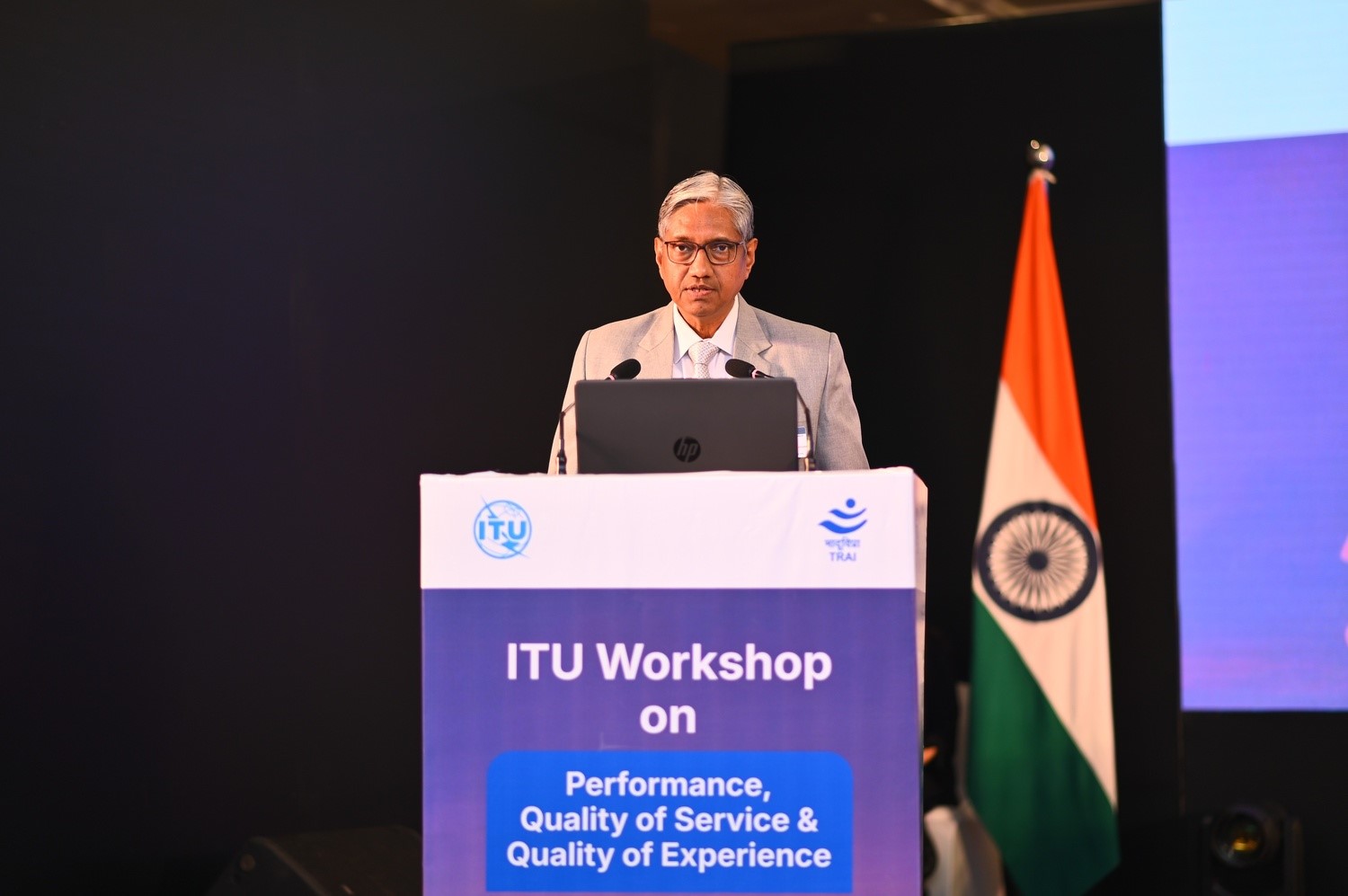
Shri Lahoti underscored India’s emergence as a model for emerging economies in bridging the urban–rural divide, enabling mobile-based financial inclusion and simplifying procedural frameworks under the Telecommunications Act, 2023. He highlighted TRAI’s Quality of Service Rating Framework for Buildings as an important initiative to enhance transparency in service-quality assessment and noted the growing need to strengthen indoor connectivity, given the significant share of data usage occurring within buildings.
He further emphasised the need for deeper multilateral collaboration and called for exploring an ITU Regional Group for Asia on QoS and QoE to address challenges such as fraud prevention, cybersecurity and network interoperability. “India’s experience demonstrates how comprehensive telecom policies, regulatory reform and strong collaboration can drive inclusive growth and digital empowerment,” he said, adding that coordinated regional efforts will help strengthen QoS and QoE frameworks across Asia.
Concluding the inaugural session, Mr Martin Adolph,Study Group Advisor, ITU, thanked TRAI for hosting the workshop and the Government of Odisha for its support. He acknowledged the contributions of all delegates and noted that the discussions will directly inform QSDG’s future work to strengthen global QoS and QoE frameworks.
The workshop has four thematic sessions on 4 December, covering connectivity mapping, satellite-service performance, measurement methodologies and a regional panel on service-quality approaches across Asia. These sessions brought together regulators, industry leaders and experts to exchange tools, methodologies and regulatory perspectives. On 5 December, the programme continues with a meeting of the Quality of Service Development Group (QSDG), followed by a rapporteur group meeting of ITU-T Study Group 12 on the “NRA Repository” initiative aimed at creating a global library of QoS and QoE parameters used by regulators.
The workshop aimed to build a deeper understanding of key challenges in QoS and QoE management and support the development of actionable best practices for regulatory bodies and service providers. Delegates engaged in peer learning and collaborative dialogue to advance universal, reliable and secure telecom services across diverse regions. Hosted by TRAI in partnership with ITU-T, the event drew around 150 participants from Asia, Africaand Europe, attending physically,as well as virtually, reflecting the global relevance of telecom standards and policy development. Participants included regulatory officials, operators, technology vendors and measurement-tool specialists, such as Opensignal, Ookla and Keysight Technologies, from 39 countries.