
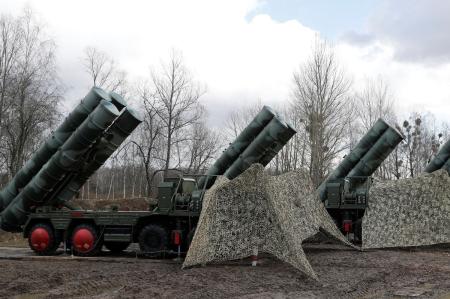
The Defence Procurement Board (DPB) has cleared a proposal by the Indian Air Force (IAF) to procure five additional S-400 air defence missile systems from Russia, strengthening India’s multi-layered air defence network amid evolving regional security challenges.
The board, chaired by Defence Secretary Rajesh Kumar Singh, approved the proposal and forwarded it to the Defence Acquisition Council (DAC), headed by Defence Minister Rajnath Singh, for Acceptance of Necessity (AoN). Once the DAC grants AoN, a cost negotiation committee will determine pricing terms before the proposal is submitted to the Cabinet Committee on Security (CCS) for final approval.
Expansion of India’s S-400 Fleet
India currently operates three S-400 systems, with two more scheduled for induction this year. With the proposed acquisition, the Indian armed forces would eventually operate a total of ten S-400 systems.
The S-400 system demonstrated operational effectiveness during Operation Sindoor in May 2025, where it contributed to maintaining air superiority and strengthening defensive preparedness during heightened military tensions.
Proposal for Pantsir S-1 Systems Under Consideration
The defence ministry is also reviewing a separate proposal from the IAF and the Indian Army to procure 13 Pantsir S-1 self-propelled air defence systems from Russia. These systems are designed to counter medium-range surface-to-air threats, cruise missiles, rockets, loitering munitions, and unmanned aerial vehicles.
Under the proposal:
-
Ten Pantsir systems would be deployed by the IAF to protect S-400 installations.
-
Three systems would be inducted by the Indian Army for border defence operations.
While the S-400 systems are expected to be purchased outright—with maintenance, overhaul, and repair support assigned to Indian private sector companies—the Pantsir acquisition may follow a hybrid model. Initial units could be procured through a fast-track route, with subsequent systems potentially manufactured in India by private firms to address urgent operational requirements.
Strategic Context
The procurement comes at a time when modern conflicts are increasingly characterised by the use of ballistic missiles, long-range strike capabilities, and kamikaze drones. Recent global developments, including heightened tensions in West Asia, have underscored the importance of integrated air and missile defence systems.
India’s geographical expanse, its western and northern borders, and its 11,000-km coastline necessitate advanced defensive capabilities to safeguard airspace and critical infrastructure. Strengthening multi-tiered air defence systems enhances preparedness against a wide spectrum of aerial threats.