As the sacred Odia month of Kartika draws to a close, Margasira arrives with its own distinctive rhythm of devotion, art, and agricultural gratitude.
Today marks the first Gurubara (Thursday) of Margasira masa—an especially auspicious day dedicated to Goddess Lakshmi, the bestower of prosperity and well-being.
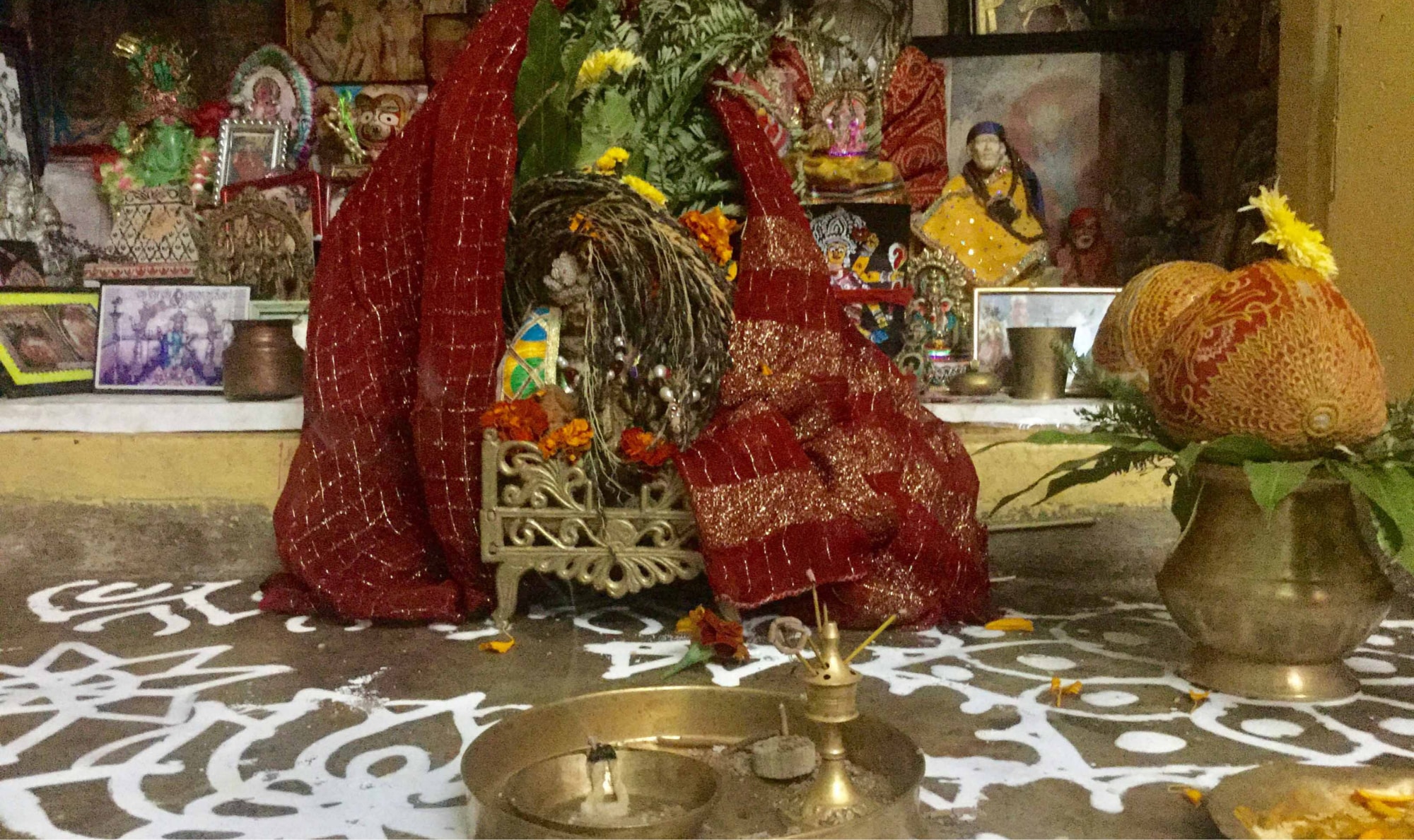
Across Odisha, households mark these Margasira Thursdays, known as Manabasa Gurubara, by thoroughly cleaning their homes and drawing elegant white Jhoti Chita designs on floors and walls. Created from a simple paste of rice flour and water (pithau), these freehand patterns often feature lotus motifs, flowering vines, stacked paddy sheaves, and the distinctive footprints of Maa Lakshmi leading inward from the threshold—symbolically inviting the goddess to enter and bless the household.
The tradition is deeply tied to the harvest season. By Margasira, fresh paddy has been gathered and stored. Women place a traditional measuring vessel called a mana, filled with newly harvested grain, as the central object of worship, treating it as a living embodiment of Lakshmi herself. The name “Manabasa” literally evokes the act of seating or welcoming this measure of grain as the goddess.
Many families also recite the Lakshmi Purana, composed by the 15th-century Odia poet Balaram Das. The text not only narrates the goddess’s grace but carries a powerful message of social equality: prosperity dwells with those who maintain cleanliness, generosity, and respect for all people, regardless of status.
While some households begin their Manabasa Gurubara observances from this first Thursday of Margasira, others wait until after Prathamastami before starting the weekly rituals. Both approaches reflect the living flexibility of Odia custom, where family tradition and local calendars guide practice. In either case, the emphasis remains the same: a clean home, beautiful art, and sincere devotion create the ideal conditions for Lakshmi’s presence.
These Thursday rituals transform ordinary houses into spaces of quiet celebration. Doorways and courtyards shimmer with white designs, oil lamps are lit, and the fragrance of offerings fills the air. Beyond the immediate act of worship, the practice preserves a distinctive Odia folk art form that has been passed down through generations of women—linking agricultural abundance, spiritual faith, and aesthetic creativity in a single, harmonious tradition.
As Odisha steps into Margasira, Manabasa Gurubara once again demonstrates how festivals here form an unbroken chain. Faith, art, and everyday life continue to intertwine, keeping the state’s rich cultural heritage vibrant and deeply meaningful for families across the region.