An Emirates flight travelling from Mumbai to Dubai executed a rare mid-air manoeuvre after authorities in the United Arab Emirates (UAE) activated air defence systems in response to a missile alert.
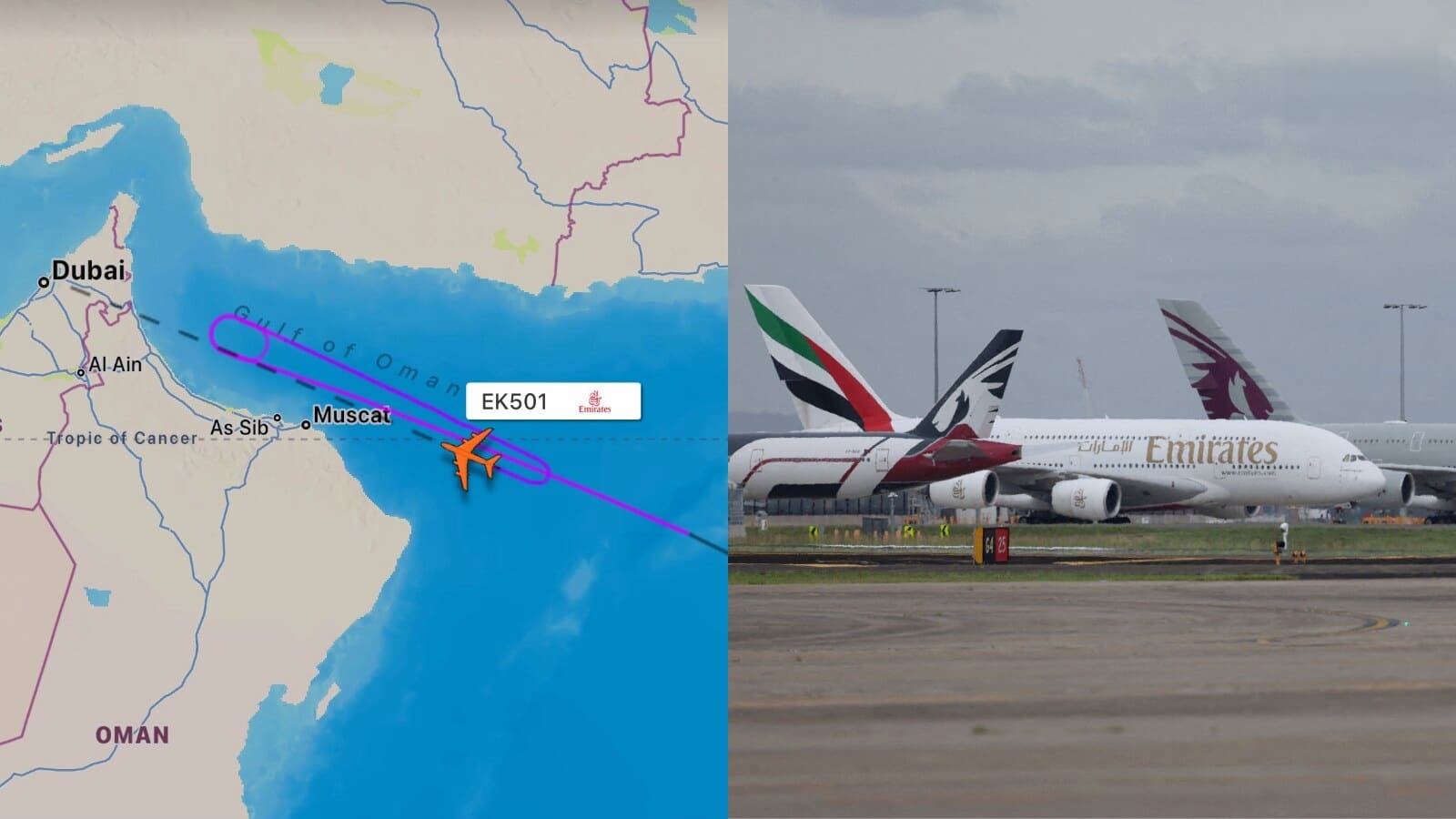
According to flight tracking data from Flightradar24, Emirates flight EK501, which departed from Mumbai, Maharashtra, was temporarily held outside UAE airspace on Tuesday morning. The alert followed reports from the UAE Ministry of Defence that air defence systems were engaging ballistic missiles reportedly launched from Iran.
Rare Aerial Manoeuvre Before Landing
Live tracking visuals indicated that the aircraft initially turned back toward Mumbai before resuming its route toward Dubai. Shortly thereafter, it performed what aviation observers describe as a “double reverse” — an uncommon holding pattern used in exceptional operational circumstances.
The aircraft later proceeded safely to Dubai after receiving clearance from authorities.
Regional Tensions Disrupt Air Traffic
The incident comes amid escalating hostilities across West Asia. Over the weekend, military forces from the United States and Israel conducted joint strikes against targets in Iran. During the operation, Iranian Supreme Leader Ali Khamenei was reported killed.
In response, Iran launched missile and drone attacks targeting US military bases in Qatar, the United Arab Emirates, Bahrain, Kuwait and Iraq. The widening conflict has disrupted civilian aviation routes, prompting temporary airspace closures and flight cancellations across the region.
Airports in Dubai, Abu Dhabi and Sharjah resumed limited operations after earlier suspensions. However, infrastructure at Dubai International Airport and Zayed International Airport sustained minor damage, largely due to debris from intercepted drones. Authorities in Abu Dhabi confirmed one fatality linked to the strikes.
Limited Evacuation Flights Resume
Amid widespread disruption, limited evacuation and scheduled flights resumed on Monday to assist stranded passengers. Airlines continue to monitor the security situation closely, with safety protocols remaining the highest priority.
Aviation authorities have advised travellers to check flight statuses regularly as regional airspace conditions remain fluid.