

The military confrontation between the United States, Israel, and Iran intensified on Saturday, with the conflict spreading into the Gulf region and impacting major cities in the United Arab Emirates.
Dubai and Abu Dhabi reported aerial threats and interceptions as Iran launched retaliatory strikes targeting US-linked establishments across the region. The escalation triggered widespread airspace closures and massive flight disruptions across the Middle East.
Dubai Airport Partially Damaged
Operations at Dubai International Airport, the world’s busiest international aviation hub, were affected after what authorities described as minor damage to part of a terminal building due to a suspected aerial strike. Airport officials stated the situation was quickly contained.
Major airports in Dubai, Abu Dhabi and Doha were temporarily shut, while more than 18,000 flights operated by leading Middle Eastern carriers were cancelled or rerouted, according to international wire reports.
Flight tracking data from Flightradar24 showed large sections of UAE airspace largely empty as airlines diverted aircraft away from the conflict zone.
Fire at Palm Jumeirah Hotel; Casualties Reported
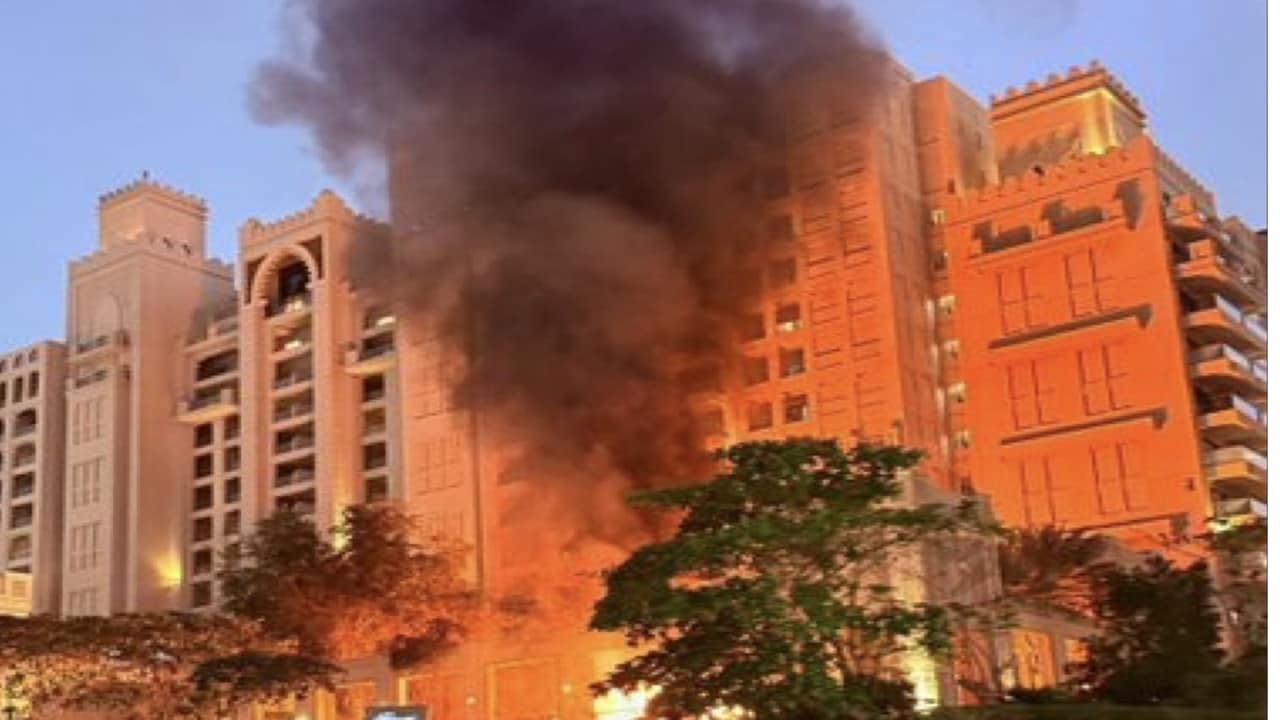
Four people were injured after debris from an intercepted missile struck a hotel in Palm Jumeirah, a high-profile waterfront development known for luxury resorts and residences.
Images from the scene showed emergency responders inspecting damage at the Fairmont The Palm. Authorities indicated that parts of a missile—either intercepted mid-air or knocked off its trajectory—caused the blaze.
Separately, Dubai officials confirmed a fire at one of the berths at Jebel Ali Port, reportedly triggered by falling debris from aerial interceptions. Emergency teams responded promptly, and the situation was brought under control.
UAE Defence Intercepts Missiles and Drones
The UAE Ministry of Defence said its air defence systems intercepted multiple missiles and drones launched toward its territory.
According to official statements, Iran fired 137 missiles and 209 drones at the UAE, most of which were neutralised before impact. The government described the attacks as a “dangerous escalation” and affirmed that all necessary measures were being taken to safeguard national security.
The UAE also stated it reserves the right to respond to the attacks.
Regional Airspace Closures Disrupt Travel
The rapid escalation prompted airspace closures across several countries, including:
-
Israel
-
Qatar
-
Syria
-
Iran
-
Iraq
-
Kuwait
-
Bahrain
The cascading shutdowns left hundreds of thousands of travellers stranded or diverted, severely disrupting global aviation networks.
Aviation analysts warn that prolonged instability could lead to sustained flight cancellations, higher airfares, and extended delays across Asia–Europe transit corridors.
Situation Remains Fluid
The developments mark a significant widening of the conflict beyond Iran’s borders, raising concerns about broader regional involvement. Governments across the Gulf have heightened security measures, while international carriers continue to monitor the evolving security situation.
Authorities have urged residents and travellers to follow official advisories and remain alert as diplomatic efforts to de-escalate tensions continue.