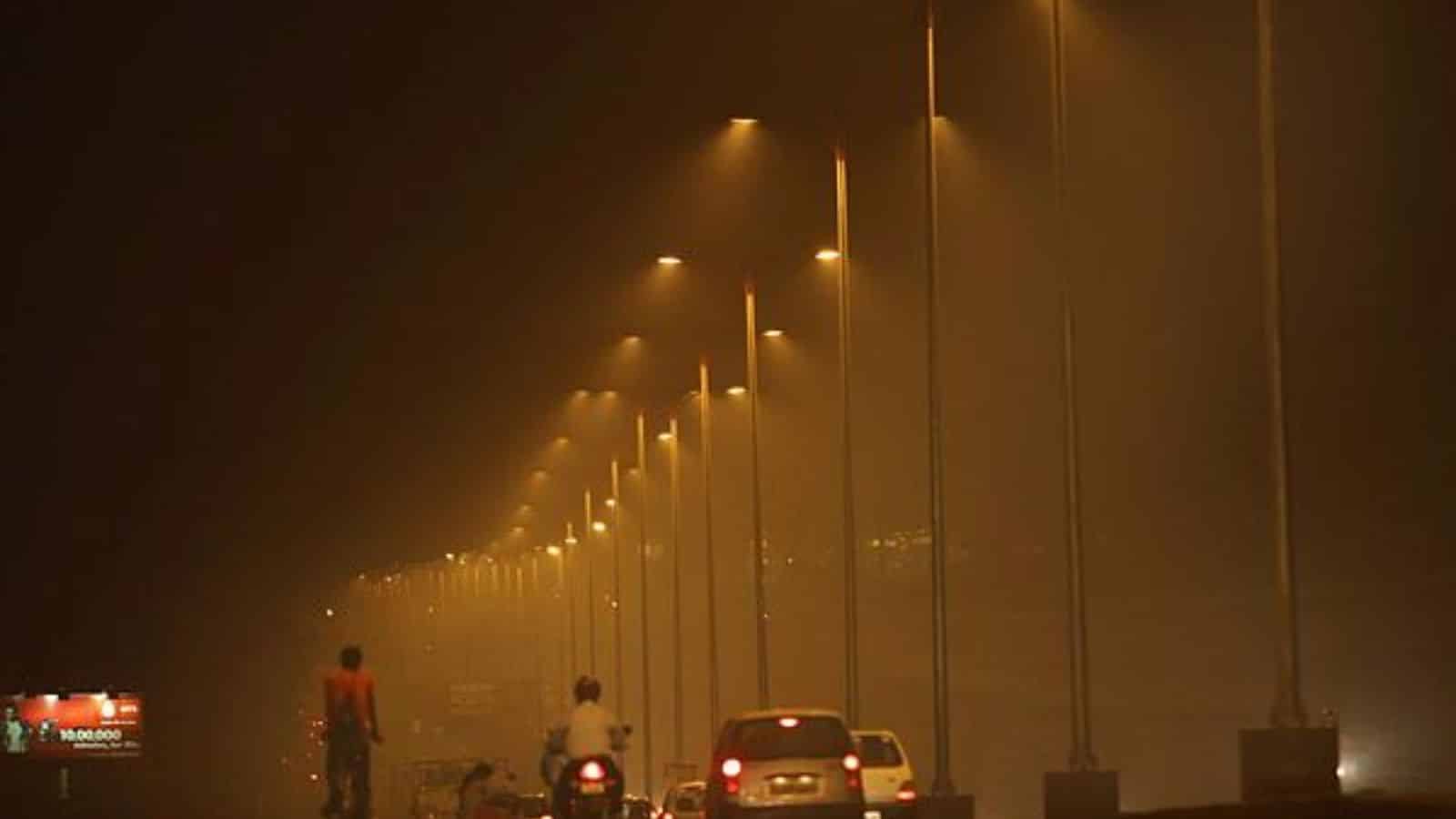
Air quality across the National Capital Region (NCR) deteriorated sharply through Thursday night into Friday morning, November 6, 2026.
Data from the Central Pollution Control Board (CPCB) showed Delhi’s hourly Air Quality Index (AQI) surging to 389 (“Very Poor” bordering “Severe”) by 7:00 AM IST—a 20-point increase from Thursday afternoon’s 4:00 PM bulletin reading of 369.
A combination of stagnant ground-level winds, atmospheric thermal inversion, and upper-level transport winds carrying stubble-burning emissions from Punjab and Haryana has locked heavy particulate pollution over the capital.
Stubble Fires Surge Across Punjab and Haryana
Upper-level meteorological conditions have accelerated the flow of agricultural smoke directly into the Delhi landmass:
- High-Speed Transport Winds: India Meteorological Department (IMD) weather balloon readings taken at 4:30 AM from Safdarjung recorded transport-level winds blowing at 23 km/h at altitudes between 500 and 1,500 meters, carrying farm-fire smoke straight from the north-west.
- Fire Tally Acceleration: NASA satellite tracking reported 226 active farm fires on Thursday alone across Punjab and Haryana. Daily stubble fire detections have nearly doubled within a week—rising from 120 on October 30 to over 246 per day in early November.
- Cumulative Season Data: Since October 1, NASA satellites have logged 2,477 cumulative farm fires, with Punjab accounting for 2,232 blazes. Experts note these figures undercount total burning, as many farmers ignite fields late in the afternoon after satellite flyovers.