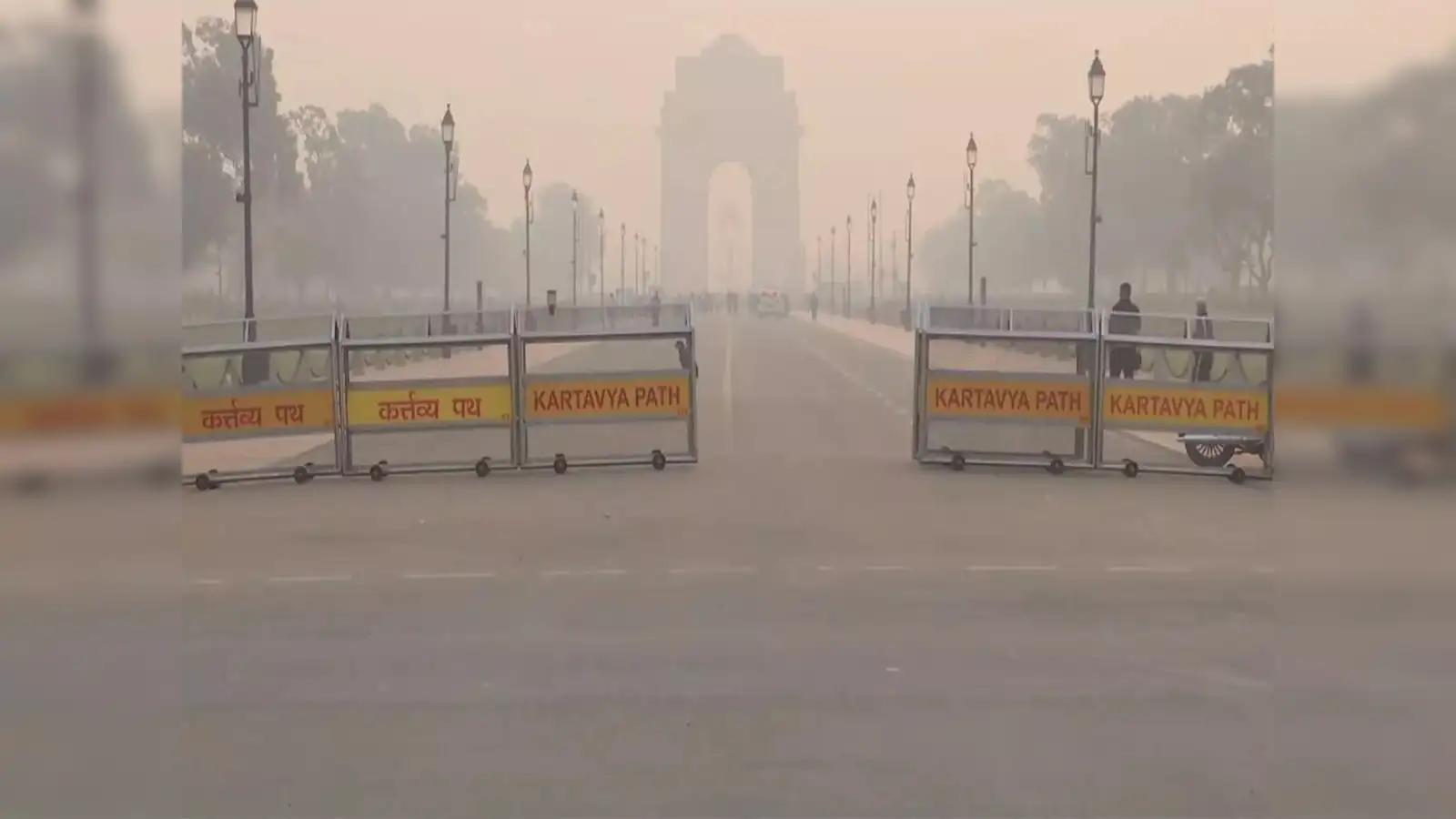
Delhi’s air quality deteriorated sharply into the “severe” category—the worst grade on the government’s air pollution scale—on Friday morning, November 13, 2026, as a thick layer of toxic smog enveloped the national capital.
According to real-time monitoring data, the city’s overall Air Quality Index (AQI) stood at 403 at 7:30 AM, marking an 82-point spike over the previous 24 hours. This is the first time Delhi’s air quality has breached the severe threshold since January 19, when the AQI reached 410.
Key Pollution Metrics & Worst-Affected Zones
The sudden deterioration followed a steep surge in fine particulate matter on Thursday, pushing more than half of the capital’s monitoring stations into the hazardous zone:
- Station-Wise Breakdown: Out of 59 reporting monitoring stations across Delhi, 32 recorded “severe” air quality on Friday morning, with IIT Delhi logging the highest reading at 488.
- PM2.5 Surge: Delhi’s PM2.5 concentration more than doubled within 24 hours on Thursday, reaching 244 micrograms per cubic metre by 6:00 PM—more than four times the national safe standard.
- Stubble Burning Data: NASA satellite monitoring recorded 4,107 farm fires across Punjab and Haryana between October 1 and November 12 (3,729 in Punjab and 378 in Haryana), including 96 incidents detected on Thursday alone—compared to 4,220 fires over the same period last year.