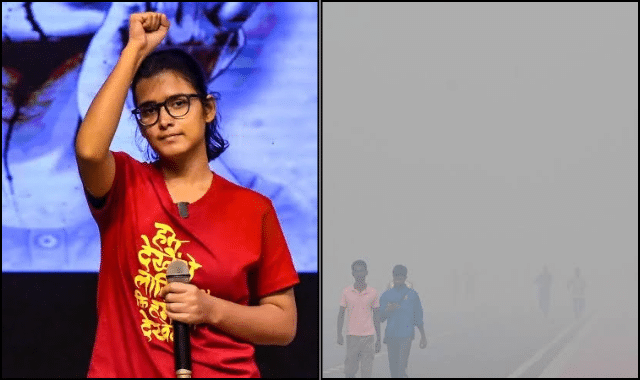
Amid Delhi’s air quality slipping into the ‘poor’ category with an AQI of 218, student bodies including AISA and JNUSU are pressing ahead with a protest march to Union Environment Minister Bhupender Yadav’s office on Monday.
The mobilisation follows unanswered urgent appointment requests regarding the public health emergency.
Late Sunday, the ministry responded to AISA president Neha Bora, stating Yadav attaches the “highest priority” to tackling Delhi-NCR’s pollution and is continuously reviewing state enforcement.
The ministry noted that Yadav is currently leading India’s delegation at the COP31 climate summit in Türkiye and highlighted a November 11 directive ordering secretary-level officers to monitor ground enforcement across NCR states.
Unswayed, AISA confirmed its program remains unchanged. The agitation builds on a November 12 letter co-signed by Bora, activist Bhavreen Kandhari, and health experts, which urged 10 key reforms—including declaring pollution a national emergency, aligning AQI with WHO standards, and tightening coal-plant emission norms.
With Delhi having recorded its most polluted Diwali in five years and monitoring data occasionally failing during peak hours, citizens and student groups are demanding direct accountability and year-round governance to protect their right to breathe.